

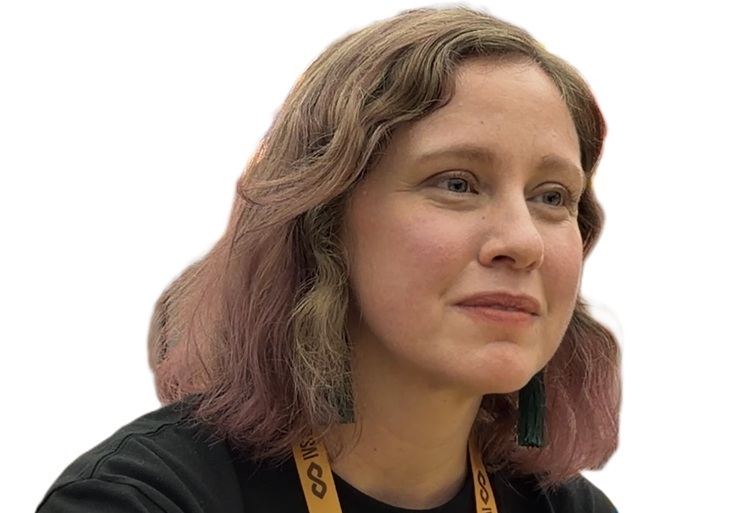
In an Asia Insights conversation at IVS Kyoto 2026, the executive coach and community builder argues that Japan’s next startup leap will depend not only on capital and technology, but also on leadership, communication, inclusion and founder resilience
KYOTO, Japan, July 8, 2026 — Japan’s startup ecosystem is attracting renewed attention, with platforms such as IVS Kyoto, SusHi Tech Tokyo and Tokyo Innovation Base helping bring founders, investors, corporates and ecosystem builders into the spotlight. But for Heather Dobbin, the next stage of growth will require more than capital, pitch stages and government support.
Speaking on the sidelines of IVS Kyoto 2026, Dobbin, an executive and leadership coach, professional facilitator and community builder, said Japan’s founders need stronger human skills, healthier leadership models and more inclusive networks if the ecosystem is to become globally competitive.
Her argument is straightforward: startup ecosystems are not built by technology alone. They are built by people who can communicate, take risks, lead teams, build trust and sustain themselves through uncertainty.
“I hate that they’re called soft skills,” Dobbin said. “That degrades them. It makes them seem less important.” She prefers the term human skills — a category that includes communication, emotional intelligence, relationship-building, confidence, cultural fluency, leadership presence and the ability to work through uncertainty.
For Japan, where business is deeply relationship-oriented and where founders are increasingly being encouraged to operate globally, these capabilities are becoming a commercial necessity.
From education to startup leadership
Dobbin’s own journey into Japan’s startup ecosystem has been shaped by several professional transitions. Originally from the United States, she first moved to South Korea before eventually settling in Japan. She began her career in education as an English teacher, later moving into business development, recruitment, educational leadership and curriculum design.
Her deeper connection with entrepreneurship began when she became Director of Programmes at an engineering bootcamp in Tokyo. There, she worked with people who were giving up stable career paths to reskill and enter the technology industry.
“The people who were going through the programme were basically giving up everything and taking a huge risk to change their careers,” she said. “Through that I became really inspired, and that’s what inspired me to start my own business.”
After working as a solo entrepreneur for several years, Dobbin noticed that individual coaching alone was not enough. Founders and leaders could make progress personally, but when they returned to unsupportive environments, weak networks or rigid organisational cultures, the impact was harder to sustain.
“One of the things I love about Venture Café Tokyo is that innovation doesn’t happen in isolation,” she said. That insight led her deeper into community building. Today, her work operates at three levels: supporting individuals through coaching, helping teams and companies through facilitation, and connecting founders with networks, resources and communities.
The risk-taking gap in Japan
Asked about the internal challenges Japanese startup founders face, Dobbin pointed to two recurring themes: risk-taking and burnout. On risk-taking, she said Japan’s strong culture of quality and perfection has both strengths and limitations.
“When you grow up Japanese and in Japanese society, this idea of perfection is very important,” she said. “You can see that in the high degree of quality that we have in Japanese products and services.”
That discipline has helped build Japan’s reputation for quality. But in the startup world, where founders must often communicate before things are perfect, pitch in unfamiliar settings and engage global audiences, the fear of imperfection can hold them back.
“More often than not, a lot of the founders that I see here in Japan, and this is also true with executives as well, really hesitate to speak up,” Dobbin said. “These are amazing people doing world-class things.”
At IVS Kyoto, she observed that some founders running impressive companies still hesitated to speak with international visitors because they felt their English was not good enough.
“There’s a huge hesitation like, ‘I can’t speak English, I can’t do this.’ And it turns out that it’s perfectly fine,” she said.
For Dobbin, this is not simply a language problem. It is a business problem. If Japanese startups want to raise international capital, acquire overseas customers, attract global partners or participate in cross-border innovation, founders need the confidence to communicate beyond domestic comfort zones.
“I would say the risk-taking when it comes to interpersonal communication is a really big issue here,” she said.
Founder burnout as an ecosystem risk
The second challenge is burnout. Startup culture everywhere has an element of grind. But in Japan, Dobbin believes startup pressure sits on top of an existing cultural foundation that already rewards hard work, endurance and social conformity.
“Startup culture all over the world has a lot of grind,” she said. “But particularly in Japan, there’s already a cultural foundation that really encourages that thinking.”
That creates risk for founders and teams. Entrepreneurs may struggle to set boundaries, rest properly or maintain social support outside work. The problem is especially acute when families or peers do not understand the startup path.
Although entrepreneurship is becoming more socially acceptable in Japan, leaving a stable corporate job to start a company can still invite scepticism.
“If you go home and your family is like, ‘You’re crazy, you’re giving up your amazing corporate job for the stable life, why are you doing that?’ — that pushback from your dominant culture can increase your burnout risk,” she said.
For Dobbin, this makes founder support and community-building a business issue, not just a wellbeing concern. Burned-out founders make poorer decisions. Exhausted teams lose momentum. Unsupported entrepreneurs may drop out before their companies have a chance to mature. If Japan wants a stronger startup ecosystem, it must also build stronger support systems around founders.
The startup path becomes socially attractive
Despite these challenges, Dobbin sees visible change in Japan’s founder ecosystem. Asked what has changed most since she began working in Japan, her answer was direct: “It’s cool to be a founder.”
Entrepreneurship, once seen largely as an outlier path, is increasingly becoming a legitimate and even attractive career choice. Government-backed initiatives, startup conferences, innovation hubs and media attention have helped shift public perception.
“You see people here, they’ve got interesting hair, they’re all wearing black,” she said. “There’s a little bit of positive edginess that comes with being a founder. And so that generates social capital.”
This matters because social legitimacy can influence talent flows. If entrepreneurship becomes a respected path, more young people may consider joining or founding startups instead of defaulting to large corporations.
But Dobbin believes the ecosystem still needs to become more inclusive, especially for women founders and international founders.
Inclusion as startup infrastructure
One of Dobbin’s strongest points is that inclusion should not be treated as a side conversation. It is part of the infrastructure needed for ecosystem growth. She has seen more women founders in Japan, but their visibility remains limited. At major startup events and pitch competitions, women are still often underrepresented.
“The first one is representation,” she said. “When I walk into a room, in any business setting, I’m a minority. And oftentimes it’s not assumed that I am a person who’s working in business.”
This affects who feels welcome in startup spaces. Early-stage women founders entering male-dominated rooms may feel discouraged before they have built the confidence and networks needed to scale.
Dobbin argues that the ecosystem needs more spaces where women founders are visible, supported and recognised as business leaders.
“Simply increasing the rooms where there are more women and understanding that there actually are women founders out there gives you the psychological safety to then build up a challenger’s mindset,” she said.
She also rejects the frequent claim that there are not enough women founders or women speakers. “You always hear this, ‘Where are the women?’ And I think that’s become an excuse,” she said. In one instance at Venture Café Tokyo, she and a colleague were able to identify around 50 women speakers within 30 minutes.
“People need to ask the people who know where the women are and actually get serious about putting them into programme leadership positions, into panel discussions,” she said.
For Dobbin, this is not only about fairness. It is about business performance, talent utilisation and ecosystem competitiveness. Japan cannot afford to underuse large parts of its talent base, especially as demographic pressure intensifies.
Bilingual spaces and global access
Another inclusion issue is language. Dobbin pointed to the divide between foreign founders and Japanese founders, including women founders. Language and cultural barriers can keep communities apart, reducing the possibility of collaboration.
This is why she values bilingual startup platforms. “One of the things that I like about IVS is that it’s very bilingual friendly,” she said. “Even on the Japanese stages, we make an effort to do simultaneous translation.”
For Japan’s startup ecosystem to globalise, bilingual access cannot be cosmetic. It must be built into event design, founder support, investor engagement and community-building.
If international founders cannot engage Japanese founders, or Japanese founders cannot confidently speak to global audiences, opportunities are lost on both sides.
Why human skills matter in the age of AI
Dobbin believes human skills will become even more important as AI reshapes knowledge work. As machines take over more technical and analytical tasks, the differentiator for founders and leaders will increasingly lie in areas such as trust-building, communication, judgement, empathy, relationship management and team culture.
“Human skills are more important than ever,” she said. For startups, that has direct commercial implications. Investors back founders, not just products. Customers buy from teams they trust. Partnerships depend on credibility. Hiring requires culture. International expansion demands communication across differences.
In Japan, where business relationships are built through patience, consistency and trust, these capabilities carry even greater weight. Her advice to founders is clear: “Come in, get the human skills you need, build the relationships, and then be successful.”
Asked what a healthier Japanese startup ecosystem could look like, Dobbin said she would like to see founders embrace a “cycle of hustle, not grind.” She is not against working hard. But she believes founders must understand when to push and when to recover.
“I would love to see people embrace that cycle of hustle, not grind,” she said. That means setting boundaries, building rest into the system, making collective commitments within teams and treating founder health as part of company performance.
“Make sure you’re looking at yourself and your company and your team holistically,” she said. For Japan, this could become a competitive advantage. Rather than copying the most unsustainable aspects of Silicon Valley-style startup culture, Japan has an opportunity to build a more balanced model — one that combines technical quality, long-term thinking, inclusive communities and sustainable leadership.
A business case for healthier startup ecosystems
Heather Dobbin’s message from IVS Kyoto 2026 is timely. Japan’s startup ecosystem is becoming more visible. Founders are gaining social recognition. International investors are paying closer attention. Government and city-led initiatives are creating more platforms for entrepreneurship.
But the next phase will require more than events and capital. It will require founders who can communicate globally, teams that can sustain pressure, women who are visible as leaders, bilingual spaces that connect communities, and human skills that are treated as business-critical capabilities.
For AsiaBizToday’s business audience, the takeaway is clear: founder wellbeing and inclusion are not soft issues. They are growth issues. A startup ecosystem that burns out founders, excludes women, isolates foreign entrepreneurs or undervalues communication will struggle to compete globally.
A startup ecosystem that invests in human-centred leadership, however, can build companies that last. As Japan looks to position itself more strongly in the global startup economy, Dobbin’s argument is worth taking seriously: innovation does not happen in isolation, and startup success depends as much on people as it does on technology.