

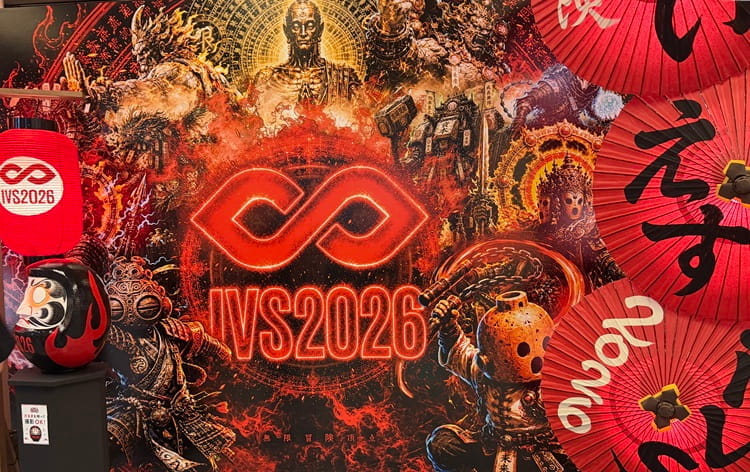
AsiaBizToday reports from Kyoto as IVS Kyoto 2026 closes after three days of startup showcases, IVS CORE discussions, LAUNCHPAD pitches, side events and cross-border ecosystem conversations
KYOTO, July 3, 2026 — IVS Kyoto 2026, held from July 1–3 across Kyoto Miyakomesse, ROHM Theatre Kyoto, Hotel Okura Kyoto and other venues in the city, closed after three days that signalled Japan’s renewed ambition to position itself as a more globally connected startup and innovation market.
Reporting from Kyoto as a media partner to IVS Kyoto 2026, AsiaBizToday found that the event’s central message — “Japan is Back” — was not merely a conference slogan. It reflected a broader attempt to bring Japanese startups, global investors, corporate decision-makers, universities, accelerators and international founders into the same ecosystem conversation.

Across the three days, IVS Kyoto 2026 combined the scale of a major startup conference with the intimacy of founder conversations, side events, closed-door decision-maker discussions and pitch-stage visibility. The event brought together more than 10,000 participants, while official event positioning around the 2026 edition pointed to a broader registration base of more than 13,000.
The result was not simply a large event. It was a city-wide startup platform that used Kyoto’s distinctive identity — history, universities, deep industrial roots and global cultural recognition — to frame Japan’s next startup chapter.
What is IVS Kyoto 2026?
IVS Kyoto 2026 is one of Japan’s largest startup conferences, bringing together founders, investors, corporates, policymakers, students, creators, universities, media and ecosystem builders from Japan and overseas.
The 2026 edition was held from July 1–3 in Kyoto under the theme “Japan is Back.” The main IVS area was hosted at Kyoto Miyakomesse and ROHM Theatre Kyoto, while IVS CORE, the invitation-only executive platform, took place at Hotel Okura Kyoto on July 1 and 2.
The conference structure reflected a layered approach to ecosystem-building. The main IVS area provided open visibility, community energy and startup discovery. IVS Startup Market gave selected startups a platform to present their businesses to investors, corporates and media. IVS CORE created a more closed decision-maker environment. Side events across Kyoto extended the conference into smaller, more focused gatherings. The final day centred heavily on IVS LAUNCHPAD, one of Japan’s most visible startup pitch platforms.
Together, these formats helped position IVS Kyoto 2026 as more than a conference. It functioned as a gateway into Japan’s startup economy.
Why does IVS Kyoto 2026 matter for Japan’s startup ecosystem?
IVS Kyoto 2026 matters because it showed Japan actively trying to reconnect its startup ecosystem with global capital, markets and talent.
Japan has long been recognised for manufacturing excellence, engineering depth, product quality, robotics, automotive strength, electronics, healthcare, gaming, advanced materials and research capability. What has often been less visible internationally is its venture-backed startup layer.
That is the gap IVS is trying to address. Across the event, there was a clear effort to make Japan easier to understand for foreign founders and investors, while also encouraging Japanese startups to think beyond the domestic market. The conference brought together companies and ecosystem players from Japan, Taiwan, Korea, Hong Kong, Singapore, Malaysia, India, the United States and other markets.
For Japanese startups, IVS offered access to global investors, corporate partners, overseas founders and media. For foreign companies, it provided a practical entry point into Japan — a market that is highly attractive but often complex, relationship-driven and difficult to navigate without local context.
This dual function gave the event its real significance. IVS Kyoto 2026 was not only about Japan showcasing startups to the world. It was also about inviting the world to understand how to work with Japan.
Day 1: Japan sets the tone with scale, ambition and global visibility
The opening day of IVS Kyoto 2026 established the event’s central themes: Japan’s startup comeback, global engagement and the need for more practical collaboration between founders, investors, corporates and institutions.
At Miyakomesse and ROHM Theatre Kyoto, the main IVS area carried the visible energy of the conference. Startup booths, founder pitches, stage sessions, investor meetings, product demonstrations and media interactions created a sense of movement across the venue.
For AsiaBizToday on the ground, one of the strongest impressions from the first day was the breadth of sectors represented. The startup mix included AI translation, medtech, agri-AI, food innovation, customer engagement, social commerce, construction technology, water access, deeptech and social impact ventures.
Many of these startups were solving specific industry or human problems rather than speaking only in broad technology terms. They were addressing multilingual communication, healthcare monitoring, farmer support, reliable access to water, future construction methods, customer conversion and enterprise AI adoption.
This gave IVS Kyoto 2026 a relevance beyond Japan’s domestic startup scene. It became a platform for Asia’s wider innovation story.
Day 2: IVS CORE and side events bring depth to the ecosystem conversation
The second day reinforced one of the defining features of the 2026 edition: the addition of deeper decision-maker formats alongside the larger open conference.
IVS CORE, held at Hotel Okura Kyoto on July 1 and 2, was a fully invitation-only platform designed for senior startup executives, investors, corporate leaders, financial institutions, policymakers, researchers and ecosystem decision-makers.
While the main IVS area created scale and visibility, IVS CORE was designed to create depth. Its role was to support more substantive conversations around capital, partnerships, policy, market creation, corporate collaboration and Japan’s global startup competitiveness.
This distinction matters. Startup ecosystems are not built by visibility alone. They require decisions — around funding, customer adoption, regulation, partnerships, talent, market access and long-term support.
By creating a dedicated layer for decision-makers, IVS Kyoto 2026 attempted to bridge the gap between conference networking and ecosystem-level action.
The side-event ecosystem added another layer. Across Kyoto, founders, investors, accelerators, corporates and community builders gathered in smaller settings around themes such as AI, deeptech, women founders, Taiwan-Japan collaboration, global expansion, impact startups and investor access.
For a relationship-driven market such as Japan, these side events matter. They allow conversations to move beyond the booth, the stage or the formal meeting room. They help build the trust and familiarity that are often essential for business in Japan.
Day 3: LAUNCHPAD puts founders at the centre
The final day of IVS Kyoto 2026 shifted much of the attention to IVS LAUNCHPAD, the event’s high-profile startup pitch platform.
Held at ROHM Theatre Kyoto, LAUNCHPAD gave selected finalists the opportunity to pitch to a large audience of entrepreneurs, investors, business leaders, media and ecosystem participants. The platform has long been positioned as a gateway for the next generation of entrepreneurs, with past alumni going on to raise significant capital and achieve exits.
For the 2026 edition, IVS announced 15 LAUNCHPAD finalists ahead of the event, selected from a competitive application process. The final round on July 3 gave these companies a six-minute stage to present their business models, technologies and growth ambitions.
LAUNCHPAD matters because it concentrates attention. For startups, visibility in front of investors and corporates can create follow-up conversations that are difficult to generate through informal networking alone. For the wider ecosystem, the pitch stage offers a snapshot of founder ambition and market direction.
The final day also brought together many of the themes that had shaped the first two days: Japan’s need for more globally visible startups, the importance of founder storytelling, the role of universities and research institutions, and the growing presence of international founders and investors in Japan’s startup conversation.
Why Kyoto matters to IVS and Japan’s startup story
Kyoto was not simply the backdrop to IVS Kyoto 2026. It was central to the event’s identity. Tokyo remains Japan’s dominant financial, corporate and policy centre. Kyoto offers a different innovation narrative. It brings together culture, universities, research institutions, precision manufacturing, electronics, gaming, advanced materials and long-term company-building.
The city and the wider Kansai region are associated with globally recognised companies such as Nintendo, Kyocera, Omron, Shimadzu, ROHM and Nidec. Kyoto’s academic base also gives the region relevance as Japan tries to build more university-linked startups and deeptech ventures.
At IVS Kyoto 2026, this contrast was visible throughout the event: historic Kyoto hosting AI startups, medtech devices, climate-linked innovation, deeptech ventures, corporate investors, university stakeholders and global founders.
That contrast is part of the event’s appeal. IVS is not trying to recreate Silicon Valley in Japan. It is presenting a more distinctly Japanese model of startup ecosystem-building — one rooted in trust, technical credibility, industrial depth, long-term thinking and increasing global openness.
What does IVS Kyoto 2026 mean for international founders and investors?
For international founders and investors, IVS Kyoto 2026 offered a concentrated view of Japan’s startup opportunity.
Japan represents a large and sophisticated market. It also offers corporate customers, manufacturing partnerships, healthcare and ageing-related opportunities, robotics demand, food and agriculture innovation, climate technology relevance, deeptech validation and access to a highly quality-conscious customer base.
But Japan is not an easy market. Founders entering Japan need patience, local understanding and trust-building. Global traction does not automatically translate into local acceptance.
This is why IVS matters. It gives foreign founders structured and informal access to Japanese investors, corporate partners, accelerators, universities, media and ecosystem enablers. It also helps Japanese companies and investors see what global startups can bring into the market.
The event’s international dimension was particularly visible in conversations around Taiwan-Japan collaboration, AI translation, deeptech, social impact, Southeast Asian market access, India-Japan opportunities, and the role of cross-border founders operating between Japan and the wider region.
What were the key themes from IVS Kyoto 2026?
Several themes stood out across the three days. The first was globalisation. Japanese startups are increasingly being encouraged to think beyond the domestic market, while foreign startups are looking at Japan as a serious market for expansion and partnership.
The second was deeptech and applied AI. Many conversations were less about generic AI and more about how AI can be applied to real-world problems in manufacturing, agriculture, healthcare, events, construction and enterprise workflows.
The third was corporate-startup collaboration. Japan’s large companies remain central to the country’s innovation system. For startups, access to corporates can mean customers, pilots, validation and scale.
The fourth was university-linked innovation. Kyoto’s academic ecosystem and Japan’s research depth were recurring points of discussion, particularly for deeptech and science-based startups.
The fifth was human infrastructure. Beyond funding and technology, conversations with founders and ecosystem builders pointed to the need for better communication, global storytelling, inclusion, founder support and sustainable leadership.
The three days of IVS Kyoto 2026 revealed a Japanese startup ecosystem that is becoming more open, more international and more intentional about its role in Asia.
The main conference created visibility. Startup Market created discovery. IVS CORE added a senior decision-maker layer. LAUNCHPAD gave founders a high-profile pitch platform. Side events expanded the conference into the city. Kyoto gave the event a distinctive cultural and industrial identity.
For AsiaBizToday, reporting from Kyoto, the strongest impression was that IVS Kyoto 2026 was not merely an event about startups. It was about Japan’s attempt to reposition itself within the global innovation economy.
Japan wants to be seen again as a serious destination for founders, investors and technology partnerships. International startups want to understand how to enter and work with Japan. Japanese startups want stronger global connections. Investors and corporates are looking for the next wave of companies that can solve real industrial and social problems.
The real test will come after the event. Conferences create energy, but ecosystems are built through investments, partnerships, customers, hiring, market access and long-term follow-up.
Still, by the close of the third day, one message from Kyoto was clear: Japan’s startup ecosystem is no longer speaking only to itself. Through IVS Kyoto 2026, it is making a more deliberate pitch to Asia and the world.