
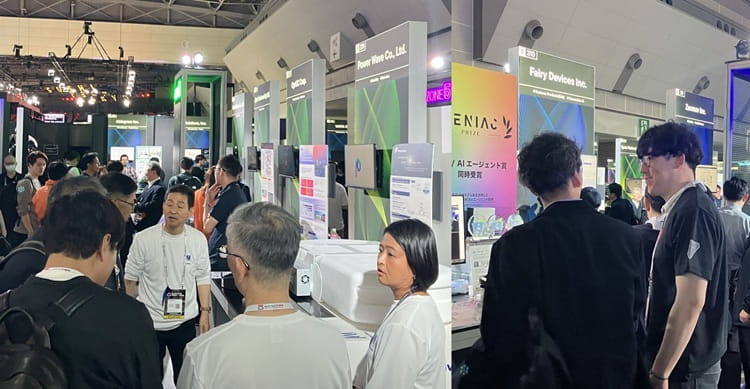
MACAU, June 3, 2026 – For decades, Japan was known globally for its industrial giants, household brands and corporate stability. Entrepreneurship, venture capital and startup culture existed, but largely in the shadow of the country’s powerful conglomerates.
Today, that is changing. Speaking with AsiaBizToday on the sidelines of BEYOND Expo 2026 in Macau, Akio Tanaka, Partner at Headline VC and one of Japan’s most prominent venture capital investors, outlined why Japan may be entering one of the most significant startup transformations in its modern history.
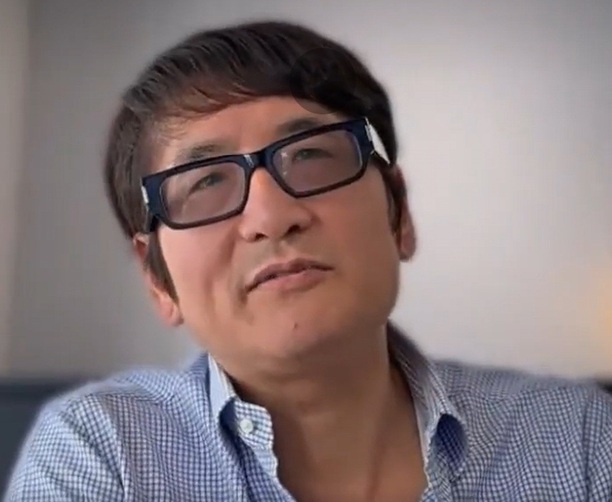
According to Tanaka, the shift is being driven by a combination of economic realities, cultural change, government support and a rapidly maturing venture capital ecosystem.
The Greater Bay Area and Asia’s New Innovation Geography
Tanaka was attending BEYOND Expo, which he believes has evolved into far more than a technology conference for Macau. “This is not a Macau conference. This is not a Hong Kong conference. This is not even a Shenzhen conference. This is actually a Greater Bay Area conference,” he said.
While the concept of China’s Greater Bay Area was initially viewed by many as a transportation and infrastructure initiative, Tanaka believes it has emerged as one of the world’s most important economic development zones.
Combining Hong Kong’s financial capabilities, Macau’s tourism and entertainment strengths, and Shenzhen’s position as a global manufacturing and technology powerhouse has created an economic ecosystem that increasingly rivals leading innovation hubs worldwide.
“When you combine these, you suddenly have an economy that can rival California,” he noted. For Tanaka, BEYOND Expo serves as a window through which international investors, founders and business leaders can better understand the rapid technological advances emerging from the region, particularly in robotics, electric vehicles and advanced manufacturing.
The End of Japan’s Lost Decades?
Japan’s startup awakening comes after what many economists describe as three decades of relative stagnation following the collapse of the country’s asset bubble in the early 1990s. “We used to have a very booming economy in the 1980s,” said Tanaka. “From the 1990s for the next 30 years, we had a very slow-growing economy.”
Yet beneath that seemingly stagnant surface, important structural changes were taking place. The dominance of large corporations gradually weakened, creating opportunities for smaller, more agile businesses to emerge.
“New openings emerged which allowed startups and new businesses to flourish and even challenge some incumbents,” he said. Perhaps more importantly, public attitudes towards entrepreneurship began to evolve.
Tanaka recalled how joining a startup two decades ago was often viewed negatively in Japan. Graduates were expected to pursue careers at prestigious corporations such as Sony, Mitsubishi or Panasonic, where lifetime employment was considered the norm.
“If you joined a startup instead of a large company, people thought you had failed,” he said. That perception has undergone a dramatic reversal.
Startups Become Mainstream
One of the most significant indicators of cultural change, according to Tanaka, is that venture-backed startups are now offering salaries that exceed those of many large corporations. “Right after COVID, we found that the average salary of VC-funded startups exceeded the average salary of Japan’s equivalent of Fortune 500 companies,” he said.
As a result, startups have moved from the fringes of Japanese society into the mainstream. The shift is even reflected in popular culture.
“Twenty years ago, Japanese television dramas were always set inside large corporations,” Tanaka explained. “Today, we have popular TV dramas featuring startups.” The evolution reflects a broader acceptance of entrepreneurship as a viable and desirable career path.
Government Finally Backs Innovation
Another key driver of change has been the Japanese government’s growing recognition that startups play a critical role in economic competitiveness. For many years, policy support was largely focused on established corporations.
However, as neighbouring markets such as South Korea, Singapore and Southeast Asia began producing more unicorns and venture-backed success stories, policymakers started to reassess their approach.
“The government realised that while other countries were producing more unicorns, Japan had neglected the needs of startups,” Tanaka said. Over the past decade, policymakers have introduced initiatives aimed at improving access to capital, creating fairer business conditions and opening procurement opportunities to younger companies.
One notable example is defence procurement. Historically, defence contracts were almost exclusively awarded to large industrial groups. Today, certain areas of procurement are becoming accessible to startups, particularly those developing specialised technologies.
The result is a significantly more supportive environment for innovation than existed even a decade ago.
A More Founder-Friendly Financial System
Perhaps one of the most important changes for entrepreneurs has been the reform of Japan’s lending system. Historically, startup founders were often required to provide personal guarantees for business loans. Failure could result in personal bankruptcy, loss of social standing and severe restrictions on future borrowing.
“Nobody wanted to become an entrepreneur under those conditions,” Tanaka observed. That situation has changed significantly.
Banks are increasingly offering venture debt without requiring founders to mortgage their homes or provide personal guarantees, reducing one of the biggest barriers to entrepreneurship.
For many founders, the change has fundamentally altered the risk-reward equation associated with launching a startup. Alongside policy reforms, Japan’s venture capital industry has undergone substantial development.
Twenty-five years ago, the country had only a small number of professional venture investors. Today, it boasts a multi-layered ecosystem comprising angel investors, institutional venture capital firms and corporate venture capital funds.
Japan has also produced a growing number of successful entrepreneurs who have exited businesses and are now reinvesting their capital into the next generation of founders. “We finally have a pool of angel investors who are former entrepreneurs investing their own money into startups,” Tanaka said.
Meanwhile, corporate venture capital has become a major force in the ecosystem. “I believe the majority of public companies in Japan now have their own VC departments,” he noted.
This growing pool of capital is helping address funding needs across the startup lifecycle, particularly at seed and early-growth stages.
The Next Frontier: Family Offices and Global Connections
While the ecosystem has matured considerably, Tanaka believes there is still room for further development. One area that remains underdeveloped compared with Singapore and Hong Kong is the family office sector.
Japan has several prominent family offices linked to major entrepreneurial families and technology founders, but the segment remains relatively small. “I think we need another five to ten years before family offices become a significant source of startup capital,” he said.
At the same time, Tanaka stressed that Japan’s future success will depend on its ability to strengthen international connections. “I don’t think Japan can succeed alone,” he said. “We need regional ties within Asia, but also connections to Europe and the United States.”
For investors, entrepreneurs and global technology companies, the message is increasingly clear: Japan is no longer simply a market dominated by large corporations. A new generation of founders, investors and policymakers is helping reshape the country’s innovation landscape.
The transformation may have arrived later than in Silicon Valley or parts of China, but Tanaka believes Japan is finally entering its startup era. As capital, talent and government support continue to align, the country is positioning itself not merely as a participant in Asia’s innovation economy, but as one of its emerging growth engines.
And for founders looking to expand across Asia, Japan may become one of the region’s most important markets over the coming decade.