

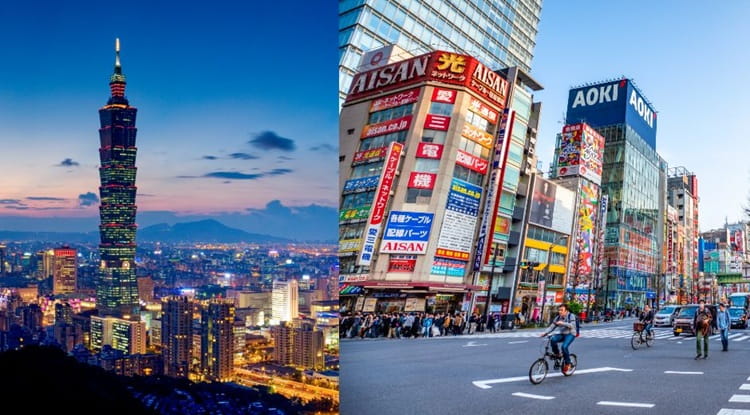
In an Asia Insights conversation at IVS Kyoto 2026, the cross-border startup advisor explains why Taiwan’s speed in commercialisation and Japan’s research depth can create a powerful regional innovation bridge
KYOTO, Japan, July 5, 2026 — For Kazumi Otani, Asia’s startup ecosystem does not need more isolated innovation silos. It needs switching hubs — people, platforms and institutions that can connect technologies, markets, cultures, universities, enterprises and capital across borders.
Speaking to AsiaBizToday on the sidelines of IVS Kyoto 2026, Otani described her mission as that of a “switching hub of the startup ecosystem” and a “catalyst of chemical reactions” — helping break down the geographic walls and cultural gaps that can slow down innovation across Asia.
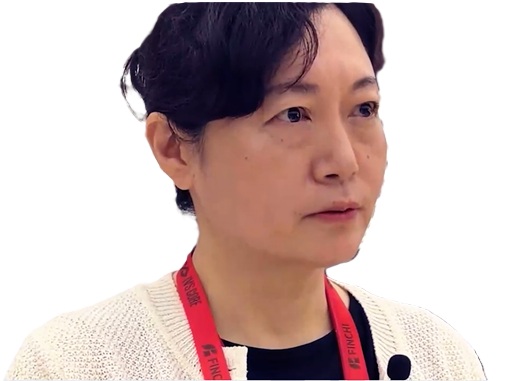
Her focus is especially clear: building stronger bridges between Taiwan and Japan.
Otani works across accelerators, venture capital networks, deeptech startups, open innovation programmes and business development roles. At IVS Kyoto 2026, she was supporting the Japan business development of a Taiwanese startup, while also using the event to connect with Japanese universities, IP offices, innovation programmes and enterprise partners.
Her wider ambition is to help connect Taiwan’s world-class semiconductor and manufacturing industries, high-velocity prototyping culture and global mindset with Japan’s enterprise market, capital base, deeptech research, university labs and industrial credibility.
“For cross-border collaboration, I can help fill in the gaps — business gaps, business culture gaps, startup and enterprise gaps, or industry gaps,” she said.
That ability to operate across gaps defines her work. Otani is not simply helping startups enter new markets. She is trying to create the conditions for deeper Taiwan-Japan collaboration in AI, manufacturing, construction, agriculture, mobility, deeptech and university-linked commercialisation.
A startup bridge-builder across Asia
Otani’s work cuts across several roles. She is associated with accelerators and venture platforms such as Mosaic Venture Lab, which has a presence across San Francisco, Taipei and Germany, and EMERGE Global Acceleration Program, which operates across Hong Kong, Taichung and Osaka.
Her work typically centres on startups, open innovation and enterprise collaboration across Asia. She supports companies looking to internationalise and helps connect founders with the right markets, partners, mentors and institutions.
At IVS Kyoto, this meant helping Taiwanese startups engage with Japan’s business ecosystem. More broadly, it means acting as a cultural and commercial translator between ecosystems that are technologically sophisticated but operate differently.
Taiwan and Japan are a natural focus for that work. Taiwan brings speed, manufacturing agility, semiconductor strength, hardware-software integration and a market mindset shaped by the need to go global early. Japan brings research depth, large enterprises, patient capital, industrial heritage, universities and a trusted global reputation in engineering and quality.
The problem is that these strengths do not automatically connect. Otani’s role is to help create those connections.
Innovation for the greatest happiness
Otani’s motto is “innovations for the greatest happiness for the greatest number.” For her, this philosophy shapes the kinds of technologies and founders she chooses to support. She is not looking only for fashionable technologies or products aimed at elite niches. She is interested in innovations that can democratise prosperity and solve large social problems.
That explains her work with startups in construction technology, agritech, mobility and deeptech. She serves as Chief Investment Officer at 3DCPGENAI, a construction technology startup focused on the future of construction. In her view, the company’s work points toward autonomous, negative-carbon and affordable housing solutions that can address labour shortages, urbanisation and the need for more sustainable infrastructure.
She is also a strategic advisor to KimPax, an agritech startup based in Tokyo. The company’s work, as Otani frames it, is linked to the urgent need to preserve agricultural knowledge and food security in ageing societies.
The common thread is clear: Otani is drawn to deeptech startups that can move beyond “innovation for innovation’s sake” and address structural problems in physical industries.
“AI will eat up white-collar roles very soon,” she said during the conversation. “So there should be opportunities for younger people to get into this kind of so-called blue-collar industries, like construction.”
That comment reflects one of her core beliefs. The future of innovation is not only in digital interfaces or software workflows. It is also in applying AI, automation and physical technologies to industries such as construction, agriculture, mobility and care — sectors that are essential, labour-intensive and often underserved by venture-backed innovation.
Making deeptech useful in the real world
For Otani, deeptech becomes meaningful when it engages with “unsexy” legacy industries and transforms physical infrastructure. 3DCPGENAI is one example. Rather than positioning 3D printing as a novelty, Otani sees its value in a broader Construction-as-a-Service model that can combine BIM modelling, physical AI and autonomous 3D printing to address labour scarcity and the carbon footprint of global construction.
KimPax offers another example. Japan’s agricultural sector faces a severe demographic challenge, with many farmers already elderly. Otani sees an opportunity for AI to capture implicit, generational farming knowledge before it disappears.

She describes KimPax’s approach as a form of agricultural knowledge intelligence — digitising, preserving and applying the hard-earned expertise of older farmers in ways that can support future food systems.
This is where her philosophy becomes practical. Technology should not merely create new efficiencies for existing elites. It should preserve knowledge, generate new types of work, support ageing societies, and create opportunities in industries that younger generations may otherwise overlook.
Otani also mentioned her support for Moveez, a robo-taxi startup spun out from Kanazawa University. She sees mobility innovation as another way to address ageing society needs, particularly by helping older people travel to hospitals, shopping malls and other essential locations.
Across these examples, Otani’s interest is not in technology as spectacle. It is in technology as infrastructure for social resilience.
Taiwan Speed and Japan’s deep research base
A central theme of Otani’s work is the difference between how Taiwan and Japan move. Taiwanese startups, she said, bring a “Day One global mindset” because Taiwan’s domestic market is relatively small. Founders cannot afford to think only locally. Global expansion has to be built into the company’s mindset from the beginning.
They also bring what she calls “Taiwan Speed” — a high-velocity product development and iteration culture. Combined with Taiwan’s strength in hardware-software integration, this gives Taiwanese startups a distinct advantage in industries where AI, IoT, semiconductors, devices and manufacturing must come together.
“Taiwan is very strong in AI, especially applying AI technologies to manufacturing,” Otani said. “Taiwan is one of the top global countries of semiconductors.”
Japan, by contrast, has strong basic research, university laboratories and enterprise laboratories. It has deep industrial knowledge and established corporate infrastructure. But Otani believes Japan often moves too slowly in applying core technologies to business.
“Japan has very good, strong basic research and university labs and enterprise labs,” she said. “But it seems like Japanese enterprises and those top universities are very late applying those core technologies to business.”
This is where she sees the complementarity. “Taiwan knows how to accelerate the innovation cycle,” she said. “Taiwan-Japan cooperation will help more business opportunities and innovation go to global markets.”
The idea of a Taiwan-Japan Deeptech Corridor
Otani’s most ambitious project is the creation of a Taiwan-Japan Deeptech Corridor. She does not see the corridor as a single-track initiative. Instead, she describes it as a multi-dimensional highway designed to blend the asymmetric strengths of both ecosystems.
The first pillar is commercialised pilots and corporate partnerships. Otani wants to pair Taiwan’s agile AI and hardware stacks with Japan’s industrial giants to create real-world pilot projects, rather than leaving collaboration at the level of networking or discussion.
The second pillar is university collaboration and IP mobility. Japan has world-class research, but its university-linked technologies often need faster paths to commercialisation. Taiwan can provide manufacturing architecture, applied engineering capacity and speed-to-market discipline.
The third pillar is bilateral capital and talent flows. Otani wants startups on both sides to have structured access to enterprise capital, investment opportunities and technical talent.
She is also working on a stealth initiative with a non-profit and university fund in Taiwan to bring a top-tier US technology university presence to Tokyo, with MIT as the aspiration. Since last year, she said she has been engaging policy makers, government officers, Sloan School alumni and industry stakeholders around this idea.
Her ambition is bold: create a deeper platform where global universities, Taiwan’s manufacturing and startup ecosystem, and Japan’s enterprises and research institutions can work together.
In five years, she hopes to establish a non-profit organisation to help Taiwan and Japan industries collaborate more systematically. “Five years from now, I want to set up an organisation, a non-profit organisation, to help Taiwan industries and Japan industries get together and work together,” she said.
The “Trust Tax” foreign startups face in Japan
While Otani is optimistic about Taiwan-Japan collaboration, she is also realistic about the difficulties foreign startups face when entering Japan. She describes the first barrier as the “Trust Tax.”
For foreign deeptech and B2B startups, entering Japan requires more than product readiness. It requires credibility, compliance, local validation and patient relationship-building.
The challenges are practical. Startups working in AI-driven payment, purchase or support economy infrastructure, for example, must navigate regulatory and trust requirements. They may need to demonstrate compliance with standards such as PCI DSS, ISO certifications and local Japanese regulatory expectations.
The second challenge is Japan’s enterprise sales cycle. B2B procurement often requires multiple layers of corporate consensus, internal approvals and proof-of-concept processes. For foreign startups operating on limited runway, this can be difficult.
The third challenge is the need for local champions. Otani is clear that foreign B2B startups cannot scale in Japan remotely through Zoom alone. They need high-status local advisors, strategic partners or joint-venture allies who can validate their credibility in Japanese language and corporate context.
This is where bridge-builders become essential. Japan is open to innovation, but trust must be earned through the right local structures.
Why IVS Kyoto matters
Otani’s participation in IVS Kyoto 2026 reflects the event’s growing role as a regional startup platform. For her, IVS was not only a place to meet founders and investors. It was also an opportunity to connect with Japanese university-linked innovation stakeholders, including Kyoto University’s IP office and programmes associated with Kyoto University of Advanced Science.
These conversations are important because Otani’s corridor-building ambition depends on universities, IP offices, enterprises and accelerators working together.
Deeptech cannot scale through pitch events alone. It requires research, patents, commercial pilots, enterprise buyers, specialised capital, regulatory understanding and market-entry support.
IVS Kyoto provided a useful meeting ground for those conversations. The event also reflected Japan’s wider attempt to become more open to global startup collaboration. For Taiwanese startups, Japan offers enterprise customers, industrial partners, capital and credibility. For Japanese enterprises and universities, Taiwan offers speed, manufacturing capability and a gateway to global hardware and AI ecosystems.
Taiwan as a platform for Japanese startups
Otani also believes Taiwan is open to international startups and investment, including from Japan. “They are welcoming investment to Taiwan. They are welcoming startups,” she said. “Japanese startups or enterprises can come to Taiwan.”
For Japanese companies, Taiwan can offer a practical landing point for internationalisation. It is close to Japan, deeply connected to global manufacturing and semiconductors, and home to a startup ecosystem that is more accustomed to globalisation from the beginning.
This makes Taiwan not only a market, but also a strategic partner. For Japanese startups that want to expand beyond the domestic market, Taiwan can serve as a testing ground, manufacturing partner, talent source and bridge into wider global supply chains.
For Taiwanese startups, Japan offers the scale and credibility of a major enterprise market. The opportunity lies in making that exchange more structured.
Building Asia’s next deeptech bridge
Kazumi Otani’s work points to a larger shift in Asia’s innovation landscape. The next phase of startup growth in the region will not be defined only by individual founders, national ecosystems or venture capital cycles. It will increasingly depend on corridors — cross-border channels that connect research, manufacturing, capital, talent, enterprises and markets.
Taiwan and Japan are especially well positioned to build such a corridor. Japan brings research depth, enterprise scale, engineering discipline, industrial credibility and long-term trust. Taiwan brings semiconductor leadership, manufacturing agility, AI application strength, fast prototyping and a Day One global mindset.
The challenge is execution. That is why Otani sees herself as a switching hub and catalyst. Her work is to make the right connections happen across business cultures, industries and institutions.
At IVS Kyoto 2026, her message was clear: Asia does not lack innovation. What it needs are better bridges that allow innovation to move faster from research to business, from local markets to global scale, and from technology to social impact.
For Otani, the Taiwan-Japan Deeptech Corridor is one such bridge. If built well, it could help create a new model of Asian deeptech growth — one that combines Japan’s research strength, Taiwan’s commercial speed and a shared ambition to take innovation to global markets while serving the greatest happiness for the greatest number.