
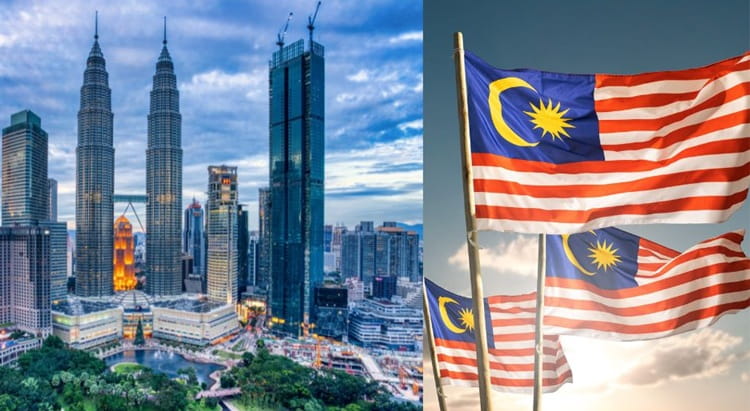
As geopolitical rifts and tariff wars force companies to rethink where they manufacture and invest, Malaysia is making its case as the connector economy Southeast Asia needs.
KUALA LUMPUR, July 22, 2026 – Global supply chains are being redrawn in real time, and Malaysia wants to be the country businesses land on when they redraw them. That was the message from Malaysian trade leaders following last month’s 56th Annual World Trade Center Association (WTCA) Global Business Forum (GBF), where more than 500 business and trade executives from 53 countries gathered in Philadelphia to debate how commerce survives — and grows — in an era of fragmentation.
The forum’s theme, “Historic Foundations, Future Collaborations: Cultivating New Business Frontiers,” set the tone for a broader argument now gaining traction across ASEAN: in a world where tariffs shift by the month and supply chains are being reshored, friend-shored, or diversified outright, the winners will be markets that offer not just cost advantages but trust, connectivity, and staying power.
Malaysia is betting it can be one of them.
Why Malaysia, Why Now
ASEAN’s pitch to global business has always rested on scale — more than 680 million people and some of the world’s fastest-growing consumer markets. But scale alone no longer closes deals. Companies weighing where to build a factory, open a logistics hub, or route a supply chain are increasingly screening for stability and connectivity first.
Malaysia’s case rests on geography and infrastructure. Sitting astride major East-West shipping lanes, the country functions as a natural link between Northeast Asia, Southeast Asia, the Middle East and Europe. That position is backed by an established manufacturing base, mature port and logistics networks, and a digital economy that has grown quickly enough to attract data center and tech investment alongside traditional manufacturing.
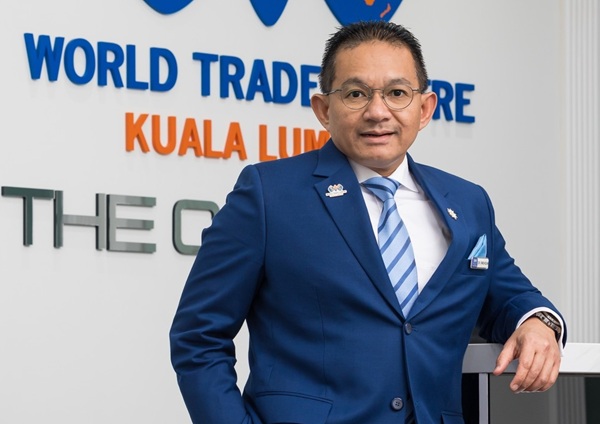
Dato’ Sri Dr. Haji Irmohizam Ibrahim, Group Managing Director of World Trade Centre Kuala Lumpur (WTCKL), framed the moment bluntly: “As the global trading landscape continues to evolve, businesses are increasingly seeking partners and locations that offer stability, connectivity and long-term confidence. Through the WTCA network, we are committed to strengthening international partnerships that facilitate trade and create long-term opportunities for businesses on a global scale.”
He went further on what today’s businesses actually need: “Today’s global business environment demands more than market access and logistics capabilities. It requires trust, connectivity and the ability to adapt to rapidly changing geopolitical realities. Malaysia’s strategic location, strong trade fundamentals and longstanding relationships across multiple regions position us to play an increasingly crucial role in shaping the future of ASEAN trade corridors.”
Trust as a Trade Strategy
The WTCA’s 24th annual WTCA Day, held during the Philadelphia forum, reinforced a theme that has become central to the association’s messaging: in a fragmented global economy, business relationships — not just trade agreements — determine who can absorb shocks and who can seize new openings. For a network of more than 300 member organizations across nearly 100 countries, that argument doubles as a value proposition for the World Trade Center brand itself.
It also points to a harder-edged reality underlying the diplomatic language: businesses are hedging. Supply chain diversification, once a defensive afterthought, has become an active strategy, and companies are looking for markets that can absorb new manufacturing and investment without the political risk attached to other options.
To help business leaders and policymakers navigate that risk, WTCA and the Hague Centre for Strategic Studies jointly developed the Geopolitical Annual Trade Risk Index (GATRI), presented during the forum’s 2026 Geopolitical Update. The index is designed to translate geopolitical developments — trade disputes, sanctions regimes, regional conflicts — into a framework businesses can actually use when deciding where to commit capital.
Vietnam Gets the Baton Next
The WTCA network’s momentum won’t stay parked in Kuala Lumpur or Philadelphia. The 57th annual WTCA Global Business Forum has been awarded to World Trade Center Binh Duong New City (WTC BDNC), running April 4–7, 2027, in Vietnam. Organizers say next year’s forum will spotlight Vietnam’s own rise as a manufacturing and innovation hub — a reminder that Malaysia isn’t the only ASEAN economy angling for a bigger slice of diversifying global trade.
That regional competition may be the real subtext here. As multinational companies decide how to spread manufacturing and investment risk across Southeast Asia, Malaysia, Vietnam and their neighbors are each making overlapping pitches: stable governance, capable infrastructure, and — increasingly — a seat inside trusted international business networks like WTCA’s.
The Bigger Picture
None of this happens in a vacuum. The push to position Malaysia as ASEAN’s trade and investment anchor comes as companies worldwide continue adjusting to a business environment shaped by tariff volatility, reshoring pressure in the US and Europe, and heightened scrutiny of China-dependent supply chains. For ASEAN as a bloc, that volatility has been a net positive, drawing manufacturing and investment that might once have gone elsewhere.
Malaysia’s argument is that it can turn that regional tailwind into a durable advantage — not by competing purely on cost, but by offering what WTCKL’s Irmohizam calls a “trusted bridge” between global enterprises and Southeast Asia’s growth story. Whether that positioning translates into sustained investment flows will likely be tested well before Vietnam hosts the WTCA forum in 2027.