

GSE 2026 Producer Ryusuke Komura on building a distinct innovation identity beyond Tokyo
By Vishwesh Iyer
OSAKA, Japan, September 3: As Japan looks to move its startup ecosystem from policy momentum to global scale, Global Startup Expo 2026 in Osaka is being positioned as a platform where deep tech, industry collaboration, international capital and regional innovation ecosystems can come together.
Speaking to AsiaBizToday for the Asia Insights series, Ryusuke Komura, Producer of Global Startup Expo 2026 and Executive Director at Venture Café Tokyo, said the event, being held in Osaka from October 5 to 7, will reflect an important shift in how Japan is approaching startups. The country’s startup support agenda, he said, has moved from general startup promotion towards a sharper focus on deep tech.
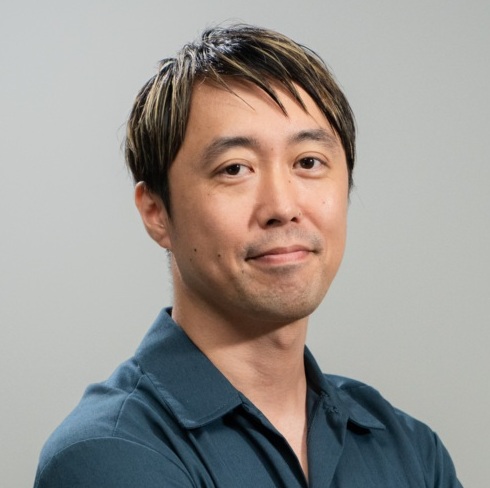
“The primary focus of the Global Startup Expo is actually deep tech,” Komura said, explaining that Japan’s startup ecosystem has evolved over the past decade with growing government support, but is now entering a phase where deep tech companies need more specialised forms of support.
According to Komura, deep tech startups cannot be supported in the same way as software-led or consumer internet startups. They require different capital structures, closer links with industry and a stronger ability to move from research to revenue.
“In one word, I would say it is industry,” he said, referring to what deep tech companies most need. Such startups need significant capital to grow, but they also need collaboration with established industries if they are to generate revenue and build sustainable businesses.
Why Deep Tech Needs Industry and Global Capital
Komura said Japan’s startup funding environment has grown significantly compared with a decade ago but remains smaller than markets such as the United States. That means Japan needs to attract overseas capital if it wants to accelerate the growth of deep tech companies.
This international capital question is one of the reasons Global Startup Expo is being designed as a global-facing event. Komura said GSE is responding to the broader global shift in how deep tech ecosystems are supported, with Japan looking to collaborate with foreign ecosystems and attract foreign capital.
But capital alone is not enough. For deep tech startups, commercialisation remains the bigger challenge.

Asked whether Japan’s key gaps are capital, entrepreneurial culture, commercialisation, talent or international market access, Komura said the answer is “everything”, but identified commercialisation as the most important gap, especially in deep tech.
Deep tech startups, he said, need an ecosystem that can orchestrate startups, venture capital, policymakers and existing industries. While Japan’s startup movement has become more visible, Komura argued that it still needs to move closer to the mainstream of the economy and win deeper collaboration from established industries.
This is where GSE’s positioning becomes important. It is not only a showcase of startups, but a mechanism to bring Japanese deep tech companies into contact with the capital, customers, corporations and international networks they need to scale.
Japan’s Structural Shift
Komura pushed back against simple explanations that attribute Japan’s startup challenges only to culture or mindset. He argued that Japan’s earlier economic structure did not require the same level of disruptive innovation.
Japan, he said, had a large domestic market, efficient infrastructure and legacy technologies that worked well. Its transportation systems, consumer infrastructure and domestic demand allowed the economy to function without the same pressure to create high-impact startups.
But that structure is changing. Japan’s population is declining, global supply chains are being re-engineered, and even startups and entrepreneurs now need to consider geopolitical factors. These shifts, Komura said, mark a tipping point for Japan to look again at foreign markets and pursue innovation opportunities more aggressively.
He also noted that Japanese entrepreneurs often begin by focusing on the domestic market and seeking revenue at home. While that may be realistic in the early stages, Komura said founders increasingly need to think globally from the outset.
“They need to be born global,” he said.
Venture Café’s Role in Building Connections
Komura’s perspective on the startup ecosystem is shaped by his work with Venture Café Tokyo, which was founded in 2018. He described Venture Café’s mission as “connecting innovators to make things happen”, based on the belief that isolation is the enemy of innovation.
He said connections are a critical factor in ecosystem growth. For a startup ecosystem to thrive, it needs dense networks across founders, talent, investors, corporates, institutions and policymakers. Venture Café Tokyo, he said, has played a central role in Tokyo’s innovation ecosystem since its establishment.
Komura linked the Tokyo effort to Venture Café’s origins in Boston, where the organisation and its sibling entity CIC are seen as having played an important role in the growth of Boston’s innovation ecosystem, particularly in fields such as robotics, life sciences and biotechnology.
The Tokyo model, he said, adapted that Boston methodology to Japan and has contributed to the growth of entrepreneurial culture in Tokyo. One example he cited was a founder who first came to Venture Café as a solo entrepreneur, found collaborators, gained exposure through a panel session, attracted his first capital investment from a corporate participant and later won business through connections formed within the Venture Café and CIC community.
For Komura, this illustrates why community infrastructure matters. A strong ecosystem does not only provide inspiration. It can provide personal connections, capital access and market access.
Japanese Corporates Are Changing, But Still Learning
Large Japanese corporations have historically been central to the country’s industrial strength. The question now is whether they can also become engines of startup collaboration.
Komura said Japanese corporations are changing and increasingly recognise startups as an efficient source of innovation. Building breakthrough innovation entirely inside a large company can require enormous capital and organisational commitment. By contrast, startups can use market capital and external networks to pursue ambitious new technologies.
He cited KDDI as one example of a Japanese corporation that has been effective in using startups as a source of innovation. But he added that many Japanese companies are still in a learning phase.
One of the biggest challenges, he said, is corporate culture. Traditional Japanese employment models and long tenures have created dense company cultures that can make external collaboration and post-merger integration more difficult. However, talent mobility is improving, and companies are increasingly realising the importance of startups as partners in innovation.
This evolution is central to GSE’s relevance. If Japan’s deep tech startups are to scale, they need not only government support and venture capital, but also access to the country’s industrial giants.
Why International Startups Are Looking at Japan
Komura said Japan is also seeing growing interest from international startups. He has received delegations from around the world through Venture Café, and said global interest in Japan has surged since around 2020 or 2021, partly because of changes in the geopolitical environment.
He sees Japan as one of the important “middle powers” with which countries and companies increasingly want to collaborate. European ecosystems, for example, are showing more interest in working with Japan, while Korean entrepreneurs are also entering the Japanese market in growing numbers.
Korea’s domestic market is smaller than Japan’s, making international expansion more necessary for Korean startups. Japan’s proximity, cultural familiarity and larger market make it an attractive destination. Komura said similar interest can also be seen from Taiwan.
For deep tech and B2B startups, Japan’s appeal is particularly strong because of its large industrial conglomerates, including companies such as Toyota, Panasonic and Sony. Many international startups want to collaborate or do business with these corporations.
“This is the opportunity. This is the event. Japan is changing,” Komura said of GSE’s role in connecting these players.
Osaka and the Need for Multiple Startup Hubs
While Tokyo dominates the international conversation around Japanese startups, Komura believes Japan’s future innovation strength must be more distributed.
He compared Japan with the United States, where multiple strong ecosystems exist across Boston, Silicon Valley, New York, Texas, Seattle and other regions. Boston is known for life sciences, biotechnology and robotics; Silicon Valley for technology; New York for finance and startups; and other cities for their own clusters.
Komura said he wants Japan to develop a future where multiple powerful ecosystems coexist. Today, a large share of startup capital in Japan is concentrated in the Tokyo area, but he would like to see Osaka, Nagoya, Fukuoka and other cities also attract capital and recognition.
Osaka and the wider Kansai region have clear advantages. Komura pointed to Kansai’s concentration of universities, research institutes, advanced manufacturing capabilities and major companies, with strengths in life sciences, materials manufacturing, quantum and advanced technologies.
GSE, he said, has a dual character. It is a national event supported by Japan’s national government, but also an Osaka event supported by the local government. One aspect is national and global; the other is local and Osaka-focused.
Through the event, Komura said organisers want to create opportunities for Japan to collaborate with global society, while also showcasing what the future of Osaka and Japan could look like.
A New Generation of Founders
Komura is also encouraged by changing attitudes among young people in Japan. Compared with a decade ago, he said entrepreneurial culture has improved significantly. Graduates from top universities, including the University of Tokyo, are increasingly choosing to work for startups or start companies as their first career step.
Later in the conversation, he returned to this point, saying the culture has changed substantially and younger generations are enjoying the momentum created by government growth strategy and startup-focused policy.
GSE’s content will align with Japan’s broader growth strategy, with a focus on six areas, including semiconductors, AI, life sciences, AI robotics and other deep tech fields.
Japan’s Unicorn Gap
Komura also addressed the question of unicorns. By his definition, unicorns are private companies valued at more than US$1 billion. He said Japan already has more than 10 or 20 unicorns, depending on exchange rates, with examples across SaaS, media and AI, including companies such as SmartHR, SmartNews and Preferred Networks.
However, he said Japan’s share of global unicorns remains small compared with the size of its economy. Japan accounts for only around 1 percent of global unicorns, while its share of global GDP is higher, creating a gap that represents both a weakness and an opportunity.
This gap captures the larger challenge facing Japan’s startup ecosystem. The country has industrial depth, research strength, engineering talent and corporate scale. What it needs now is stronger commercialisation, global ambition, deeper startup-industry collaboration and more internationally connected capital.
The Larger Significance of GSE 2026
Global Startup Expo 2026 comes at a moment when Japan’s startup ecosystem is seeking to define its next phase. Over the past decade, Japan has built momentum around entrepreneurship. But the next stage, especially in deep tech, will require more than founders and funding.
It will require industry participation, global market access, foreign capital, regional ecosystems, policy alignment and a cultural shift that treats startups not as peripheral actors, but as central to Japan’s future growth.
For Komura, GSE is designed to sit at that intersection.
It is a platform for Japan’s deep tech startups to meet the world. It is also a platform for the world’s startups to engage with Japan’s corporations, research institutions and industrial clusters. And by placing the event in Osaka, it reinforces the idea that Japan’s innovation future should not be concentrated only in Tokyo.
As Japan faces demographic change, global supply chain realignment and renewed pressure to innovate, GSE 2026 may become more than a startup event. It could become one of the stages on which Japan shows how it intends to build its next growth economy.