

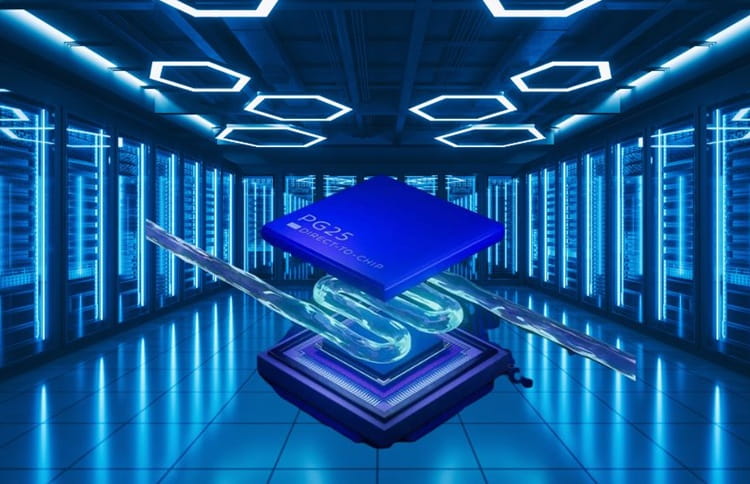
SINGAPORE, October 3, 2026: The rapid rise of artificial intelligence and high-performance computing is forcing data centre operators to rethink cooling infrastructure from the ground up, pushing liquid cooling from a specialist technology towards an increasingly critical part of next-generation facility design.
Against that backdrop, Castrol has launched Castrol CORE, an integrated thermal management offer that marks a significant shift from supplying cooling fluids towards providing customers with a broader, service-led solution spanning design, technology, testing, deployment, operations and lifecycle support.
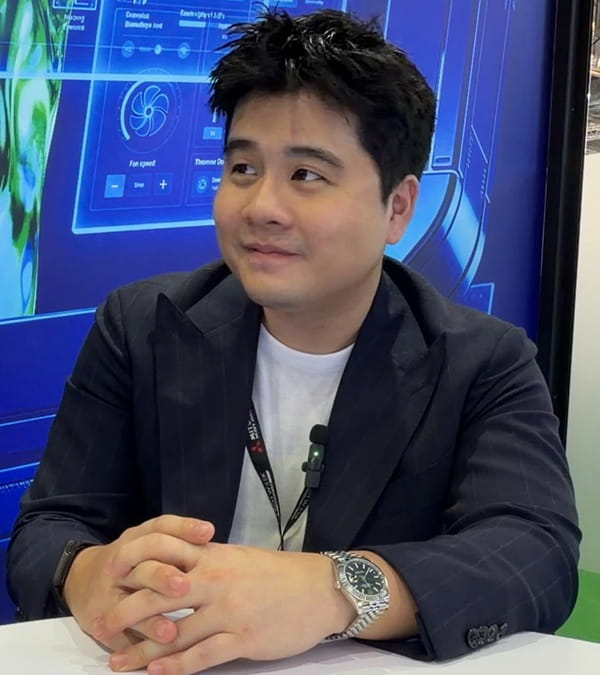
The launch was announced at Data Centre World Asia during Tech Week Singapore, where Peter Huang, Global President, Data Centre & Thermal Management at Castrol, spoke to AsiaBizToday as part of the Asia Insights series.
Huang said the changing nature of computing infrastructure is creating an entirely new set of requirements for data centre operators.
“This is my 10th year,” Huang said of the Singapore event. “Ten years ago, it was one floor. This year, three floors.” The expansion, he said, reflects the broader growth of the data centre ecosystem and the increasing focus on what the next phase of core infrastructure will look like.
For Castrol, the response is to move beyond its traditional role as a fluid supplier.
From Cooling Product to Thermal Management Platform
Castrol CORE brings together cooling technology, infrastructure partners, design capabilities, testing and lifecycle services under a more integrated model.
Instead of requiring data centre operators to coordinate separately with multiple suppliers, Castrol wants to offer a single point of contact across more of the thermal management value chain.
The company says the shift follows its own customer research, which identified growing demand for experienced partners capable of simplifying increasingly complex cooling requirements. The research also highlighted supply chain constraints and the potentially high cost of cooling failures as major concerns for operators.
Huang described the change as an expansion of Castrol’s existing capabilities rather than an abandonment of its core expertise.
“Fluid coolant is still our core,” he said. “But we are expanding to a whole ecosystem of system-level liquid coolant.”
Castrol CORE includes a regional design team in Asia Pacific, hardware and system partners, OEM relationships and localised services such as flushing, filtration and cleaning.
“We don’t want to be a traditional vendor,” Huang said. “We want to be a system-level ecosystem orchestrator for our customers.”
That approach represents an important change in how suppliers may need to work with data centre operators.
As cooling systems become increasingly connected with servers, piping, electrical systems and infrastructure design, the distinction between equipment supplier and infrastructure partner is becoming less clear.
Castrol’s proposition is that operators increasingly want fewer points of coordination and greater accountability from companies involved in critical thermal infrastructure.
Design Is Moving Much Earlier in the Process
One of the most important additions under Castrol CORE is an increased focus on early-stage design.
The company says it now intends to engage customers from the development stage of data centre infrastructure rather than becoming involved primarily when coolant or deployment support is required.
That matters because AI infrastructure is changing the thermal profile of data centres.
Huang said traditional cooling architectures were built for a world in which thermal management could be treated relatively separately from electrical and server design.
That is no longer the case. “We have never seen a system-level design right now in data centre that combines both mechanical and electrical design,” he said. “Right now, everything is connected.”
Piping connects directly into server infrastructure, while heat management increasingly affects equipment design, power systems and overall facility architecture.
The result is that cooling can no longer simply be added after the rest of the infrastructure has been specified.
Liquid Cooling Is Becoming a Requirement
The main driver is the rapidly increasing power density of AI computing. Huang pointed to systems operating at around 240 to 250 kilowatts per rack, levels that make conventional air cooling increasingly difficult.
“Liquid cooling is definitely here to stay,” he said. As chip manufacturers continue to push computing density higher, Huang believes system-level requirements are turning liquid cooling from an optional technology into an increasingly necessary one.
“Liquid cooling is not an option anymore. It’s a must.” This is also why Castrol is seeking to position CORE around more than the coolant itself.
The company says its cooling technologies have been tested and validated with leading chip and hardware manufacturers including NVIDIA and Intel, giving it a technology foundation designed to keep pace with changing AI hardware.
Castrol CORE is also backed by testing and technology facilities in the UK, US, Germany and China, joint laboratories across Asia and a service network spanning more than 150 countries.
The aim is to extend testing, monitoring, validation and maintenance throughout the lifetime of a facility rather than treating cooling as a one-off installation.
China Proof-of-Concept Tests the Model
Castrol has already begun testing the integrated approach in Asia Pacific. The company says it has completed a proof-of-concept programme with a leading data centre operator in China and is now working with global operators on additional proof-of-concept projects.
The Asia-Pacific regional design team is intended to give Castrol local capability in a market where infrastructure requirements can vary significantly between countries.
That local dimension is likely to become increasingly important as data centre development accelerates across Southeast Asia, China, Japan, Australia and other markets.
The bigger question is how far current liquid cooling technology can stretch as compute density continues increasing. Huang believes single-phase liquid cooling could potentially support rack densities of 500 to 600 kilowatts, up from roughly 250 kilowatts in some advanced deployments today.
But beyond that point, the industry may need different technologies. One possibility is immersion cooling, where computing hardware is submerged in dielectric fluid.
Another is two-phase cooling, where liquid changes state during the heat-transfer process.
Huang said Castrol is already researching next-generation technologies at laboratories in several markets. For the next three to five years, however, he expects single-phase liquid cooling to remain highly relevant.
And he does not expect every rack inside a data centre to require the same cooling architecture.
Some racks may run extremely high-density AI or large language model workloads, while the majority may operate at lower levels.
That means the future is likely to involve combinations of cooling technologies. “The future, cooling for the future, will always be a hybrid system,” Huang said.
APAC Emerging as a Major Data Centre Growth Market
The launch comes as Asia Pacific becomes one of the most active regions for new data centre infrastructure. Huang pointed to continuing development across Singapore, Johor, Cyberjaya, Penang, Kuala Lumpur, Indonesia, Thailand and Australia.
“This whole region is really, really booming,” he said. Southeast Asia in particular is attracting hyperscalers, colocation providers, cloud infrastructure companies and investors as demand for computing capacity expands.
But Huang believes the growth raises an important question: can the local ecosystem execute projects at the required scale and complexity?
There are many suppliers, he said, but engineering and deployment capabilities remain uneven. The challenge becomes even greater as liquid cooling requires closer integration between mechanical, electrical and computing infrastructure.
Supply Chains As Another Constraint
The region is also dealing with increasingly complicated supply chains. Asian data centre projects can combine Chinese components, Western technology, regional manufacturing and local engineering contractors.
Lead times are becoming longer. “Back in the day, lead time was 90 days,” Huang said. “Now it’s close to four to five to six months.”
This makes supplier coordination, local execution capability and lifecycle support increasingly important. It also helps explain why Castrol is positioning CORE around an integrated partner network rather than a standalone product.
If hardware, coolant, installation and maintenance come from disconnected suppliers, complexity rises quickly. Despite the infrastructure challenges, Huang is strongly positive about the region.
He highlighted supportive government policies, a greater willingness among customers to experiment and intense pressure to deploy capacity quickly.
“This region definitely has the highest growth,” he said. “People are asking for speed, speed, speed.” That speed is creating a fertile environment for new cooling technologies.
But it also means operators need confidence that new systems can be deployed reliably and maintained over long periods. Castrol says its combination of local design capability and a global service network is intended to address that gap.
Thermal Management Extends Into Energy Storage
Castrol’s broader thermal management strategy is not limited to computing infrastructure. Huang said the company is also heavily involved in electric vehicle and battery cooling.
That experience increasingly overlaps with data centres because operators need more sophisticated energy storage as computing loads increase and conventional power infrastructure comes under pressure.
Huang said Castrol has significant research activity around battery thermal management, including teams working closely with battery-cell manufacturers in China.
The link between computing, cooling, batteries and power resilience could become increasingly important as AI data centres place larger loads on electricity systems.
Huang expects Castrol’s data centre thermal management business to grow rapidly over the next three years. But he said coolant volumes alone are not the strategic objective.
“Castrol Core is an ecosystem, system-level brand,” Huang said. “Within that, coolant is a part of it. But the bigger picture is the system-level growth.”
The customer base is also expanding. Alongside traditional hyperscalers and colocation providers, Huang pointed to growing participation from NeoCloud companies, general contractors and sovereign funds.
For Castrol, that creates an opportunity to reposition a century-old fluids business around one of the fastest-evolving infrastructure markets in technology.
For the data centre industry, meanwhile, the rise of AI is changing the conversation around cooling itself.
What was once largely an engineering utility is becoming a strategic infrastructure decision affecting compute density, capital expenditure, energy use, reliability and ultimately how quickly new AI capacity can come online.
And as APAC becomes one of the fastest-growing data centre regions globally, it may also become one of the key markets where the next generation of thermal management systems is tested at scale.