


SINGAPORE, October 2, 2026: Japan has the technology, corporate depth, research talent and capital to build a much stronger startup ecosystem, but it still needs a more mature early-stage venture market capable of backing ambitious companies from inception through global scale, according to Winter Mead, Founder and CEO of Coolwater Capital.
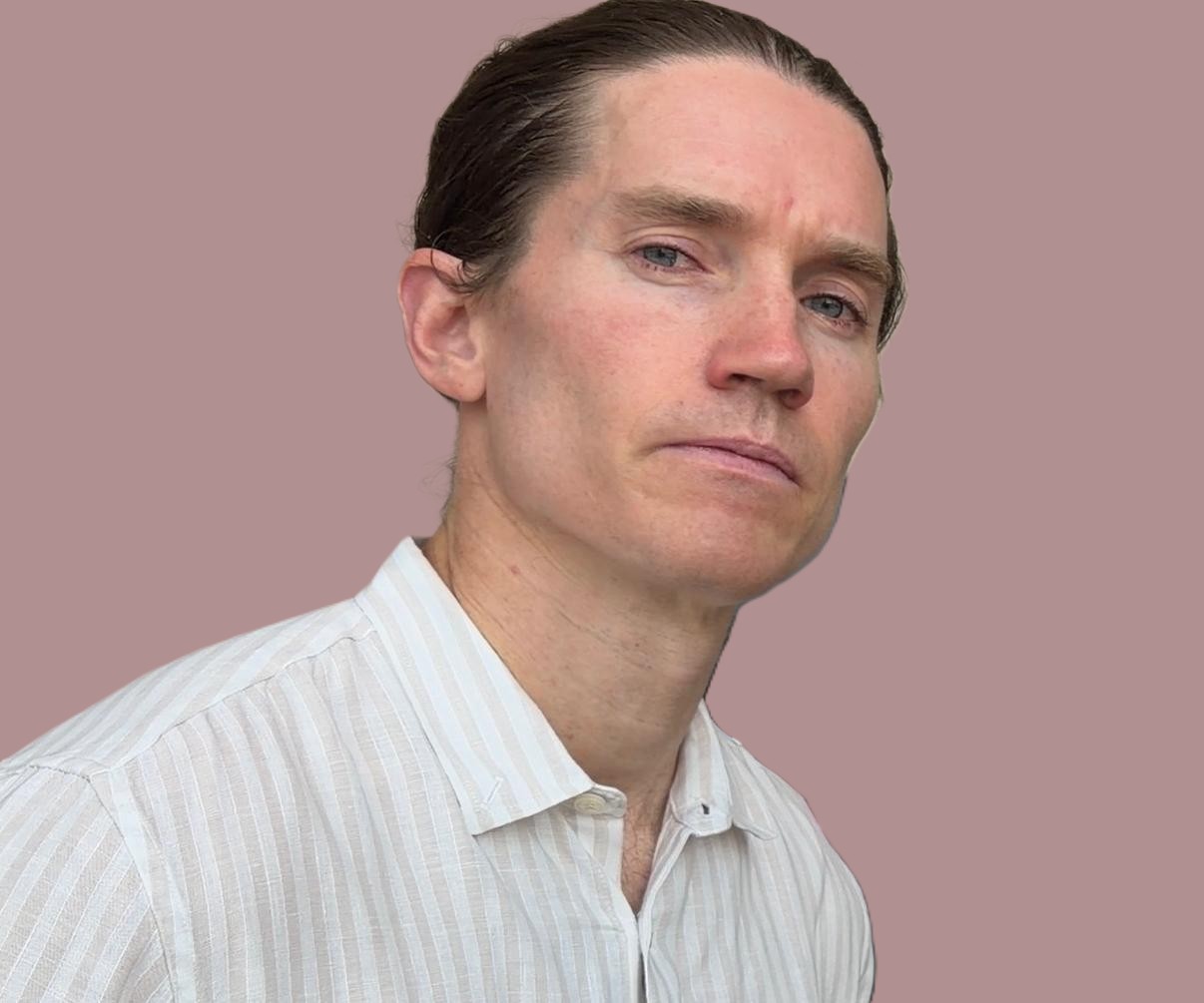
Speaking to AsiaBizToday for the Asia Insights series on the sidelines of The Tech Week in Singapore, ahead of his participation at GSE2026 in Osaka, Mead said Japan’s innovation economy has made visible progress over the past few years, supported by government initiatives, corporate venture capital and a growing willingness among investors to back startups more aggressively.
But the next phase, he argued, will depend on strengthening the capital markets around startups rather than focusing only on startup formation itself.
Coolwater Capital has been working with JETRO and, by extension, Japan’s Ministry of Economy, Trade and Industry, for the past three years to support venture capital managers and growth investors in Japan. This year, Coolwater evaluated roughly 75 teams over a compressed two-to-three-week period before selecting 15 fund teams for its latest programme. The cohort includes professionals spinning out of corporate venture capital arms, family offices launching funds, active angel investors and existing VC fund spin-outs.
Building the Other Side of the Innovation Economy
Much of the global startup ecosystem over the past 15 to 20 years has been built around accelerators and incubators supporting founders. Mead said Coolwater takes a different approach by focusing on the capital side of that same equation.
“There’s the startup side,” he said, pointing to organisations such as Y Combinator, Techstars and 500 Startups. “On the other side of that innovation economy is what Coolwater supports, which is the capital markets of startups.”
That distinction is central to his view of Japan. The country, he said, has spent decades building sophisticated technology and world-class companies. The weakness is not necessarily a lack of ideas, talent or money, but whether enough of that capital is structured and deployed in ways suited to venture-backed company building.
“There’s no shortage of talent. There’s no shortage of world-class brands. There’s no shortage of, I think, capital in Japan,” Mead said. “But I do think there is an opportunity to strengthen the early-stage focus capital markets.”
That means building investors capable of supporting startups through inception, early-stage development, growth, internationalisation and eventually public markets.
Government Support Is Helping Change the Environment
Mead said the change in Japan’s startup ecosystem is increasingly visible from both the top down and the bottom up. At the government level, he said policymakers are taking the strengthening of innovation capital markets seriously and are putting resources behind that objective.
Coolwater’s role, in his view, is to help ensure the right fund managers are being supported: investors who understand technology, company building, market gaps and the need for startups to think globally from an early stage.
That global orientation remains important. Mead repeatedly returned to the question of how Japanese startups can build larger companies by looking beyond the domestic market earlier.
“How do you go global from day one?” he asked. “How do you build a bigger business, a bigger startup business, which you need for venture performance?”
Japan’s CVC Strength Is Both an Asset and a Constraint
One of Japan’s strongest advantages, Mead said, is the sophistication of its corporate venture capital ecosystem. “Japan has the most sophisticated corporate venture capital in the world,” he said, adding that he believes it can compete directly with the United States.
Many of the investors entering Coolwater’s programmes come from major Japanese corporations. Mead said roughly half of the current cohort has extensive CVC experience, with some participants having deployed as much as US$500 million in corporate balance-sheet capital into startups.
He argued that the ecosystem will be stronger if corporate investors continue to support technology while more financially oriented VC managers emerge with ambitions to build funds capable of producing multiple large outcomes.
This matters because, in Mead’s view, Japan has historically produced fewer large venture-backed outcomes than its talent and technology base might suggest.
The missing piece is not necessarily innovation. It is an investment ecosystem willing to stay with companies long enough to pursue much larger outcomes rather than selling too early.
Where Japan’s Next Large Startups Could Come From
Asked which sectors could produce major venture-backed companies over the next three to five years, Mead pointed to several areas where Japan already has significant capability.
Deep tech and manufacturing technology are at the top of the list. He also highlighted semiconductors, nuclear technology, robotics and sovereign AI, where Japan’s industrial base and supply-chain position could create opportunities for significant companies.
Consumer technology is another possible growth area. Japan already has globally recognised consumer and entertainment brands, and Mead sees potential where AI intersects with consumer products and Japanese intellectual property.
Biotechnology is another area he believes could produce substantial companies. “The technology there, the biology is very sophisticated in Japan,” he said, noting a growing level of ambition among investors and entrepreneurs in the sector.
His broader point is that Japan’s opportunity is not confined to one sector. Its strength lies in having multiple pools of advanced technology and industrial expertise.
Japan’s universities are another important part of the equation. Mead said there is significant research coming out of Japanese institutions, but the challenge remains translating that research into commercial companies.
He pointed to the US model, where venture funds are often built specifically around university ecosystems such as MIT, Stanford, Berkeley and Harvard.
Japan is beginning to see something similar, he said, with venture funds associated with universities and some investors maintaining teams or offices directly on campus.
Mead’s expectations for GSE2026 in Osaka are closely linked to that broader objective. Coolwater is participating as a co-host and is bringing US venture investors to the event, particularly those focused on deep technology.
The areas of interest include AI, semiconductors, data centres and robotics. For Mead, the value of GSE2026 lies in creating a forum where international VCs can meet a large number of Japanese startups, including university spin-outs and companies backed by local venture funds.
Global Ambition Has to Start Early
Mead believes startups across Asia need to think internationally sooner. He said the most globally ambitious Asian companies will eventually establish operations in the US, just as US companies seeking global scale will expand into Asia.
“I do think they need to play global from day one here in Asia,” he said. That advice echoes a recurring theme in conversations around Japan’s startup ecosystem: a large domestic market can provide a strong foundation, but it can also reduce the urgency to internationalise.
For venture-backed companies seeking very large outcomes, Mead believes global ambition needs to be built into the company much earlier.
On the current AI investment cycle, Mead acknowledged that the US venture market is heavily focused on artificial intelligence. He said founders cannot ignore AI, whether as an operating tool or as a core product opportunity.
Mead’s assessment of Japan is ultimately optimistic. He sees deep pools of research and technology talent, sophisticated corporate executives, substantial financial capital and increasing entrepreneurial ambition.
But he also sees a need to combine those ingredients differently. “I think even if you have a lot of money, it doesn’t necessarily mean you understand VC,” he said, arguing that venture capital requires a very particular approach to financing high-growth companies tackling large markets in compressed timeframes.
Culturally, he also sees change. More Japanese founders are willing to take risks, more success stories are emerging, and immigrant entrepreneurs are contributing additional ambition to the ecosystem.
Japan, he said, already has the right ingredients. The challenge now is getting the proportions right. “It has all the right ingredients,” Mead said. “We’re just trying to make sure the measurements are right over the next few years.”