

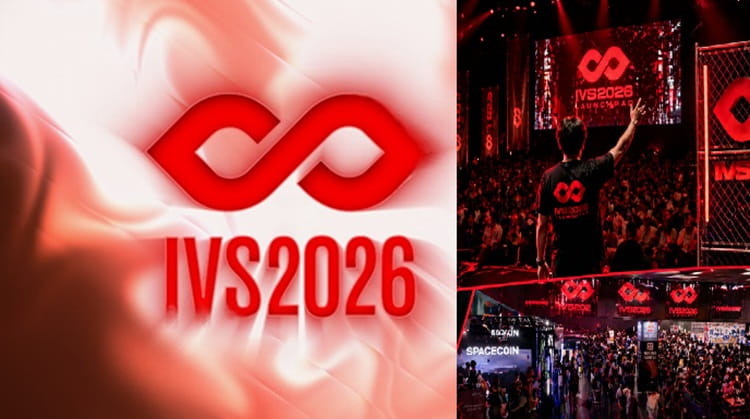
SINGAPORE, June 17, 2026 – IVS Kyoto 2026 will bring Japanese startups, global investors, founders and corporate leaders together in Kyoto from July 1–3. In an Asia Insights conversation with AsiaBizToday, Whiplus Wang, who leads IVS Global, outlined the strategy behind the event, including its Startup Market, the new IVS CORE platform, its extensive side-event ecosystem and its ambition to become Asia’s leading startup platform.
At the centre of this year’s event is a direct message: “Japan is Back.” For Wang, the theme is an invitation to global investors, founders and corporations to reconsider Japan as a market in which to build, invest and collaborate. “This is a very strong message from us to global investors, startup founders and corporates: come back to Japan and build here,” Wang said.

Japan has often been seen internationally as a stable but slow-moving economy, with a business environment that can be difficult for startups and overseas companies to navigate. IVS Kyoto 2026 is intended to challenge that perception and present the country as entering a new phase of economic and entrepreneurial activity.
“This is not about returning nostalgically to the bubble economy,” Wang said. “It is really a new page. Japan can be a great partner to economies around the world and within the global ecosystem.” He believes Japan’s changing economic conditions and renewed international attention have created one of the most accessible periods in a generation for overseas businesses seeking to enter the country, invest in companies or partner with established Japanese corporations.
Presenting Japanese startups to a global audience
One of the principal objectives of IVS Kyoto 2026 is to showcase Japanese startups and technologies more effectively to international investors and potential customers. The event’s Startup Market is expected to feature around 400 companies. Wang said IVS has renewed its selection and ranking process to identify promising Japanese startups and create stronger opportunities for them to meet investors, corporate buyers and international partners.
“For this year, we are more focused on how we show good technology and good startups from Japan to the global audience,” he said. Dedicated tours will help international attendees navigate the Startup Market and identify companies relevant to their industries and investment interests.
The strategy reflects Wang’s belief that IVS should be judged not only by the number of people attending, but by the quality of the interactions and commercial opportunities it generates.
Wang previously worked as a front-end engineer, and that builder’s perspective influences how he approaches the event. “I see IVS not as a show and not just as a conference. It is a product,” he said. “We focus on the numbers, we focus on the user experience and we focus on the output.”
At the previous edition, Wang said participating startup booths received more than 100 visitors per day. Around 20 per cent were investors, while another significant segment consisted of potential customers and buyers. “Our final KPI is not just attendance,” he said. “It is how we bring value to our customers, who are startup founders and investors.”
IVS CORE and the event’s three-layer architecture
IVS Kyoto 2026 is being designed around three levels of participation. The broadest layer consists of hundreds of side events held across Kyoto. These offer an accessible way for people interested in startups and technology to participate in the wider ecosystem, even if they do not attend every part of the main conference.
The second layer is the main IVS programme, including conference sessions, the Startup Market, networking opportunities and activities at the principal venues. It is intended to help founders present their businesses, find mentors, meet investors and connect with customers or partners.
The third layer is IVS CORE, a new invitation-only platform for fewer than 1,000 senior founders, investors, corporate executives and other decision-makers.
Its focus will be high-level networking, partnerships and deal-making. “We want each segment of people to have the best possible outcome from the three days,” Wang said. “That is why we designed these three layers for the different segments of the ecosystem.”
This architecture is intended to balance the openness and energy of a large startup gathering with the need for targeted commercial discussions.
The side-event ecosystem has become one of IVS’s defining features. Wang said the number of such events has grown from more than 100 in 2023, over 300 in 2024 and approximately 500 at the previous edition.
A similarly extensive programme is expected this year, extending the conference beyond its official venues and creating opportunities for interaction across Kyoto during the day and evening.
Connecting Japan with global founders and investors
IVS expects between 10,000 and 12,000 participants across its main programme, with startup founders and investors representing a substantial proportion of the audience. Wang said IVS attracts much of Japan’s venture capital community, including independent VCs, corporate venture capital arms and leading startups.
The event has also expanded its international reach. The previous edition welcomed participants from 78 countries, with overseas visitors accounting for approximately one-quarter of the audience. These included global venture capital firms and international startups, particularly companies working in artificial intelligence.
“Our role is to bridge these two communities,” Wang said. “We bring together the real players in the Japanese startup ecosystem and people from around the world.” International founders approach Japan with different objectives. Some want to establish operations in the country, while others are seeking customers, distributors, investors, corporate partners or technology collaborations.
Wang highlighted hardware companies as one group that may find Japan especially relevant because of the country’s manufacturing base, engineering expertise and corporate networks. The exchange is intended to work in both directions. International companies gain access to Japanese partners and markets, while Japanese startups can use IVS to connect with overseas capital, talent and business opportunities.
Helping Japanese startups become global
Japan has longstanding strengths in manufacturing, robotics, enterprise technology and scientific research. However, many Japanese startups still find it difficult to scale internationally. Wang believes one common barrier is the way companies define their target market at the beginning.
Many Japanese technology businesses are built primarily for domestic customers. Wang stressed that not every startup needs to pursue international growth. The challenge arises when companies possess globally relevant technology and ambition but have not built teams or organisational cultures capable of operating across markets.
For those companies, internationalisation must extend beyond overseas sales. It needs to influence recruitment, leadership, product development and corporate culture.
Wang pointed to the relatively limited international exposure of some Japanese founders and startup teams as another obstacle. Some may have had fewer opportunities to study abroad, work in global organisations or build multicultural teams.
IVS Global wants to bring more international talent into Japan and introduce local founders to examples of how global startups design their teams and organisations.
“We want to bring more global talent from outside Japan to help Japanese startups rebuild their teams or expand overseas,” Wang said.
The objective is to encourage ambitious companies to think globally from their early stages rather than treating international expansion as an afterthought.
Why Kyoto is central to the strategy
Kyoto’s role as host city is important to the international identity of IVS. For overseas visitors, it is one of Japan’s most recognisable cultural destinations. Its tourism infrastructure, global reputation and hospitality capabilities make it attractive as the location for a major international gathering.
Yet Wang emphasised that Kyoto’s relevance extends beyond culture and tourism. The city and its surrounding region have produced globally recognised technology and manufacturing companies, including Nintendo, Kyocera and Omron.
He sees Kyoto’s combination of craftsmanship, design, culture and technology as a source of inspiration for entrepreneurs. “People from outside Japan want to experience real Japanese culture in Kyoto,” he said. “But Kyoto is also a city that can inspire startup founders to build better products and services for the world.”
For startups from Southeast Asia, India and the wider Asia-Pacific region, IVS is intended to serve both as a gateway to Japan and as a meeting point for the broader Asian startup ecosystem. A founder from Jakarta could attend to meet Japanese investors or corporate partners, but could also connect with a startup or investor from Bangalore, Delhi or another international market.
Becoming Asia’s leading startup platform
IVS Global’s ambition extends beyond building a larger Japanese startup conference. “Our goal and our mission are to become the number one startup platform in Asia,” Wang said.
The organisation wants IVS to become a gathering where founders, investors and corporations from different countries can meet, invest and establish partnerships, even when Japan is not directly involved in every transaction.
Japan will remain central as the host market and as a source of technology, research, corporations and business opportunities. “There are good startups, good corporates, good technology, good research and good culture in Japan that can be commercialised and create business value,” Wang said.
IVS Global is also expanding beyond the annual Kyoto event. Wang said the organisation has previously taken around 30 companies to India, travelled to Africa and increased its activities across China, Hong Kong, Macau and Shenzhen. These initiatives are intended to make IVS a year-round international network rather than an ecosystem that convenes only for three days.
The success of IVS Kyoto 2026 will therefore be measured not simply by attendance or the number of sessions and side events. The more important indicators will be investments, customer relationships, corporate partnerships and international expansion opportunities.
The longer-term aim is to create a startup platform rooted in Japan, but capable of connecting founders, investors and companies across Asia and the rest of the world.