

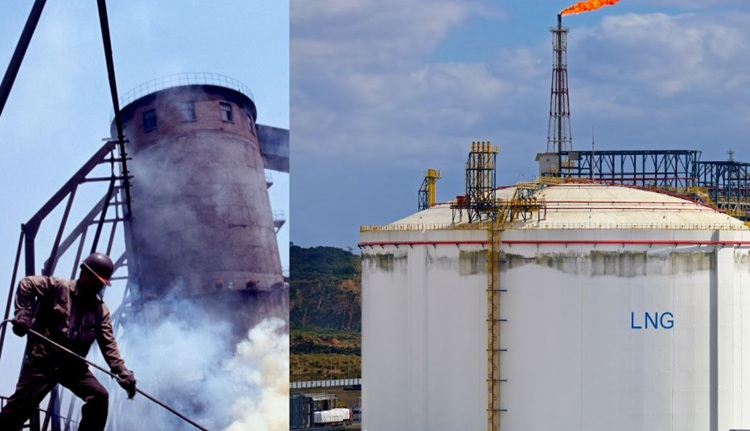
HONG KONG, June 29, 2026 – CIMC Enric Holdings Limited has commenced operations at its integrated steel-coking project in Liupanshui City, Guizhou Province, marking another step in the company’s expansion across China’s clean energy and hydrogen value chain.
The project, controlled by CIMC Enric and built by its subsidiary CIMC New Energy (Liupanshui) Technology Co., Ltd., uses coke oven gas from Shougang Shuicheng Iron and Steel (Group) Co., Ltd., a subsidiary of Shougang Group, as feedstock to produce blue LNG and high-purity blue hydrogen.
With a total investment of RMB 808 million, the project was completed over a construction period of approximately 12 months and covers around 248 mu of land. It has an annual production capacity of approximately 140,000 tonnes of LNG and 24 million Nm³ of high-purity hydrogen with 99.999 per cent purity.
The launch brings CIMC Enric’s operational steel-coking integration projects to three, including the Angang Bayuquan project and the Linggang Steel project. Another three new projects have entered the preliminary stage of construction.
Across its operating projects, CIMC Enric now has aggregate annual production capacity of 48 million cubic metres of hydrogen, 420,000 tonnes of LNG and 80,000 tonnes of liquid ammonia.
The company’s related business footprint now covers Liaoning, Guizhou, Sichuan and the overseas Southeast Asian market, reflecting its broader strategy to develop integrated clean energy services across industrial clusters and regional energy corridors.
Guizhou Builds Position as Southwest China Hydrogen Energy Hub
The Liupanshui project comes as Guizhou Province accelerates its ambition to become a national hydrogen energy hub in Southwest China.
Liupanshui has been developing multiple downstream hydrogen consumption scenarios, creating demand for low-cost and stable hydrogen supply. In 2025, the city put into operation a fleet of 100 49-tonne hydrogen heavy-duty trucks and four 8.6-metre hydrogen fuel cell buses.
The first hydrogen fuel cell locomotive in Southwest China also underwent trial operation, helping fill a gap in hydrogen-powered railway freight transport in the region.
Liupanshui is now expanding hydrogen applications into heavy-duty truck transport, sanitation operations, cold-chain logistics and railway freight. The city is also exploring more advanced applications such as hydrogen metallurgy and hydrogen-based chemicals.
On the policy front, Guizhou Province has laid out plans to develop a hydrogen industrial axis connecting Guiyang, Anshun and Liupanshui, alongside a circular hydrogen economy belt covering Bijie, Liupanshui and Xingyi.
Liupanshui, as a core city in this layout, has launched its 2024-2030 implementation plan to advance the full hydrogen industrial chain, covering production, storage, refuelling and end-use.
The Department of Industry and Information Technology of Guizhou Province has highlighted Liupanshui’s natural advantages in hydrogen energy resources and hydrogen production costs, which it says provide a foundation for large-scale commercial applications.
The project also aligns with wider national clean energy policy signals. On 25 June 2026, China’s National Development and Reform Commission and the National Energy Administration issued the “15th Five-Year Plan for the Construction of a New Energy System”, which highlighted the need to accelerate hydrogen energy and green fuel industries and coordinate the full hydrogen value chain from production and storage to transmission and application.
Turning Industrial By-Product Gas Into Clean Energy
CIMC Enric’s Liupanshui project is built around the utilisation of coke oven gas from local steel production.
By converting this industrial by-product into blue LNG and high-purity hydrogen on site, the project supports more efficient use of existing industrial resources while creating cleaner energy products for downstream markets.
The project covers several stages of the value chain, including production, liquefaction, storage, transportation, distribution and terminal application development.
CIMC Enric said the project uses equipment independently developed by the company, including LNG storage tanks, cryogenic liquefaction systems, hydrogen compression units, plant-wide distributed control systems and digital intelligence systems.
The project construction was undertaken under a comprehensive contract provided by CIMC Enric Engineering Technology Co., Ltd., another subsidiary of the company. This enabled CIMC Enric to deploy its capabilities across key equipment, core processes and integrated services.
The company said the project reflects the implementation of Guizhou Province’s policy approach of “exploiting rich mines with precision”, while supporting the rollout of additional clean energy projects.
Fuel-Cell Grade Hydrogen for Industry and Transport
The high-purity hydrogen produced by the Liupanshui project meets fuel-cell grade standards.
This provides a stable and relatively low-cost hydrogen source for surrounding enterprises involved in areas such as precious metal processing and semiconductor production.
The project is also expected to support Liupanshui’s development as a hydrogen energy demonstration city by enabling applications such as integrated gas-hydrogen-electricity energy service stations and hydrogen combined heat and power systems.
CIMC Enric said the facility could become an important hydrogen replenishment point along the “Chongqing-Guizhou-Guangxi” hydrogen corridor.
The company also indicated that the project could help meet national requirements for purifying industrial by-product hydrogen and expanding the supply of affordable hydrogen sources. In the longer term, it may support the possibility of “Guizhou hydrogen supply to Guangdong”, widening the market reach of hydrogen produced in the province and strengthening an end-to-end industrial value chain.
For China’s emerging hydrogen economy, such projects are important because they connect industrial gas utilisation with downstream transport, logistics, manufacturing and energy applications.
Rather than treating hydrogen production as a standalone activity, the integrated model links feedstock, processing, storage, transportation and end-use demand in one regional ecosystem.
LNG Demand Grows Across Yunnan-Guizhou-Sichuan Region
Beyond hydrogen, the Liupanshui project’s LNG output is expected to support energy demand across the Yunnan-Guizhou-Sichuan region.
According to Sun Yong, General Manager of CIMC New Energy (Liupanshui) Technology Co., Ltd. and the project’s person-in-charge, the Yunnan-Guizhou region still lags northern Chinese provinces in the deployment of LNG heavy-duty trucks and LNG refuelling infrastructure.
However, local logistics companies have been expanding or replacing fleets with LNG heavy trucks in recent years. Major energy companies, including PetroChina and Sinopec, are also increasing investment in LNG refuelling station networks.
This creates a broader downstream market for the project’s LNG production.
LNG heavy-duty trucks are often seen as a transitional clean transport option, particularly in logistics corridors where diesel replacement, cost efficiency and emissions reduction are priorities.
By producing LNG alongside hydrogen, the Liupanshui project positions CIMC Enric within two major clean energy transition pathways: low-carbon industrial gas conversion and cleaner heavy transport fuel supply.
Integrated Clean Energy Services Become Core Strategy
CIMC Enric said it will continue to focus on three major pillars: key equipment, core processes and integrated services. The company plans to deepen its presence in comprehensive clean energy services as more projects move forward.
Sun Zhengping, Vice President of CIMC Enric’s New Energy Development and Application Business Center, said the company’s integrated steel-coking projects will be guided by national clean energy development policies.
“The Company’s integrated steel-coking projects will be guided by national clean energy development policies. We will comprehensively advance the connection of the entire hydrogen energy value chain and the multi-scenario application of clean energy such as LNG, accelerating the large-scale implementation of projects, and striving to become a core driving force in the regional green and low-carbon transition,” Sun said.
Founded in 2004 and listed on the Hong Kong Stock Exchange since 2005, CIMC Enric is part of CIMC Group. The company provides key equipment, core processes and integrated services for transportation, storage and processing across the clean energy, chemical and environmental, and liquid food sectors.
It is among the world’s top players in the production and sales of high-pressure gas storage and transport vehicles, and among China’s leading companies in cryogenic transport vehicles, cryogenic storage tanks, LNG receiving station storage tanks and modular LNG refuelling station products.
The company has more than 20 subsidiaries across China, the Netherlands, Germany, Belgium, the United Kingdom and Canada, with production bases and R&D centres supporting its global business network.
China’s Hydrogen and LNG Transition Gains Industrial Momentum
The start of operations at CIMC Enric’s Liupanshui project highlights a broader trend in China’s clean energy transition: the increasing use of industrial clusters as anchors for hydrogen, LNG and low-carbon fuel ecosystems.
Steel and coking industries generate gas streams that can be converted into higher-value clean energy products. When combined with local transport demand, industrial hydrogen use, refuelling networks and policy support, these projects can accelerate regional clean energy adoption.
For Guizhou, the project strengthens Liupanshui’s role in the province’s hydrogen development strategy and supports Southwest China’s broader hydrogen energy ambitions.
For CIMC Enric, the project adds operational scale and demonstrates the company’s integrated capability across clean energy equipment, engineering, processing and service delivery.
As China coordinates hydrogen production, storage, transmission and application under its emerging energy system strategy, integrated steel-coking projects such as Liupanshui could become important building blocks in regional low-carbon industrial transformation.