
TOKYO, May 17, 2026 – Philippine climate-tech/ clean-tech startup Klimatech Innovative Solutions is on track to establish a multi-purpose manufacturing and distribution facility in Ormoc City, Leyte, targeted for operational launch by around September 2026.
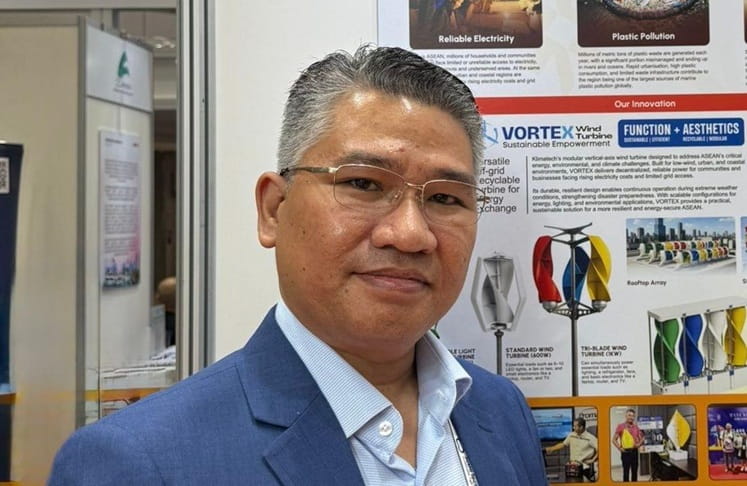
This update on the company’s progress was shared by Chief Operating Officer Arvin Gastardo during SusHi Tech Tokyo 2026, where the company was exhibiting as one of just eight Southeast Asian startups selected for the prestigious ASEAN SPARKS Elevate programme — a joint initiative of the ASEAN Centre for Energy (ACE) and the United Nations Industrial Development Organization (UNIDO), supported by the Japan-ASEAN Integration Fund (JAIF).
The planned 1,000-square-meter facility will serve as a central production hub for Klimatech’s flagship VORTEX vertical-axis wind turbines (VAWTs), supporting the company’s growing renewable energy and climate resilience initiatives in the Philippines and the broader ASEAN region.
Unlike traditional horizontal-axis wind turbines, the VORTEX (Versatile Off-grid Recyclable Turbine for Energy Exchange) is a vertical-axis design that requires under one square metre of footprint, can operate in low-wind and urban environments, and is engineered to be typhoon-resilient. Its blades are manufactured from recycled plastic sourced from coastal communities, giving the turbine a dual environmental benefit: clean power generation and plastic waste reduction.
In addition to renewable energy manufacturing, the facility will house a dedicated circular economy initiative under Oyloop, focused on the efficient collection and processing of used cooking oil (UCO) into sustainable aviation fuel (SAF) and other value-added sustainable products.
The facility is also expected to strengthen Klimatech’s sustainability efforts by supporting its recycled materials program, including the conversion of plastic waste into turbine blade components— an initiative the company has already piloted on a smaller scale as part of its commitment to circular manufacturing and environmentally responsible innovation.
Once operational, the facility is expected to support local job creation, regional green manufacturing capabilities, climate technology innovation, and community-based sustainability programs in Eastern Visayas.
According to Gastardo, Klimatech is currently coordinating with strategic partners, stakeholders, and local institutions as part of the project’s development and implementation efforts.
If Klimatech succeeds in its commercialisation plans, it could play an important role in the Philippines’ energy landscape. Even though the country has an estimated 178 GW of offshore wind potential, millions of households remain unelectrified or under-served. At the same time, plastic pollution- particularly in coastal and island communities- remains a severe environmental burden. UCO, described by analysts as a “sleeping giant” feedstock, is abundant in the Philippines but largely wasted due to the absence of organised collection infrastructure.
Klimatech’s integrated model, linking wind energy, circular plastics, and waste-oil valorisation under one roof, could well be a prototype for community-centred, multi-stream sustainability hubs that could be replicated across the Philippine archipelago and the rest of ASEAN region.
Klimatech also pitched at a dedicated Cleantech Innovation Pitch and Matchmaking event at Tokyo Innovation Base in April, engaging investors, Japanese conglomerates, and government bodies including Japan’s Ministry of Economy, Trade and Industry (METI).