

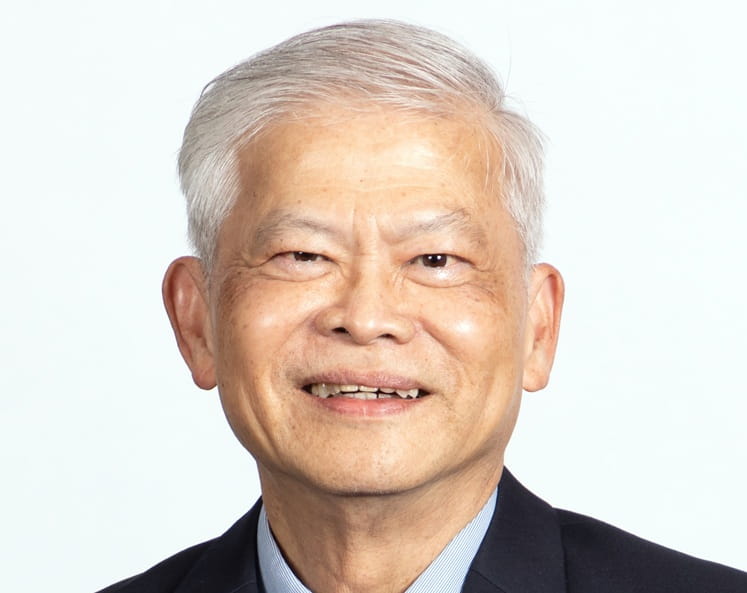
By Er. Dr. Seng-Chuan TAN
A cascade of global pressures driven by climate instability, rapid urbanisation and technological fragmentation is reshaping the world at a pace that demands more from engineers than technical competence alone.
The scale of the challenge is well documented. The United Nations reports that 80 per cent of the Sustainable Development Goals (SDGs) are behind schedule, while the World Bank estimates that more than US$97 trillion in infrastructure investment will be required by 2040 to meet rising environmental and societal demands.
These pressures cut across borders and disciplines. No country or profession can address them in isolation. How the world collaborates will shape whether societies progress, stagnate or fall behind.
Why engineering leadership must extend beyond borders
As Singapore’s economy becomes more connected to global innovation and sustainability efforts, engineering work is increasingly shaped by collaboration across countries.
Supply chains span continents, standards are developed jointly and climate-related challenges often require shared solutions, even if their effects differ from place to place.
This raises the question of whether engineering leadership can remain focused within national boundaries when the challenges of the SDGs are global.
Professional institutions such as The Institution of Engineers, Singapore (IES) were established at a time when the country was in the infrastructure development stage.
Over the years, the institution’s role has expanded beyond setting standards to supporting learning, dialogue and professional growth across a more connected engineering community.
Today, this shift offers an opportunity to rethink how leadership is exercised in a global context as we face different challenges.
Partnerships with international bodies such as the World Federation of Engineering Organizations (WFEO), International Engineering Alliance (IEA) and the Federation of Engineering Institutions of Asia and the Pacific (FEIAP) help provide that wider perspective.
Through these collaborations, engineers can learn from shared research, contribute to the development of technical standards, take part in regional capacity-building efforts and better understand how professional recognition works across borders.
A Singapore engineer’s path to the world stage
This backdrop explains the significance of the appointment of Er. Dr Tan Seng Chuan as President of WFEO in October 2025.
Representing more than 30 million engineers across over 100 countries, his appointment reflects not only individual achievement, but also the credibility Singapore engineers have built through years of international engagement.
Er. Tan’s long involvement with regional and international engineering organisations, including WFEO, FEIAP, IEA and the ASEAN Federation of Engineering Organisations (AFEO), has shaped how he works across cultures, manages differing views and builds consensus regionally and globally.
His career also reflects the broader evolution of Singapore’s engineering arena. After graduating with a Bachelor of Engineering in Civil Engineering, he began his professional journey in Singapore and across the region in the built environment and infrastructure industry.
He later expanded his expertise into the energy, water, waste and environmental sectors, gaining a holistic perspective on sustainable development. In the later stages of his career, he integrated science, engineering and management consulting to address complex challenges in carbon reduction and sustainability, contributing to the achievement of the SDGs.
He served as President of IES from 2006 to 2008 and has since continued to contribute actively to the Council in various capacities. Through his sustained involvement, he has played a vital role in advancing the institution’s mission to uphold professional standards, foster inclusivity and strengthen collaboration across the engineering community.
His long-standing involvement with IES provided early opportunities to build confidence, take on leadership roles and gain exposure beyond purely technical work.
His experience is a reminder that global engagement is not reserved for later in one’s career, but developed gradually through participation, curiosity and openness, an important message for younger engineers today.
Scaling international engagement through collaboration
With global engineering priorities increasingly shaped by sustainability, climate resilience and artificial intelligence, international collaboration is no longer peripheral. It is becoming central to how engineers learn, adapt and remain relevant.
This shift creates space for engagement that goes beyond conferences or formal affiliations. Forums, technical exchanges and collaborative platforms anchored in sustainability and AI allow engineers to test ideas across different constraints and contribute to shared problem-solving.
For engineers in Singapore, this is less about projecting influence than about staying connected to how engineering practice is evolving globally.
Capacity-building is one area where this engagement can take more concrete form. WFEO is developing programmes to strengthen leadership and professional capability, including new research and certification following its memorandum of understanding with the United Nations University.
As WFEO works to elevate its academy towards an institution-level platform, there is scope for professional bodies such as IES to contribute expertise drawn from Singapore’s engineering ecosystem.
This also includes contributing to UNESCO Global Engineering Report (ER III), an area where IES already has strong experience in sharing professional knowledge.
More active participation allows Singapore engineers to contribute practical insights, learn from global peers and take part in shaping international thinking on engineering issues.
Jointly convening programmes with global partners can bring international engagement closer to home.
As WFEO invites members to host international meetings, IES could co-host selected events, such as WFEO’s World Engineering Convention, alongside platforms like the World Engineers Summit. This would bring global conversations closer to local engineers and internationalise IES activities in a practical way.
Professional mobility is another practical dimension. As engineering projects increasingly span multiple jurisdictions, familiarity with international standards and recognition frameworks supported by WFEO becomes more important.
Engineering as shared responsibility
The future of engineering will be shaped not only by institutions, but by engineers willing to expand their perspectives and engage beyond familiar boundaries.
For countries like Singapore, challenges such as climate resilience and digital equity cannot be addressed in isolation, making global literacy an essential professional skill.
Internationalisation will help engineers remain relevant. As infrastructure, energy systems and digital technologies evolve rapidly, engineers who understand global dynamics will be better equipped to lead and innovate.
Engineering is ultimately an act of stewardship of ideas, resources and communities. The way Singapore participates in the global engineering ecosystem will shape its standing as a trusted, future-ready contributor to engineering excellence worldwide.
Er. Dr. Seng-Chuan TAN is Emeritus President of the World Federation of Engineering Organizations (WFEO), Managing Director of Tembusu Asia Consulting and a former President of the Institution of Engineers, Singapore (IES) (2006-2008)