
As Japan prepares to host SusHi Tech Tokyo 2026 from April 27-29, attention is increasingly turning to one of its most under-leveraged strengths, a deep and globally respected research ecosystem.
At the centre of this conversation is Junji Takaoka, an Incubation Partner at the UTokyo Innovation Platform Company, where he works on building startups from academic research, leading Entrepreneur-in-Residence programmes and connecting Japanese innovation with global venture capital and startup ecosystems.
With experience spanning consulting at Booz Allen Hamilton, venture building at Alibaba Japan and Silicon Valley exposure through Draper Nexus, Takaoka represents a new generation of ecosystem builders attempting to bridge Japan’s research strengths with global markets.
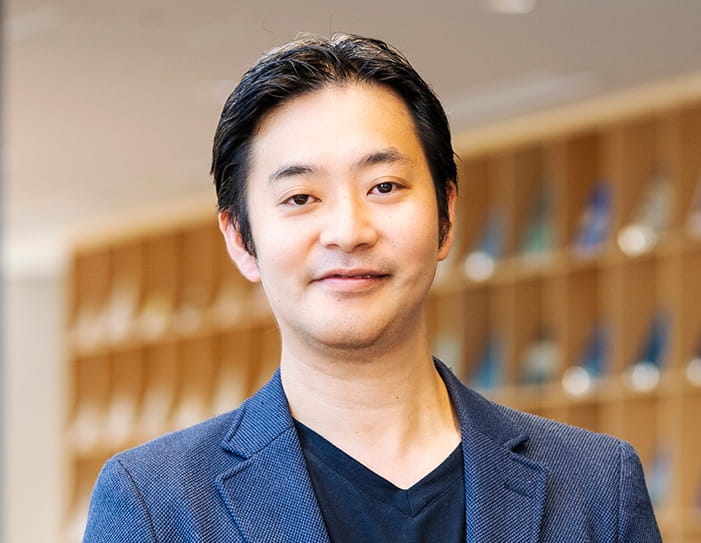
In an exclusive conversation ahead of SusHi Tech Tokyo, he outlines why Japan’s innovation story is at a turning point.
From Research Strength to Global Startup Ambition
Over the past decade, Japan has made clear progress in commercialising academic research. Universities, particularly the University of Tokyo, have seen a significant rise in startup creation, signalling a cultural shift within academia.
“For the past 10 years, Japan has been progressing in commercialising research… we have seen more and more startups coming up,” Takaoka noted.
Yet, the next phase is far more complex. The challenge is no longer about creating startups, but about building companies that can compete globally.
A key barrier lies in the structure of founding teams and networks. Many startups remain domestically oriented, with limited exposure to global markets, investors and talent.
“Their strategy tends to be limited to the domestic market,” he observed.
This lack of diversity, both in people and perspectives, often results in limited ambition and weaker global positioning. Combined with relatively closed support networks, it creates an environment where startups can grow comfortably, but not necessarily competitively.
Building the Missing Links: Capital, Community and Corporate Mindset
Takaoka argues that translating research into venture-scale businesses requires more than just world-class technology. “Founders are more important than anything else,” he said, emphasising the need for experienced operators who can navigate the gap between research and commercialisation.
Alongside founders, two additional gaps stand out:
- Global capital: While Japanese venture capital is effective in taking startups to domestic listings, it lacks the depth and experience required for global scaling, including cross-border M&A and international IPOs.
- Open ecosystems: Unlike the US or Singapore, where startups benefit from broad, community-driven networks, Japan’s support systems remain relatively closed and relationship-driven.
“A more open, community-based support system is necessary,” he noted.
Corporates also have a critical role to play. While Japanese companies have increasingly engaged with startups, their expectations often remain inward-looking. “Startups should not only contribute to the host company, but change the industry,” Takaoka said, highlighting the need for a shift from incremental innovation to transformative thinking.
SusHi Tech Tokyo and Japan’s Global Opportunity
Against this backdrop, SusHi Tech Tokyo 2026 emerges as a pivotal platform. Takaoka describes it as a powerful entry point into Japan’s innovation ecosystem, particularly in a culture where trust-building traditionally takes time.
“SusHi Tech plays a role in shortening the time needed to build trust,” he explained.
However, he cautions that its real value lies beyond the event itself. “It should be regarded as an entry point… without follow-ups, connections vanish quickly,” he added.
Complementing this is the role of initiatives like NINEJP, which seek to bridge the gap between world-class research and fragmented local ecosystems by introducing global investors, founders and evaluation frameworks into the Japanese landscape. This is particularly relevant as Japan finds itself in a unique position within the evolving global technology landscape.
In areas such as physical AI, where hardware, software and data converge, Japan’s strength in manufacturing places it at the centre of global collaboration. “No single country has achieved a full combination of software, data and hardware,” Takaoka noted.
Beyond robotics and manufacturing, he identifies semiconductors, advanced materials and energy as key sectors where Japan could produce globally significant startups in the coming decade.
Despite the challenges, his outlook remains optimistic. Describing Japan’s research ecosystem as a “diamond in the rough,” he emphasised the need for greater integration with global capital, talent and networks.
“There are diamonds… but they need to be polished,” he said.
As SusHi Tech Tokyo 2026 brings together global stakeholders, the opportunity lies not just in showcasing innovation, but in building the pathways needed to scale it. Japan’s next leap will depend not on whether it can innovate, but on whether it can globalise that innovation.