

Singapore / Osaka, October 4, 2026 : Japan’s startup ecosystem has changed materially over the past decade, with more young professionals and experienced corporate talent choosing entrepreneurship, more international founding teams emerging, and a growing number of startups targeting global markets from the outset, according to Noriya Tarutani, Deputy Director General of the Innovation Department and Head of Startups at JETRO.
Speaking to AsiaBizToday for the Asia Insights series ahead of GSE2026 in Osaka, Tarutani said the most fundamental change has been in the quality and diversity of talent entering the ecosystem.
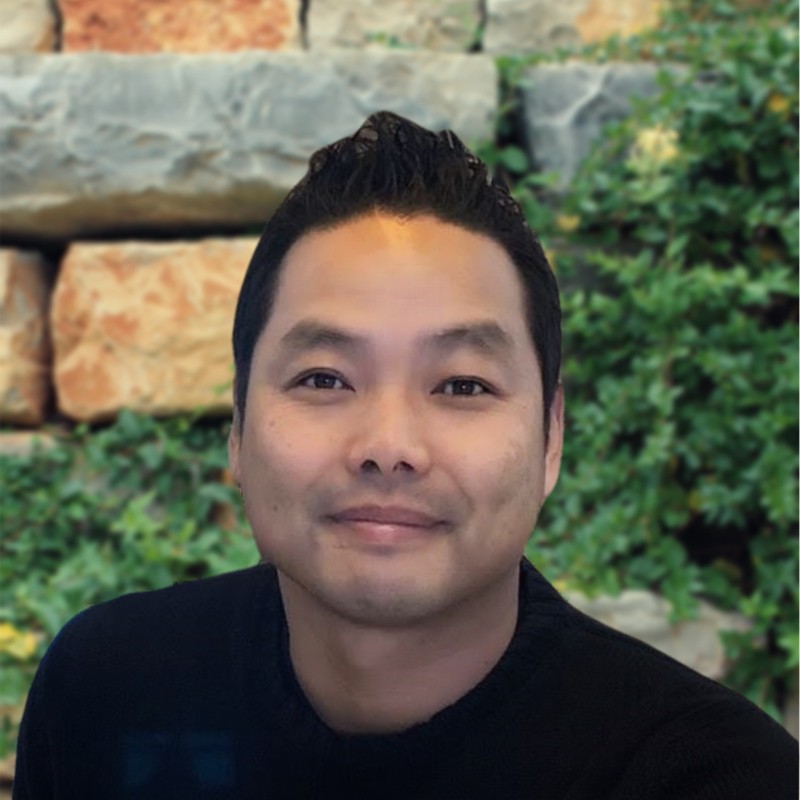
“When JETRO launched the first acceleration program in 2014, pitching in English was still unusual,” he said. A decade ago, relatively few Japanese startups were comfortable pitching internationally or building for global markets from day one. Today, he said, JETRO is seeing more “born global” startups with international founding teams and a much stronger global orientation.
Tarutani has spent more than 20 years working with startups and international business, including several years in San Francisco and Silicon Valley, where he collaborated with global accelerators and venture firms. He now oversees JETRO’s startup programmes, with a focus on connecting Japanese founders to mentors, investors, accelerators and corporates around the world.
JETRO’s Role Is Moving Beyond Outbound Support
JETRO’s startup work historically focused on helping Japanese companies expand overseas. Tarutani said that remains central, with JETRO providing mentoring, acceleration programmes and introductions to potential customers and investors, including angel investors, venture capital firms and corporate venture capital funds.
But the mandate is also evolving. JETRO is increasingly focused on attracting international investors into Japan, helping overseas VCs and CVCs invest in Japanese startups, establish funds and work with domestic venture firms.
That two-way flow matters because Japan’s startup ecosystem is no longer simply trying to help domestic companies sell abroad. It is also trying to become more connected to global capital, expertise and networks.
Asked what continues to prevent more Japanese startups from scaling internationally, Tarutani pointed to recurring feedback from global investors and accelerators.
He said five issues come up repeatedly: weak product-market fit, insufficient understanding of customer pain points, overly broad target markets, lack of global mindset and the wrong founding or management team.
Tarutani said the long-term goal is to create a self-reinforcing cycle in which successful founders generate exits, build experience and then return to the ecosystem as investors, mentors or repeat entrepreneurs.
Female Founders Remain an Important Diversity Challenge
The conversation also touched on gender diversity. Tarutani acknowledged that Japan still has work to do in increasing the number of women entrepreneurs, but said the number of female founders is rising and JETRO has introduced bootcamps and accelerator programmes specifically for women entrepreneurs.
He also said he has observed that many women founders are highly international in outlook, comfortable operating in English and focused on solving customer problems with relevance across multiple markets.
JETRO, he said, is trying to remove some of the structural challenges that women entrepreneurs continue to face in Japanese society.
What Japan Can Learn From Silicon Valley
Tarutani’s years in Silicon Valley gave him a close view of the differences between the Japanese and US startup ecosystems. His summary is simple: speed and scalability. “Speed is the most important thing,” he said.
JETRO’s acceleration programmes try to expose Japanese founders to the mindset of speaking to customers early, testing assumptions and pivoting quickly. What can appear to be a slower or indirect process of repeated customer interviews and testing is, in Tarutani’s view, often the fastest route to genuine product-market fit.
But not everything from Silicon Valley can simply be imported. One of the harder elements to reproduce is culture.
Tarutani said customer interviews are only useful when people give honest and constructive feedback, something he believes can be more difficult in Japan. He also wants the Japanese ecosystem to develop more of the “give first” culture associated with organisations such as Techstars, where experienced founders, investors and mentors actively help others without immediately expecting a transaction in return.
Japan’s strength in deep tech, advanced manufacturing and scientific research is widely recognised. The harder problem is turning that research into large companies. Tarutani said the biggest gap is often bringing together the right business team and the right capital around strong technology.
“Proving that technology works and proving the business works has different challenges,” he said.
Researchers cannot be expected to handle everything themselves. They need commercial teams, investors who understand the sector, and customers willing to engage early. Manufacturing requirements, regulation and technical validation also need to be considered alongside the research itself.
This is especially important in deep tech, where development cycles can extend far beyond those of software startups.
Corporate Japan Needs to Become a Customer, Not Just an Investor
Corporate venture capital plays an unusually large role in Japan’s startup ecosystem. Tarutani said large Japanese companies have become more active in startup investment and collaboration, but warned that increasing the number of pilots and partnerships is not enough.
Startups operate with extremely limited time and resources, while large corporates move much more slowly. That mismatch can become costly when pilots continue without leading to revenue or deployment.
His recommendation is that both sides agree upfront on what happens after a pilot. Who owns the project internally? What results would trigger a purchase? What is the path from testing to commercial deployment?
Tarutani said corporations can be enormously valuable as first customers, distribution partners and validation partners.
JETRO is therefore trying to introduce more of a venture client model into Japan, encouraging major corporations to become customers of startups rather than focusing solely on equity investment.
Longer-term purchasing agreements can be particularly powerful. If a corporation commits to buying from a startup over several years, the startup can invest with greater confidence, generate revenue and raise additional venture capital more easily.
International Investors Are Taking Japan More Seriously
Tarutani also sees a meaningful change in how global investors view Japan. Five years ago, he said, outreach to major international venture firms often generated little interest in Japanese startups.
That has started to change. “Recently, we see the direct investment from the U.S. venture capital to Japanese startups,” he said.
But interest still depends on evidence. To attract more international capital, Japanese startups need to show demand from global customers, not only domestic traction.
Tarutani specifically pointed to international recurring revenue and overseas customer adoption as signals that can make a company more credible to US investors. JETRO’s role is therefore not simply to introduce founders to investors, but to help startups win customers abroad first.
He cited digital health startup Ubie as an example, saying JETRO helped connect the company with Mayo Clinic, contributing to an overseas commercial relationship that can strengthen credibility with global investors.
For Tarutani, the value of GSE2026 in Osaka will not be determined by attendance numbers or how many business cards are exchanged. Its real value is in bringing together people who would otherwise operate in different parts of the ecosystem and turning those meetings into concrete next steps.
“A promising meeting should lead to a specific next step,” he said, pointing to technical evaluations, customer interactions and investment discussions. JETRO is involved in multiple sessions at the event, many of them bringing together Japanese startups, international investors and accelerators.
Kansai Does Not Need to Become Another Tokyo
Tarutani also sees Japan’s startup ecosystem broadening beyond Tokyo. Universities, research institutes, pilot facilities and manufacturing ecosystems across the country are becoming increasingly important to startup formation and commercialisation.
Kansai, he said, has particular strengths in connecting research and industry. In Osaka, areas such as life sciences, materials and manufacturing technology benefit from proximity to universities, industrial companies, prototyping capability and production expertise.
Tarutani argues that Kansai does not need to duplicate Tokyo in order to become internationally relevant.
“It needs to be a place where global investors and entrepreneurs can find distinctive research, companies and opportunity in particular fields,” he said.
Tarutani said Japan is also beginning to see more structured mechanisms for converting university research into startups.
He cited examples of entrepreneur-in-residence models and venture funds working closely with universities, where professional founders or CEOs can be paired with researchers rather than expecting academics to build companies on their own.
That model could be particularly important for Japan. Rather than requiring researchers to become entrepreneurs, the ecosystem can build teams around the technology by combining science, commercial leadership and capital.
Tarutani expects to see more such cases emerging from Japanese campuses in the coming years. Tarutani’s definition of a successful startup ecosystem goes beyond unicorn counts or headline valuations.
He wants to see a cycle in which one generation of successful companies helps create the next.
First, Japanese startups should consistently win international customers and generate meaningful overseas revenue.
Second, international investors should make follow-on investments and then back additional Japanese companies, demonstrating that initial interest has become sustained confidence.
Those companies should then produce exits, founders and investors who recycle their capital, experience and networks into the ecosystem.
Tarutani described this as developing a stronger “pay it forward” culture, where successful founders help the next generation build companies.
And that cycle, he said, should extend beyond Tokyo into Kansai and other regions.
If Japanese founders building significant global businesses are no longer unusual, and the next generation naturally believes it can do the same, Japan will have made meaningful progress.