


OSAKA, Japan, September 16, 2026 : Osaka wants Global Startup Expo 2026 to become more than a follow-up to Expo 2025 Osaka, Kansai. It wants the event to serve as a continuing global platform that converts international networks, technologies and ideas into business partnerships, practical solutions and new industries.
In an interview with AsiaBizToday, Koki Koreto, Deputy Director, International Business and Start-up Support Division, GSE2026 Organizing Committee, said Osaka and the wider Kansai region see the Expo not as a conclusion, but as the beginning of a new phase of international engagement.
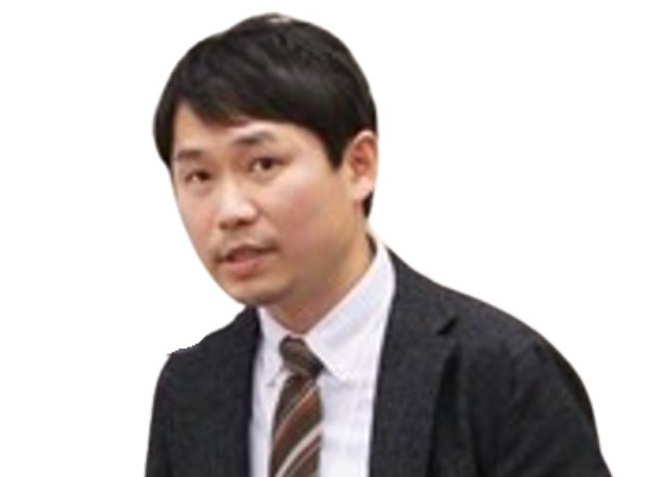
“I believe the Expo was not the finish line, but rather a starting point for Osaka and the Kansai region to build new connections with the world,” Koreto said. He added that an important part of the Expo’s legacy will be turning showcased technologies and ideas into solutions for social challenges, new businesses and new industries.
GSE2026, taking place in Osaka in the first week of October, is therefore being positioned as a mechanism to extend the global visibility created by Expo 2025 and channel it towards startups, investors, corporations, universities and research institutions.
Through the event, Osaka aims to expand the international networks built during the Expo, attract talent, companies, investment and expertise from around the world, and establish GSE as an ongoing platform for bringing technologies into practical use in society.
From Expo Visibility to Startup Outcomes
The challenge for host cities after major global expositions is often continuity. International attention can fade once the event ends unless the networks, ideas and relationships created during the period are converted into long-term economic activity.
Osaka’s strategy for GSE2026 appears designed to address precisely that challenge.
Koreto said the Prefectural Government wants the event to help transform the Expo’s legacy into tangible outcomes. These include social solutions, viable businesses and new industries that can grow out of technologies and ideas showcased through Osaka and Kansai’s global engagement.
This gives GSE2026 a dual role. It is part of Japan’s wider effort to strengthen its startup ecosystem, but it is also part of Osaka’s own effort to reposition itself internationally as a centre for deep-tech commercialisation.
Tokyo often dominates international perceptions of Japan’s startup ecosystem. Osaka, however, is seeking to present a different and complementary proposition.
Koreto described Osaka as the economic and innovation hub of the Kansai region, located near globally recognised cities such as Kyoto and Kobe. He said the region brings together global businesses, universities, research institutions, life sciences capabilities and manufacturing companies with advanced technologies.
For global startups, this combination offers significant potential. Osaka’s proposition is not simply that it is another large Japanese city, but that it has the industrial and research depth required to help startups commercialise technology.
“Through GSE, by connecting this industrial and research foundation of Osaka and Kansai with global startups and investors, we aim to establish Osaka as one of the world’s leading hubs for deep-tech commercialization,” Koreto said.
That positioning matters because deep-tech startups often face a different growth challenge from software or consumer internet companies. They need laboratories, testbeds, manufacturing partners, supply chains, regulatory understanding, capital and corporate customers. Osaka and Kansai are seeking to present themselves as an ecosystem where many of these pieces can be found in close proximity.
Moving From Innovation to Industrial Deployment
One of the key themes of GSE2026 is the connection between startups and Kansai corporations, including Osaka’s manufacturing SMEs, for prototyping, joint development and business partnerships.
Koreto said developing breakthrough technology alone is not enough to create a new industry. The technical capabilities and networks of companies across the supply chain, from materials and components to fabrication and assembly, are essential to turning research outcomes into products and services.
This is where Osaka and Kansai believe they have a competitive advantage. The region is home to global corporations, universities, research institutions and a strong concentration of manufacturing companies that have supported a wide range of industries over many years.
The ability to connect research, startups, major corporations, manufacturing capabilities and supply chains within one ecosystem is, in Koreto’s view, a major strength of Osaka and Kansai.
Japan is attractive to many overseas startups because of its large economy, industrial sophistication, engineering depth and corporate customer base. Yet it can also be difficult to enter because of language, business culture, administrative processes and corporate decision-making structures.
Koreto acknowledged these challenges, noting that overseas startups entering Japan face differences in language and business practices, as well as legal and administrative procedures.
Osaka is seeking to address this through initiatives such as OSAKA SPRINGBOARD, which brings together government and private-sector support organisations to help foreign companies establish a business in Osaka.
The support ranges from business and legal advice to assistance with administrative procedures and startup visas, as well as facilitating connections with Japanese companies. The goal, Koreto said, goes beyond attracting overseas companies to Osaka. The Prefectural Government wants to build lasting ties with them through business partnerships and continued business development.
Life Sciences, Healthcare and the Next Wave of Deep Tech
GSE2026 spans several high-growth and strategic sectors, including AI and robotics, biotechnology and healthcare, semiconductors, quantum technology, space and fusion energy.
Among these, Koreto identified life sciences and healthcare as areas where Osaka and Kansai are already internationally competitive. The region’s concentration of universities, research institutions, companies and medical institutions gives it a strong base for further global collaboration and innovation.
At the same time, Osaka sees significant growth potential over the next five to ten years in fields such as fusion energy, quantum technology, AI and robotics. Koreto said Osaka is already home to leading Japanese startups in fusion energy, has a strong quantum research community including researchers at Osaka University, and possesses a solid foundation for advanced research and industry in AI and robotics.
The opportunity, he said, lies in connecting these research capabilities and technologies with global investors and companies so they can be translated into new industries.
This is consistent with Japan’s wider deep-tech ambition. Rather than treating startups only as digital ventures, Japan is increasingly looking at hard science, advanced manufacturing, energy transition technologies, semiconductors, healthcare innovation and frontier research as foundations for the next generation of growth companies.
Koreto was careful to frame Osaka’s role not as a replacement for Tokyo, but as a complementary startup hub with distinct strengths.
He said Osaka and Kansai combine strong deep-tech research and technological expertise with a diverse industrial base capable of bringing technologies to market. Another defining feature, he added, is Osaka’s closely connected ecosystem, where relationships between people and organisations can be more readily established than in larger ecosystems such as Tokyo.
This connectedness, he said, enables researchers, entrepreneurs, investors, major corporations, manufacturers and government officials to connect directly, fostering trust and collaboration across sectors.
“We aim to establish Osaka not as a replacement for Tokyo, but as an international hub with its own distinct strengths, complementing Tokyo while contributing to the development of Japan’s startup ecosystem,” Koreto said.
Success Beyond Attendance Numbers
For Osaka, GSE2026’s success will not be measured only by the number of people who attend the event.
Koreto said the true measure of success will be the concrete actions that emerge after the event concludes on October 7. These include ongoing collaboration and proof-of-concept projects between startups and established companies, new projects and investments, memoranda of understanding between international and Osaka/Kansai-based companies, and overseas startups and companies establishing a presence in Osaka and Kansai.
GSE also works with key figures and international networks with expertise across various fields. Koreto said the organisers hope the connections formed through these collaborations will develop into long-term projects and contribute to the creation of new industries.
This outcome-focused approach gives the event a business and policy relevance beyond conventional conference visibility. If GSE2026 can produce corporate-startup partnerships, investments, proof-of-concept projects and international market-entry outcomes, it could help shift Osaka’s position in the global startup conversation.
Koreto’s own career reflects Osaka’s expanding startup agenda.
He joined the Osaka Prefectural Government in 2012 and began supporting startups in the Department of Commerce, Industry and Labor in 2017. In 2021, he was seconded to the Osaka Industrial Bureau, where he worked to promote the startup ecosystem in the Keihanshin region, covering Osaka, Kyoto and Kobe, after it had been selected by Japan’s national government. He returned to the Osaka Prefectural Government in 2024 and currently oversees startup support initiatives, including Global Startup Expo 2026.
GSE2026 arrives at a moment when Japan is trying to build deeper and more globally connected startup ecosystems. For Osaka, the opportunity is to use the momentum of Expo 2025 to position itself not only as a host city, but as a serious destination for deep-tech commercialisation.
The region’s strengths are clear: universities, research institutions, medical and life sciences capabilities, advanced manufacturing, major corporations and a network of SMEs with supply chain expertise. The challenge is to connect these assets with global founders, venture capital, corporate innovation teams and international markets.