
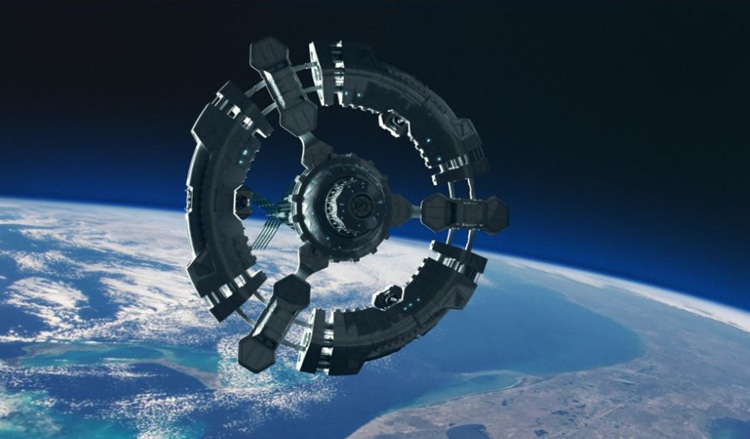
Japan’s space startups are surging ahead, fueled by a ¥1 trillion government fund and strategic defense contracts, transforming the nation into a key player in the global commercial space race. In 2026, firms like ispace, Synspective, and Interstellar Technologies lead with lunar missions, satellite constellations, and massive funding rounds, amid collaborations with JAXA and international partners.
As Japan positions itself at the forefront of next-generation innovation, platforms such as SusHi Tech Tokyo 2026 are emerging as important global stages where deep tech sectors, including space technology, can engage with investors, policymakers and international collaborators, further accelerating this momentum.
Japan’s Space Strategy Fund, a ¥1 trillion initiative over 10 years managed by JAXA, drives this boom by funding over 140 projects in transportation, satellites, and exploration. The Basic Policy 2025 emphasizes public-private ties, aiming to double the ¥4 trillion space industry to ¥8 trillion by the early 2030s. Prime Minister Takaichi Sanae, a key advocate, prioritizes disruptive tech for national security against rivals like China.
Arab News quoted JAXA President Hiroshi Yamakawa stressing at the World Economic Forum, “Japan’s national goals in space are clear: enhancing access to space, boosting international competitiveness and ensuring space sustainability and economy.”
The MoD’s satellite constellation PFI (Private Finance Initiative), involving Synspective and Axelspace for a multi-billion yen project through 2031, aligns with Yamakawa’s emphasis on dual civil-security collaboration.
In parallel, SusHi Tech Tokyo 2026, with its focus on Sustainable High City Tech, provides a natural convergence point for space startups working on Earth observation, satellite data, and space-based infrastructure that directly contribute to urban resilience, climate monitoring and future city systems.
Key Players
ispace, founded in 2010, pioneers lunar logistics with $196 million raised and Tokyo-listed status. Its Mission 2 reached lunar orbit in 2025; Mission 3 joins NASA’s CLPS in 2026 for polar landings, projecting 31% revenue growth. Founder Takeshi Hakamada noted in Brunswick Review, “The IPO was a very strategic decision… we raised about $100 million by the end of 2017… a surprise in Japan’s small VC market then.”
Synspective builds SAR satellites for all-weather imaging, with $244 million funded and seven StriX birds in orbit. A ¥105.6 billion MoD contract through 2031 anchors its 30+ satellite constellation. Axelspace, now public, supplies optical data for the same project and leads microsat ops.
Interstellar Technologies hit 44.6 billion yen ($287 million) total funding via Series F in January 2026, led by Woven by Toyota. Its Zero rocket eyes orbital launches under government SBIR Phase 3. ArkEdge Space grabbed ¥8 billion in 2025 for microsatellite commercialization and JAXA LEO PNT sats.
Astroscale excels in debris removal, with a ¥87 billion market cap and growing defense ties. CEO Nobu Okada highlighted at IAC 2024 in a SpaceWatch Global article, the push for a “circular economy in space” via Elsa-M mission in 2026. Space One’s Kairos rocket targets small-sat launches despite three failures, aiming for 20 yearly by 2030.
These companies represent the kind of deep technology innovation that is increasingly being showcased at global platforms like SusHi Tech Tokyo 2026, where space startups can position themselves not only as aerospace players but as critical enablers of data-driven economies and smart city infrastructure.
Aerospace startups topped domestic VC in H1 2025, with five IPOs since 2023 like Axelspace and iQPS. Total space tech funding hit $1.36 billion, up 29% in 2025 deals. Investors like SBI, Nomura, and Toyota back scalability amid TSE rules pushing ¥10 billion caps post-IPO.
PD AeroSpace CEO Shuji Ogawa told Reuters, “Risk money and state budgets are finally coming to Japanese space ventures,” eyeing IPO by 2027. Over 100 firms now operate, spawning “second-generation” players beyond pioneers.
Launch failures plague Space One, testing resilience in a SpaceX-dominated market. Talent shortages demand citizenship for contracts, prompting allied hires and uni training. Repeatable proofs lag for early-stage firms, risking funding amid orbital debris tripling since 2000.
Japan is collaborating with Artemis on a lunar rover and astronaut landing. Additionally, ESA’s Tokyo office is partnering for Earth observation and Apophis missions and ispace’s U.S. arm is tieing up with NASA and Synspective is partnering with Airbus and Rocket Lab for 21 launches.
By 2030s, Japan is eyeing SpaceX-like dominance via funds, MoD demand, and EO growth to $8 billion globally. Defense SSA/SDA and debris mitigation will boom, with ¥8 trillion industry fueling exports. As Yamakawa put it, JAXA blends civil and security for “space situational awareness to prevent collisions.”
This ecosystem, once Mitsubishi-led, now thrives on startups’ innovation, securing Japan’s stellar ascent.
In this context, SusHi Tech Tokyo 2026 offers space startups a strategic gateway to connect with global investors, policymakers and cross-sector partners, particularly as space technologies increasingly intersect with climate monitoring, urban systems and digital infrastructure.