
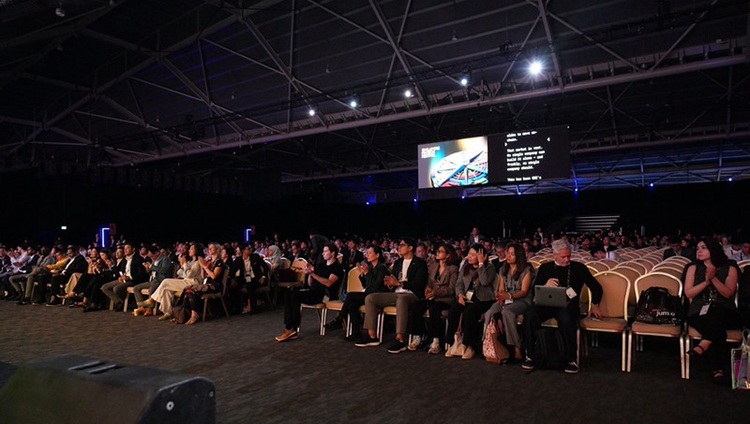
SINGAPORE, November 20, 2026: The Singapore FinTech Festival 2026, held from November 18-20 at Singapore EXPO, brought together leaders from finance, technology and policy to examine how artificial intelligence, digital money, shifting capital flows and geopolitical change are reshaping the global financial system.
Organised by the Monetary Authority of Singapore (MAS) and the Global Finance & Technology Network (GFTN) in collaboration with the Association of Banks in Singapore, the 11th edition of the festival centred on the theme “The Coming Rewiring of the Financial System: New Risks. New Rules. New Growth.”
The programme focused on five forces that organisers said were increasingly transforming finance: technology, geoeconomics, capital, talent and policy.
Across keynote addresses, policy discussions, industry sessions and technology demonstrations, participants examined how agentic AI, tokenisation, digital money and quantum technologies could affect financial services and transactions, alongside the implications of changing trade patterns, capital flows and international cooperation.
AI and digital money move to the centre of financial infrastructure
Technology remained one of the dominant themes of this year’s festival. Discussions explored the increasing use of agentic AI, the evolution of tokenised markets and digital money, and the emergence of programmable financial infrastructure.
The festival also examined how AI could change employment, skills and entrepreneurship, while raising wider questions around accountability, regulation and trust.
That tension between innovation and resilience was reflected in comments from Kenneth Gay, Chief FinTech Officer at MAS, who said the decisions being made around technology, regulation and financial infrastructure would shape how finance serves businesses and individuals for years to come.
“As AI, digital money and other innovations transform the financial system, we need to make sure that innovation goes hand in hand with trust and resilience,” Gay said.
More than 600 sponsors and exhibitors
The festival featured more than 600 sponsors and exhibitors and over 40 international pavilions across five exhibition halls, showcasing developments in areas including AI-enabled payments, digital assets, cross-border payments and programmable financial infrastructure.
The exhibition also provided a platform for startups to present new technologies and connect with potential investors and partners.
For businesses and technology providers, the international pavilions created another layer of cross-border engagement, bringing together participants from different markets seeking commercial, investment and innovation partnerships.
Finance increasingly shaped by geoeconomics
Beyond technology, the festival placed greater emphasis on the interaction between finance and geopolitics. Sessions examined how changes in global trade, investment flows and international cooperation were affecting the structure of financial markets.
Sopnendu Mohanty, Group CEO of GFTN, described the transformation as being driven by five interconnected forces. “Technology, geoeconomics, capital, talent and policy” are reshaping financial markets, redirecting capital and redefining both jobs and institutions, he said.
The broader challenge, he added, is translating these changes into coherent policy, trusted financial infrastructure and new opportunities for growth and employment across borders.
SME finance took a larger role
A notable element of SFF 2026 was the integration of the 12th Global SME Finance Forum, held under the theme “Transforming Access to Impact: Market, Capital & Technology.”
The forum brought together senior leaders from more than 80 countries to discuss ways of improving access to finance for small and medium-sized enterprises. Its programme included the Global SME Finance Awards, an Experience Centre and a dedicated Learning Day.
The focus reflected the continuing challenge of ensuring that financial innovation reaches beyond large institutions and well-funded technology companies.
SMEs remain a critical part of most economies but frequently face constraints around financing, technology adoption and access to international markets.
India and China pavilions highlight cross-border ambitions
International collaboration was another prominent feature. The India Pavilion, presented by the Indian Trade Promotion Organisation under India’s Ministry of Commerce and Industry, brought together startups, financial institutions, regulators and policymakers.
The initiative was intended to strengthen India-Singapore economic ties while connecting Indian FinTech companies with Singapore’s capital base and financial institutions and providing access to ASEAN and global markets.
The GFTN & SEGA Go-Global Pavilion featured 30 technology companies from Shanghai and Shenzhen, connecting Chinese innovators with international investors and financial institutions.
These initiatives reinforced Singapore’s role as a meeting point between Asian innovation ecosystems and global capital.
Startups, investors and founders remain central
The festival’s established programmes again focused heavily on connecting entrepreneurship with capital.
SFF MeetUp, described by organisers as Asia’s largest FinTech meetings programme, was designed to facilitate more than 20,000 pre-scheduled meetings between attendees, investors, business partners and industry leaders.
Investor Hours brought together founders, general partners and limited partners to explore investment opportunities, while The Founders Peak featured entrepreneurs discussing the personal and operational challenges involved in building and scaling companies.
The festival also featured the launch of STUBBORN: Decoding the Unreasonable Mindset of Founders Who Build Against All Odds, based on analysis of 350 founder journeys across more than 40 countries.
Policy questions move closer to the technology
Ahead of the main festival, the invitation-only Insights2040 Annual Meetings, held from November 16-17, brought together senior public- and private-sector leaders to examine some of the more difficult policy questions created by emerging financial technologies.
Discussions covered accountability and liability in agentic systems, scaling tokenised markets, payment-chain standards and the issue of sovereignty and resilience in a more interconnected financial system. Joint media release_Singapore F…
The inclusion of such topics reflected the increasingly blurred boundary between technology development and financial regulation.
As AI agents become more autonomous and tokenised assets move beyond experimental use cases, regulators and market participants face questions that cannot be addressed solely after technologies have scaled.
Singapore reinforces role as global FinTech convenor
The scale and scope of SFF 2026 reinforced Singapore’s position as one of the major global meeting points for financial technology.
The festival has evolved from a largely FinTech-focused event into a broader forum examining how financial institutions, governments, startups, investors and technology companies respond to structural changes in the global economy.
This year’s theme of “rewiring” captured that shift. The conversation was no longer simply about digitising banking services or creating new payment products.
It increasingly encompassed AI-driven financial systems, digital money, tokenised markets, global capital flows, workforce disruption and the regulatory architecture needed to maintain trust.
For Singapore, the challenge is also an opportunity. As financial systems become more interconnected but geopolitically more fragmented, the city-state continues to position itself as a neutral hub where policymakers, institutions, technology companies and investors can come together to shape standards and build new commercial relationships.
SFF 2026 ultimately highlighted a financial system being redesigned on multiple fronts at once. Technology may be driving much of that change, but the larger question emerging from the festival was how quickly institutions, regulation and talent can adapt to it.