

As SusHi Tech Tokyo 2026 brings global focus to Japan’s deep tech ecosystem, few sectors capture both ambition and complexity as clearly as fusion energy. Among the companies at the forefront is Kyoto Fusioneering, led by Satoshi Konishi, which is positioning itself as a key enabler in the emerging global fusion industry.
In an exclusive interaction with AsiaBizToday in the lead-up to the event, Konishi outlined how the company has evolved from a university spinout into a globally connected deep tech business, and what this means for Japan’s broader startup ecosystem.
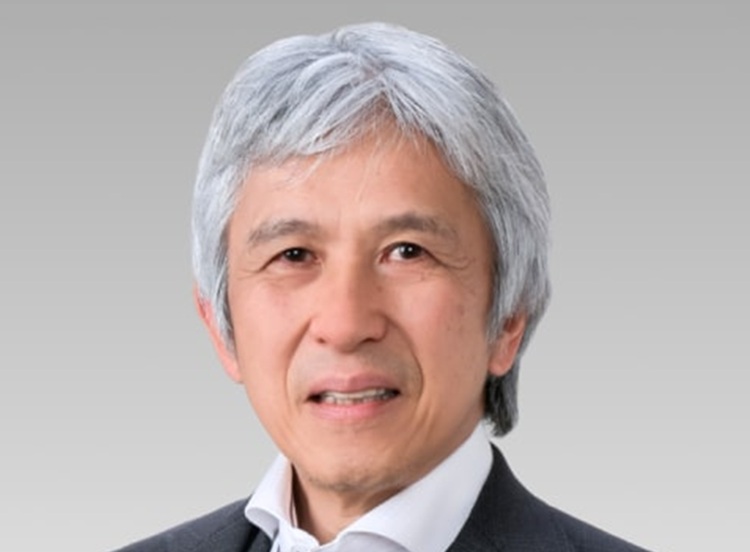
From University Research to Global Relevance
Kyoto Fusioneering originated as a spinout from Kyoto University, rooted in decades of scientific research. However, the transition from laboratory-scale experimentation to commercial deployment presented a fundamental challenge.
“There was a big gap from the university scale to the industry scale,” Konishi explained, referring to the need for capital, workforce, infrastructure and industrial partnerships to scale fusion technologies.
The company’s strategy has been to bridge this gap by focusing on fusion engineering and supply chain development, rather than competing directly with reactor developers. This positioning has enabled it to collaborate with both public and private sector players globally.
Today, a majority of its customers are based outside Japan, reflecting the international nature of the fusion ecosystem.
A Different Kind of Deep Tech Business
Fusion energy has often been viewed as a distant scientific ambition, but Konishi frames it differently. “Fusion is not just a faraway dream, but a series of technical challenges that need to be solved step by step,” he said.
This incremental approach has allowed Kyoto Fusioneering to build a business around solving specific engineering problems within the fusion value chain, creating immediate commercial opportunities while contributing to long-term industry development.
The company’s core focus is on enabling the infrastructure required for fusion systems, including fuel cycles, materials and integrated engineering solutions.
While Japan offers strong research capabilities, scaling deep tech startups remains complex.
Konishi pointed to several structural challenges:
- limited access to large-scale capital
- the need for extensive infrastructure and testing facilities
- regulatory and policy constraints
- long development timelines
“Deep tech needs not only money, but also infrastructure and policy support,” he noted. Unlike software startups, fusion ventures require decades of sustained investment, making it necessary to engage long-term investors such as corporates and public funds, alongside traditional venture capital.
SusHi Tech Tokyo as an Industry Connector
Against this backdrop, SusHi Tech Tokyo 2026 is playing an increasingly important role. Konishi sees the platform not as a one-off event, but as a framework for building long-term relationships across the ecosystem.
“We need large-scale collaboration between startups, industry and investors to establish a new supply chain,” he said.
For fusion, which depends on highly specialised technologies and global partnerships, such platforms are critical in enabling communication and coordination.
Building a New Energy Ecosystem
Looking ahead, Kyoto Fusioneering’s ambition extends beyond technology development. Konishi believes fusion has the potential to fundamentally reshape how energy is produced and consumed.
“Fusion is not just about replacing existing energy sources, but about creating a new energy system,” he said, highlighting possibilities ranging from decentralised energy networks to integrated industrial applications.
Over the next five to ten years, the company’s focus will be on building a global supply chain for fusion technologies, positioning Japan as a key player in this emerging industry.
As SusHi Tech Tokyo 2026 convenes global stakeholders, Kyoto Fusioneering’s journey offers a clear example of how Japan’s research strengths can translate into globally relevant deep tech businesses, provided the right ecosystem support is in place.