
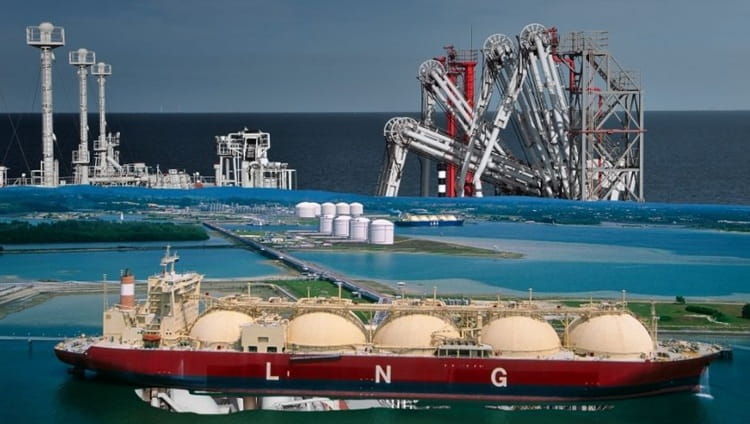
HONG KONG, August 30, 2026: CIMC Enric Holdings Limited has supported the maiden commercial voyage of Digul Mas, an LNG-powered container vessel owned by Indonesia’s TEMAS Group, marking a new model for cleaner inter-island shipping in Southeast Asia.
Digul Mas has officially commenced operations on the Surabaya, Kendari and Gorontalo route in Indonesia. The vessel uses a pioneering LNG tank container swapping propulsion system, with CIMC Enric supplying marine LNG fuel tank containers and building TEMAS Group’s 5MMSCFD skid-mounted LNG liquefaction plant. The project establishes an integrated chain covering liquefaction production, tank container storage and transport, and vessel fuel application.
The vessel is the first delivery in TEMAS Group’s planned fleet of eight green LNG-powered container vessels. It is a 488-TEU standard container cargo vessel designed for dry cargo transportation between Indonesian islands. The remaining seven vessels of the same type are expected to enter production and operation by 2027.
A Swapping Model for Island Shipping
The project is notable because it avoids the need for conventional LNG bunkering infrastructure, which can be costly and difficult to deploy across an archipelagic geography such as Indonesia.
Unlike conventional LNG-powered vessels that rely on fixed large-scale fuel storage tanks, Digul Mas uses replaceable LNG fuel tank containers arranged on deck. Once fuel is consumed, empty tank containers can be rapidly swapped for full ones using ordinary container lifting equipment at the terminal, without the need for dedicated LNG bunkering terminals.
CIMC Enric said this model directly addresses the challenges created by Indonesia’s dispersed islands and limited LNG bunkering infrastructure. The China Classification Society conducted a special risk assessment for the use of tank containers on vessels, while CIMC Enric participated in technical solution demonstration and review to support compliance and operational safety.
Closed-Loop LNG Supply Chain
At the upstream energy supply end, TEMAS Group’s 5MMSCFD skid-mounted LNG liquefaction plant, constructed by Zhangjiagang CIMC Sanctum Cryogenic Equipment Company Limited under CIMC Enric, began production and operation in Surabaya in May 2026.
The plant integrates natural gas pre-treatment, liquefaction, storage, loading and utilities. LNG produced at the facility can be directly filled into marine LNG fuel tank containers developed and manufactured by CIMC Enric, creating a closed loop covering local liquefaction, tank container filling, multimodal transport, transshipment, vessel tank container swapping and refuelling.
For Indonesia, this model is commercially significant. The country has strong demand for inter-island shipping, but its natural gas pipeline network has limited coverage and large-scale LNG bunkering terminals are costly and difficult to deploy. CIMC Enric said its “skid-mounted liquefaction plant plus standardised LNG fuel tank container” virtual pipeline solution allows each link to operate independently and flexibly, without large-scale terminal modification.
Low-Carbon Maritime Logistics
CIMC Enric said LNG significantly reduces carbon dioxide, sulphur oxide and nitrogen oxide emissions compared with conventional fuel, supporting Indonesia’s maritime emission reduction targets and compliance with IMO emission standards. The system would allow the TEMAS fleet to serve small and medium-sized ports without dedicated bunkering facilities, accelerating the green upgrade of Indonesia’s domestic inter-island container shipping.
The company said the model can be replicated across island power generation, inland waterway transport and nearshore logistics. CIMC Enric plans to deepen its presence in Southeast Asia’s overseas markets by delivering clean energy equipment and systematic solutions.
Founded in 2004 and listed in Hong Kong since 2005, CIMC Enric provides equipment, core processes and integrated services for the clean energy, chemical and environmental, and liquid food sectors. It has more than 20 subsidiaries across China, the Netherlands, Germany, Belgium, the United Kingdom and Canada.
For ABT readers, the Digul Mas project offers a practical Southeast Asian example of how modular energy infrastructure can support maritime decarbonisation in markets where conventional infrastructure rollout is difficult. It also positions CIMC Enric as a technology and systems partner for cleaner logistics in island economies.