
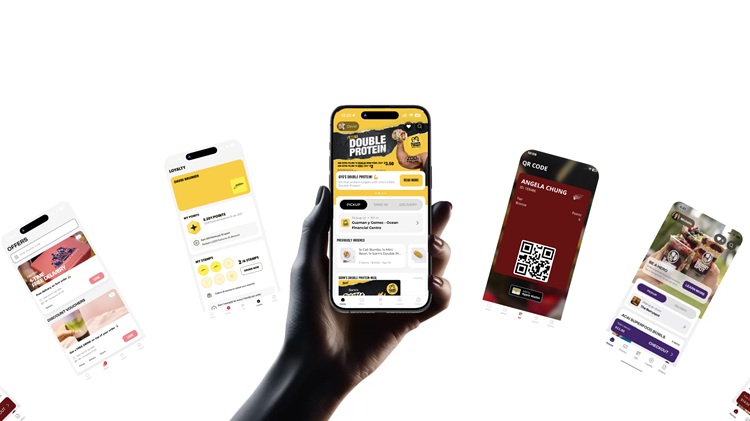
SINGAPORE, April 29, 2026 – Cata, a Singapore-based consumer app platform for F&B and retail businesses, has raised USD 5.3 million in seed funding less than a year after launch, as it looks to bring enterprise-level digital capabilities to merchants of all sizes and accelerate global expansion.
The oversubscribed funding round was led by Portage and backed by investors including White Star Capital, 468 Capital, FoodLabs, FJ Labs, Rally Cap and Iterative. The funding will support product development, particularly AI-driven capabilities, as well as the company’s international expansion, beginning with Germany.
Cata enables F&B and retail operators to launch and manage their own branded consumer apps by integrating core functions such as mobile ordering, payments, loyalty programmes, promotions, CRM and customer data into a single platform. The company says these capabilities were previously accessible mainly to global brands such as Starbucks and McDonald’s, or delivery platforms like Grab, foodpanda and Uber Eats.
Bringing enterprise-level digital tools to smaller operators
Founder and CEO David Brunier said the platform was created to address long-standing barriers faced by merchants trying to digitise operations.
“The tools needed for F&Bs and retailers to digitise operations have been out of reach for too long. They’re either too costly, too complex, or too fragmented to deliver results and drive ROI,” he said.
“Our goal is not only to be the innovating force enabling merchants to access the most modern technology for their businesses, but also to make large-scale digital operations possible for any operator globally, allowing them to build and own their customers’ online experience directly.”
Rather than requiring months of development, large upfront investment and operational complexity, Cata allows businesses to launch branded applications within days, offering what it describes as a more connected and scalable operating model.
For merchants, one of the biggest advantages is ownership of customer data. Businesses gain visibility into customer behaviour, frequency of return visits and purchasing patterns, which can then be translated into automated loyalty campaigns, CRM workflows and personalised promotions designed to improve retention and repeat engagement.
Since launching last year, Cata has partnered with several brands, including Guzman y Gomez (GYG), which uses its branded app across all 23 Singapore locations.
According to the company, GYG has more than doubled its sales through digital channels since adopting the platform, recording double-digit app sales growth almost every month. It also reported significant gains in user growth, customer retention, purchase frequency and average basket size.
Cata says this demonstrates how the right digital infrastructure can unlock meaningful performance improvements for traditional offline businesses. As more brands use the platform, the system continuously improves based on real-world usage, allowing merchants to benefit from evolving features and optimisations without needing to develop them independently.
Expanding beyond F&B into broader retail
While the company’s initial focus has been on food and beverage, Cata sees the challenge as much broader across offline consumer industries.
Traditional businesses are under increasing pressure to digitise as labour, rent and operating costs rise, particularly in highly competitive sectors like F&B. In Singapore alone, government data showed that nearly two-thirds of F&B businesses that ceased operations in 2025 had been registered for five years or less, with many never reaching profitability.
This highlights what Cata sees as a critical gap between digital ambition and operational reality, where many businesses focus first on labour, rent and product margins, but underinvest in technology that could improve long-term performance.
Jake Bodanis, Partner at Portage, said businesses are increasingly recognising customer ownership as a core driver of sustainable growth. “We see a clear shift toward businesses prioritising ownership of their customer relationships and data as a core driver of growth,” he said.
“Cata enables businesses to build, manage and scale their digital channels with control, speed and efficiency.” Alongside its geographic expansion into developed markets, the company plans to move beyond F&B into retail and booking services as part of its long-term strategy, targeting additional digitally underserved sectors.
As customer expectations continue to rise and margins remain under pressure, platforms that help businesses unify digital operations and retain ownership of customer relationships are likely to play an increasingly important role in shaping the next phase of growth.