
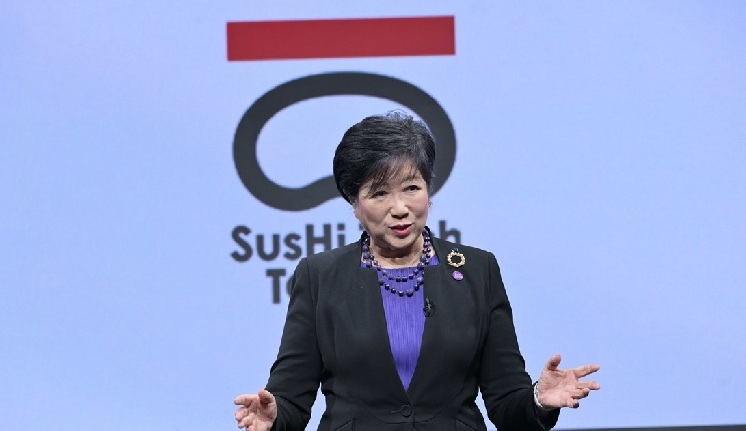
TOKYO, April 27, 2026 – Tokyo Governor Yuriko Koike officially opened SusHi Tech Tokyo 2026 this morning at Tokyo Big Sight, setting the tone for what is expected to be the largest edition yet of Asia’s flagship startup and innovation conference.
In her opening address, Governor Koike reinforced Tokyo’s ambition to become one of the world’s most startup-friendly cities, positioning SusHi Tech Tokyo not merely as an annual conference, but as a central pillar of the Tokyo Metropolitan Government’s long-term strategy to drive innovation, sustainability and global collaboration.
Held from April 27 to 29, the fourth edition of SusHi Tech Tokyo — short for Sustainable High City Tech Tokyo — brings together startups, investors, corporates, city leaders and policymakers from around the world under the shared goal of building sustainable cities through advanced technology. This year’s event features more than 700 startup exhibitors, over 10,000 expected business meetings, and approximately 60,000 participants, making it the biggest edition to date.
A Platform Beyond Startups
Governor Koike emphasised that SusHi Tech Tokyo is not simply about startup pitches or investor networking, but about creating an ecosystem where innovation can directly address urban challenges such as climate resilience, ageing infrastructure, energy transition and inclusive growth.
Through SusHi Tech, Tokyo aims to bring together domestic and international players “to spark the next wave of innovation,” while developing the platform into “a truly distinctive conference that attracts ecosystems from around the world, a must-attend event for all.”
This broader vision aligns closely with Tokyo’s 10×10×10 Innovation Vision, a strategic initiative launched by the Tokyo Metropolitan Government to increase tenfold the number of startups, unicorns and collaborative public-private projects within five years. SusHi Tech Tokyo has become the flagship platform driving that ambition.
Four Core Themes Define 2026
This year, artificial intelligence sits at the centre of the programme, supported by four major focus areas:
- AI
- Robotics
- Resilience
- Entertainment
The event reflects a clear shift from innovation as demonstration to innovation as implementation.
Sessions across the three days will explore how AI is reshaping cities and industries, how robotics is transforming labour and infrastructure, how resilience technologies are preparing cities for climate and disaster risks, and how digital creativity is redefining entertainment and cultural economies.
Notable sessions include discussions on “Who Will Build Trustworthy AI?”, “Toward the Leap of Japanese Startups onto the Global Stage”, “Women Leaders in an Era of Transformation”, “The Power of Diversity in Action”, and “Can We Build Cities that Capture CO₂ from the Air?”
The international dimension of SusHi Tech Tokyo continues to expand. This year includes 22 international pavilions, participation from more than 60 countries, and a simultaneous G-NETS Leaders Summit, where leaders from 55 cities across five continents are gathering under the theme of “A New Urban Future built on Climate and Disaster Resilience.”
The summit reflects Tokyo’s effort to position itself not only as a startup capital, but as a city leading global dialogue on urban resilience, decarbonisation and sustainable development.
Deputy Governor Manabu Miyasaka recently described the event as one where “the gathering of innovation leaders and city leaders in one place will make this event like no other.”
Building Real Business Outcomes
Unlike traditional technology conferences, SusHi Tech Tokyo is designed around business outcomes.
Structured matchmaking through the official event app, investor zones, reverse pitches from cities and corporates, startup showcases, university spinout zones and dedicated deep tech areas ensure that participants move quickly from introductions to partnerships.
The venue itself spans Tokyo Big Sight’s expanded West Halls 1–4, including AI, Robotics, Investor, Open Innovation and Global Startup areas, creating a highly interactive business environment.
For Tokyo, the objective is clear: to create an innovation platform where ideas translate into investment, policy and long-term industry building.
Tokyo’s Next Chapter
Governor Koike’s message this morning was also symbolic. As the first female Governor of Tokyo and now in her third term, she has consistently positioned innovation, sustainability and startup development as core to the city’s future economic competitiveness.
Her opening address made clear that SusHi Tech Tokyo is not a standalone event, but part of a broader effort to ensure Tokyo remains globally relevant in an increasingly competitive innovation landscape.
“We will also promote a comprehensive approach to global innovation that brings together start-ups, but also large corporations and SMEs,” she noted.
As SusHi Tech Tokyo 2026 begins, Tokyo is not simply hosting a conference, it is making a statement. That statement is that the future of cities will be built through collaboration between technology, capital and leadership, and Tokyo intends to be at the centre of that conversation.