

HONG KONG, March 20, 2026 – As the global transition toward electric mobility accelerates, the focus of the battery industry is increasingly shifting from purely chemistry innovation to the manufacturing processes and supporting technologies that enable reliable, high-volume production.
For Zeller + Gmelin, a German industrial chemicals and lubricants specialist with more than 160 years of history, this transformation represents both a continuation of its traditional automotive expertise and a significant opportunity to expand into the rapidly evolving electric vehicle ecosystem.
Speaking to AsiaBizToday on the sidelines of The Battery Show Asia in Hong Kong, Marc-Tran Heller, General Manager of Zeller + Gmelin (Suzhou) Co., Ltd., said the company is positioning itself as a key partner to battery manufacturers and EV producers seeking high-precision manufacturing solutions.

“The Battery Show stands out because it attracts a very professional audience,” Heller said. “It may not be the largest exhibition in terms of visitor numbers, but the discussions and conversations here are very high quality.”
From Traditional Automotive to Electric Mobility
Founded in Germany and still family-owned after more than a century and a half, Zeller + Gmelin specialises in industrial lubricants, process chemicals and printing inks. The company has traditionally served the automotive industry, supplying highly specialised fluids used in precision manufacturing.
That expertise, according to Heller, naturally extends into the electric vehicle sector. “Our traditional business has always been closely connected to the automotive industry,” he said. “As the industry transitions to electric mobility, we are continuing to support our customers in that journey.”
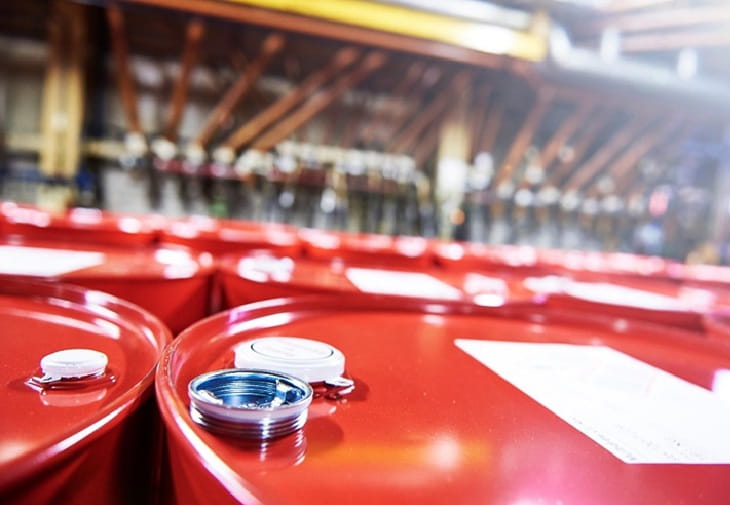
The company’s product portfolio now includes specialised solutions designed specifically for the battery and EV sectors, including cooling fluids and machining lubricants used in battery cell manufacturing and EV component production.
With the rapid expansion of battery manufacturing facilities globally, the need for precision engineering solutions has grown significantly.
Precision Manufacturing at the Core of Battery Production
Battery production requires extremely tight tolerances and consistent manufacturing processes, similar to the requirements historically associated with internal combustion engine components.
“Gigafactories may sound like a new concept, but large-scale industrial production has always existed,” Heller said. “Even in traditional automotive manufacturing, components often have micrometer or even sub-micrometer tolerances.”
Achieving that level of precision requires highly specialised machining fluids and lubricants that enable manufacturers to maintain performance and efficiency during large-scale production.
“These fluids are essential for CNC machining and other high-precision processes,” he said. “They help maintain long machine uptime and stable production conditions, which ultimately improves overall equipment effectiveness.” For battery manufacturers moving from pilot production to gigafactory-scale operations, process stability is becoming a critical challenge.
“Many companies today are scaling from prototype or small-scale production into mass manufacturing,” Heller explained. “They need to understand how to maintain stable processes and sustainable operations at that scale.”
China Driving the Battery Ecosystem
Asia remains the centre of global battery manufacturing, with China playing a particularly dominant role in shaping the industry’s development. “It is absolutely clear that China sets the pace in the battery ecosystem,” Heller said. “The technological progress and engineering capability that has emerged in the past decade is remarkable.”
He noted that the speed of innovation and industrial development in China has even prompted European companies to learn from their Asian counterparts. “We are now in a situation where companies from Europe and the West are learning from manufacturers and customers in China,” he said.
Zeller + Gmelin has maintained a presence in China for two decades, operating local production facilities, laboratory capabilities and service teams to support regional customers. The company plans to expand its footprint further as the new energy vehicle industry continues to grow.
Southeast Asia Emerges as the Next Growth Wave
While China remains the epicentre of battery manufacturing, Southeast Asia is increasingly emerging as the next major growth region for electric vehicle production and supply chains. “Southeast Asia will likely represent the next wave of new energy vehicle development,” Heller said.
The company is already exploring partnerships and joint ventures in markets such as Thailand and Vietnam while also closely monitoring opportunities in India. Chinese automakers are also expanding their production footprint across Southeast Asia, partly in response to changing global trade policies and diversification strategies.
“We want to follow our customers wherever they go,” Heller said.
Cooling Technologies Become a New Battleground
Beyond manufacturing processes, thermal management is rapidly becoming one of the most critical challenges in battery technology as manufacturers seek to increase power density and charging speeds.
Recognising this trend early, Zeller + Gmelin has begun developing new product lines focused on battery cooling and thermal management. “A few years ago we started to look more closely at battery production and realised that thermal management would become extremely important,” Heller said.
The company has developed thermal gap fillers designed to improve heat transfer within battery packs and is now introducing new immersion cooling and water-based cooling solutions.
These technologies are expected to become increasingly relevant as battery performance continues to improve. “High-performance batteries generate more heat, and efficient cooling solutions become essential,” he said.
Beyond electric vehicles, Heller believes these technologies will also play a critical role in energy storage systems, which are becoming increasingly important for renewable energy integration.
Sustainability Starts on the Production Line
While sustainability discussions often focus on battery recycling and lifecycle management, Heller argues that environmental responsibility begins much earlier in the manufacturing process.
“Circularity starts already during production,” he said. Reducing machine downtime, preventing defective components and minimising scrap rates all contribute to more sustainable manufacturing.
“If production lines stop frequently or if you have high scrap rates, that means wasted materials, wasted energy and wasted costs,” Heller said.
Optimised lubricants and machining fluids can help manufacturers reduce these inefficiencies by ensuring consistent production quality and longer operational lifetimes for industrial equipment.
Another element of sustainability involves extending the lifespan of industrial fluids themselves. “With the right service and monitoring, lubricants can be used for much longer periods,” he said.
Recycling Industrial Oils
Zeller + Gmelin has also developed recycling systems for industrial lubricants through its subsidiary Südöl in Germany. The division collects used oils, removes impurities and reprocesses the materials for reuse in new products.
“We track the used oils, remove dirt and impurities, and recycle them so they can be used again,” Heller said. “This is a perfect example of circular economy in practice.” He believes similar systems could eventually be introduced in other regions as the battery manufacturing ecosystem expands globally.
Supporting the Next Generation of Battery Manufacturers
Looking ahead, Heller expects the battery industry to see a wave of new companies transitioning from early-stage development to full-scale production.
“We will see many more players moving from pilot projects into mass production,” he said. For those companies, maintaining stable manufacturing processes will be critical to success.
“Our role is to support these manufacturers with lubrication and thermal management solutions that help optimise their production processes,” Heller said.
As the battery sector continues to expand, companies that combine advanced chemistry with robust manufacturing capabilities are likely to shape the next phase of the industry. For suppliers like Zeller + Gmelin, the opportunity lies in ensuring that the supporting technologies required to manufacture those batteries at scale evolve just as rapidly.