
LAS VEGAS, January 9, 2026 — CES 2026 lived up to its tagline “The Future Is Here,” emerging as one of the most consequential gatherings of technology leaders, innovators and business decision-makers in recent memory. With more than 148,000 attendees, 4,100+ exhibitors and over 1,300 speakers across 400+ sessions, this year’s show offered a vivid snapshot of how innovation is converging across industries and accelerating into practical deployment. Importantly, more than 55% of attendees were senior-level executives, reinforcing CES’s role as both a technology showcase and a business catalyst.
AI Moves Beyond Software — Into the Physical World
A dominant theme throughout CES was the transition from digital transformation to what organisers described as intelligent transformation — where artificial intelligence reshapes not just software, but physical systems and real-world outcomes. This year’s exhibits showcased AI across multiple frontiers, from agentic and vertical AI to industrial AI and physical AI in robotics, illustrating how intelligence is being embedded into the machines and systems that underlie modern commerce and everyday life.
Big-stage keynotes echoed this shift. AMD Chair and CEO Dr. Lisa Su emphasised that AI integration now spans from data centres to edge devices, citing dedicated AI platforms and partnerships that bridge enterprise, consumer and industrial applications — a signal that cross-sector adoption of AI is no longer aspirational, but operational.

Robotics Takes Centre Stage — Beyond Gimmicks to Real Use Cases
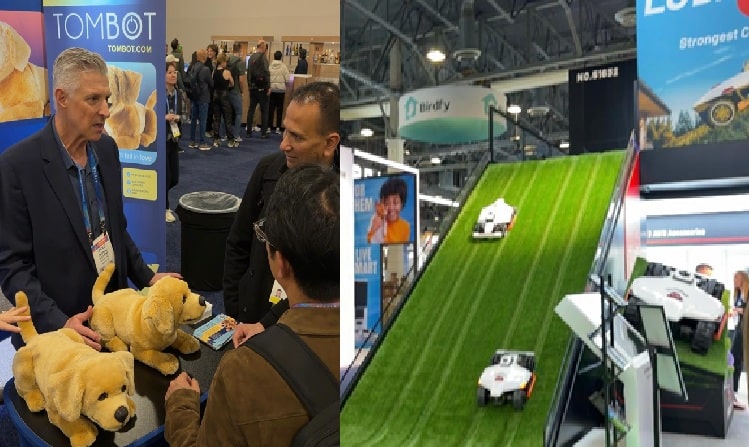
This year’s CES floor was saturated with robotics, reflecting the industry’s growing confidence that intelligent machines will be foundational to future work and life. Official CES coverage characterised this as a new era of “physical AI,” where robots are capable of more adaptive, decision-making behaviour and real-world interactions.
Across major booths and pavilions, humanoid and task-oriented robots weren’t just crowd-pleasers — they highlighted genuine value propositions. From industrial collaborators and warehouse assistants to robots designed for logistics support, the trend points to automation that augments human capacity at scale. Such demonstrations underscore robotics as a significant lever in industry productivity — particularly where repetitive, physically demanding tasks remain bottlenecks.
Mobility & Intelligent Transportation Gain Unmistakable Momentum
Mobility, once just a bright corner of the CES agenda, has become a central pillar of the innovation ecosystem. With CES formally dedicated to Vehicle Tech & Advanced Mobility, exhibitors presented everything from software-defined vehicles and autonomous platform components to next-generation shuttles and connected infrastructure.
Autonomy was a clear focus, with robotaxi concepts and smart mobility platforms illustrating how advanced sensor fusion, real-time AI and mapping technologies are maturing. OEMs and mobility startups streamed conversations around software architectures that enable vehicles to sense, adapt and operate with increasing independence — an evolution that promises to reshape urban transport, freight logistics and personal mobility in the decade ahead.
Innovation Across Sectors — Beyond Headlines
CES 2026 wasn’t solely about robots and AI engines. Its 2.6 million net square feet hosted breakthroughs across energy, digital health, accessibility and smart home ecosystems. Exhibitors presented next-generation battery storage and grid solutions, AI-powered health monitoring tools, wearables for independent living and accessibility platforms that break down everyday barriers.
Startups — more than 1,200 at this year’s show — demonstrated that innovation is thriving at the edges as well as the core. From assistive tech and industrial optimisation to embedded AI in niche workflows, CES reaffirmed itself as the place where ideas meet execution and where founders connect directly with partners, investors and enterprise buyers.
Business Signal: The Future Is Now
A common refrain among leaders was that CES 2026 no longer felt like a preview of distant possibilities, but a marketplace of present realities. As CES Executive Chair and CEO Gary Shapiro noted in the official press wrap, the show represents “where technology meets community, business, and policy” — underscoring its unique role as both a trend barometer and a business engine.
From robotics and AI to mobility and digital systems, this year’s CES didn’t just highlight what’s coming next — it illustrated how innovation is already reshaping industries, workflows and competitive landscapes. For businesses navigating this era of transformation, the lesson from Vegas is clear: adapt early, think holistically, and integrate intelligence at the core of strategy.