

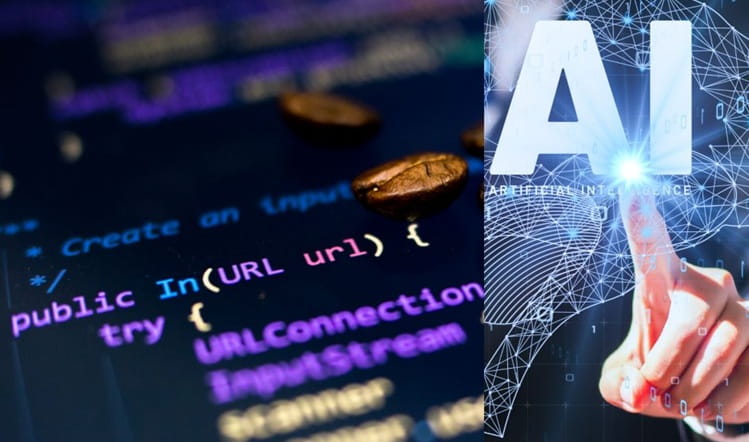
SINGAPORE, June 14, 2026 – The rise of artificial intelligence is often framed around Python, large language models and the companies developing frontier AI systems. But for enterprises seeking to deploy AI across existing business operations, the underlying reality is more complex.
According to Simon Ritter, Deputy Chief Technology Officer at Azul, Java is becoming increasingly important because many of the systems containing the data that enterprises want AI to analyse are already built on Java.

Speaking to Asia Insights during a recent visit to Singapore, Ritter said organisations are not replacing their existing enterprise systems in order to adopt AI. Instead, they are placing AI capabilities on top of customer relationship management platforms, enterprise resource planning systems, databases and transaction-processing environments that have long relied on Java.
“What we’re looking at is existing ERP systems, existing CRM systems and existing database systems,” Ritter said. “People are already using Java because it scales so well to extract information from those systems. What we’re now seeing is that people are building AI capabilities on top of that.” The result, he argued, is that enterprise AI adoption could increase the demand placed on Java systems rather than reduce Java’s relevance.
AI Sits on Top of Existing Enterprise Systems
Ritter described a typical enterprise AI architecture as a combination of technologies rather than a complete shift to a new programming environment. Python may be used to build the AI-facing layer, including natural-language interfaces and model-related functionality. But the underlying business information may still be retrieved from systems built with Java.
“The front end will probably be written in Python because that would be the AI code used in the model,” he said. “But the information is still going to be extracted using Java. It is the front layer, the AI layer, that is going to use Python.”
This matters because enterprises have spent years building and integrating mission-critical systems. Rewriting those platforms in another language simply to add AI would be expensive, operationally risky and unnecessary. Instead, businesses can use AI as a new interface to their existing data, allowing employees or customers to query information in natural language, access insights more easily and interact with enterprise systems in a more intuitive manner.
Ritter said the capabilities of large language models have advanced quickly enough to move AI beyond experimentation. “We’re seeing advances in terms of large language models and just the ability to get information from that,” he said. “The AI systems are definitely far more capable now than they have been. It’s incredible to see the pace of change, even over the last year.”
This is encouraging more organisations to move AI projects closer to production, where reliability, scalability and security become as important as the model itself.
Developers Will Move From Coding to Architecture
One of the most significant changes created by AI will be in software development. Ritter is sceptical of the idea that natural-language prompting will allow users to build complex enterprise applications without conventional software engineering.
“I’m a little sceptical of the idea of vibe coding, where you simply use a natural-language prompt to generate an entire application,” he said. He distinguished between small personal applications and large systems such as ERP or CRM platforms. For simple tools, AI-generated code may be useful and sufficient. But enterprise applications require precise architecture, integration, security and predictable behaviour.
“The reason we have programming languages is because they are unambiguous. Natural language is ambiguous, and we need to understand that,” Ritter said. He expects AI to become an increasingly powerful productivity tool for developers rather than a complete replacement for them.
Ritter compared the development to the rise of computer-aided design. Engineers once produced technical drawings manually. CAD tools later made that work faster and more efficient, but they did not eliminate the need for engineering expertise.
The same could happen in software. “The software developers are going to understand the structure and the architecture of the application,” he said. “They’ll have a higher-level view and then use AI to do the basic work of coding.”
Developers may therefore spend less time writing individual lines of code and more time designing systems, determining how components should interact and reviewing the quality of AI-generated output. AI could generate libraries, components and repetitive code, while human developers retain responsibility for the broader application and its intended outcomes.
Security Will Enter a Period of Adjustment
The growing use of AI in software development and enterprise systems will also have security implications. Ritter participates in the OpenJDK Vulnerability Group, where Java distribution providers collaborate on identifying security issues and developing patches.
“What we at Azul do is work as part of the OpenJDK Vulnerability Group, working with other distribution providers to ensure that we can get the maximum level of security,” he said. As AI systems become better at analysing software, they may identify vulnerabilities faster and at greater scale. This could initially create more pressure on developers and technology providers as weaknesses are discovered more quickly.
Ritter described this as a period of adjustment. “As AI systems are able to identify vulnerabilities in existing software more quickly, and possibly identify greater numbers of vulnerabilities, there will be a period of adjustment,” he said.
However, he believes the long-term result will be stronger software. “Ultimately, it is going to lead to more secure systems because we’ll be able to use those tools to harden all the systems that we have.”
Azul is also using AI internally to identify patterns that could improve Java performance. Ritter expects this kind of AI-assisted optimisation to expand as enterprises use machine intelligence not only at the application layer but also within the infrastructure supporting those applications.
Java’s Scalability Advantage
Ritter said Java’s enduring relevance comes less from the language itself than from the Java Virtual Machine and its ability to support applications operating at significant scale. “The thing that Java has always been successful with is scalability,” he said.
He pointed to the history of technology companies that started with newer programming environments but later shifted to JVM-based systems as their operations grew. His example was Twitter, now X, which moved away from its earlier technology architecture as scalability requirements increased.
The broader point, Ritter said, is that startups may initially prioritise speed of development, but successful platforms eventually need infrastructure capable of processing very large workloads reliably. This is particularly relevant in enterprise AI because adding natural-language interfaces and intelligent capabilities can significantly increase the number of requests reaching underlying systems.
More AI interactions mean more data retrieval, more transaction processing and more pressure on existing infrastructure. Java’s role in the AI era may therefore be less visible than that of AI models, but no less important.
Cloud, AI and Robotics Will Converge
Looking ahead, Ritter expects the continued expansion of utility-based cloud computing to combine with broader deployment of AI. He also believes robotics could become part of this convergence as compute and AI capabilities move from digital environments into the physical world.
“If we have the compute capabilities and the AI capabilities, extending that into the physical world will become more realistic in the future,” he said. This could create a technology environment where cloud platforms support AI systems, developers use AI tools to build applications and intelligent systems increasingly interact with physical devices.
For enterprises, however, the success of these developments will still depend on reliable software foundations. Foundation models and semiconductor companies may attract the most attention, but businesses will continue to need systems capable of processing transactions, retrieving information and supporting mission-critical operations.
Ritter’s central argument is that AI does not make Java obsolete. It increases the value of the enterprise systems Java already powers. As organisations seek to extract more insight from existing information and expose that data through AI-enabled interfaces, the infrastructure behind the model will become increasingly important.
In that environment, Java’s scalability, compatibility and enterprise track record could make it one of the less visible but essential foundations of the AI economy.