

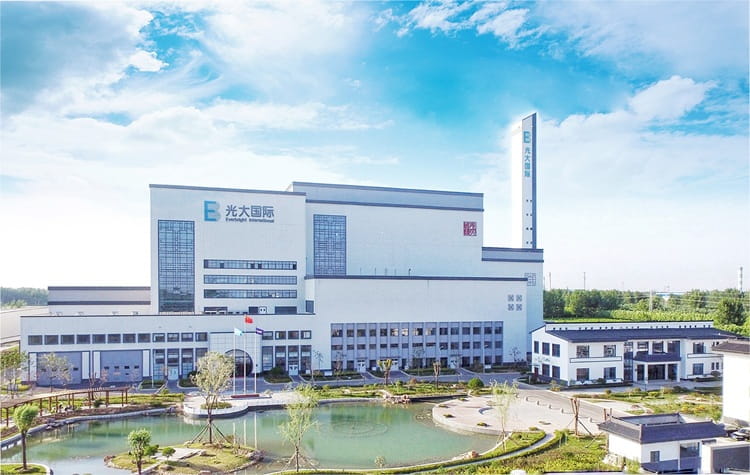
HONG KONG, March 22, 2026 – China Everbright Environment Group Limited (257.HK) reported resilient financial and operational performance for FY2025, underscoring its position as a leading environmental services provider in Asia while advancing international expansion, technological innovation and industrial ecosystem development.
The Group recorded total revenue of approximately HK$27.52 billion and profit attributable to shareholders of HK$3.93 billion for the year ended December 31, 2025. EBITDA stood at HK$10.27 billion, reflecting stable operating performance amid a complex macroeconomic and industry environment.
In line with its earnings delivery, the company proposed a final dividend of HK12.0 cents per share, bringing the full-year dividend to HK27.0 cents, representing a payout ratio of 42.3 percent.
Everbright Environment’s 2025 performance reflects the continued execution of its three core development strategies, technology-driven growth, international expansion and industrial ecosystem integration.
The company described the year as a foundational phase for its “Second-Stage Entrepreneurship”, positioning itself for long-term growth aligned with China’s upcoming 15th Five-Year Plan.
This strategic direction is increasingly visible in the Group’s evolving business mix, with a stronger emphasis on asset-light services, diversified revenue streams and cross-sector synergies across environmental energy, water and greentech segments.
Expanding Global Presence Across 16 Overseas Markets
The Group continued to scale its international footprint, with operations now spanning 16 countries including Germany, Poland, Vietnam and Uzbekistan, alongside a strong domestic presence across 24 provinces and regions in China.
A key highlight in 2025 was its entry into Central Asia, with the securing of two waste-to-energy (WTE) projects in Uzbekistan. The company also expanded its presence in Southeast Asia through asset-light service contracts in markets such as Thailand and Malaysia.
In parallel, Everbright Environment established representative offices in Vietnam, Indonesia and Central Asia, signalling a shift from project-based expansion to a more structured, region-focused global strategy.
Waste-to-Energy Leadership Anchors Growth
As the world’s largest waste-to-energy operator, Everbright Environment continues to anchor its growth on its environmental energy segment, which remains a core earnings driver.
The Group held 196 WTE projects with a designed daily processing capacity of over 163,000 tonnes. Operational efficiency also improved, with power generation per tonne of waste reaching approximately 467 kWh.
Beyond traditional WTE operations, the company is increasingly expanding into higher-value applications such as biomethane production and integrated biomass utilisation, reflecting a broader transition towards circular economy solutions.
Technology development remains central to the Group’s long-term competitiveness. In 2025, Everbright Environment advanced several key research and commercialisation initiatives under its “3+1” technology framework.
Notable developments include breakthroughs in waste charcoal production processes, fly ash recirculation technologies and high-efficiency battery recycling systems. The company also completed the development and manufacturing of micro-scale waste grate furnaces.
Importantly, these innovations are increasingly translating into commercial outcomes, with technologies such as biomethane production and energy efficiency solutions being deployed across operating projects.
As of the end of 2025, the Group had accumulated more than 2,300 intellectual property rights, reinforcing its position as a technology-led environmental services provider.
Operational Scale and Environmental Impact Expand
Everbright Environment continued to scale both its operational footprint and environmental impact during the year.
The Group processed nearly 66 million tonnes of waste, including household, hazardous and agricultural waste, while generating approximately 28.5 billion kWh of electricity. This equates to a saving of more than 11 million tonnes of standard coal.
In addition, the company treated more than 1.8 billion cubic metres of wastewater and reduced chemical oxygen demand emissions by over 920,000 tonnes. Greenhouse gas mitigation also remained a key outcome, with nearly 15 million tonnes of CO2 equivalent emissions displaced during the year.
Diversified Business Segments Drive Resilience
Beyond environmental energy, Everbright Environment’s water and greentech segments contributed to a more balanced and resilient business model.
The environmental water segment expanded into new markets and applications, including industrial wastewater treatment and zero-carbon energy projects, while continuing to improve operational efficiency through digitalisation and intelligent systems.
Meanwhile, the greentech segment achieved notable progress in biomass utilisation, biomethane supply and environmental remediation services, with increased contributions from heat and steam supply as well as green certificate trading.
The equipment manufacturing business also strengthened its international presence, securing contracts across Asia and Europe and expanding into new application areas such as flue gas treatment and small-scale waste incineration technologies.
Outlook: Focus on Value Creation and Global Competitiveness
Looking ahead, Everbright Environment is expected to maintain its strategic focus on strengthening core business areas, expanding global operations and advancing industrial upgrading. Management highlighted priorities including market expansion, risk management and technology-driven transformation, with a continued emphasis on delivering high-quality growth and sustainable value for shareholders.
With a strong operational base, expanding international footprint and increasing technological capabilities, the Group is positioning itself to play a larger role in both China’s environmental strategy and the global transition towards sustainable infrastructure.