

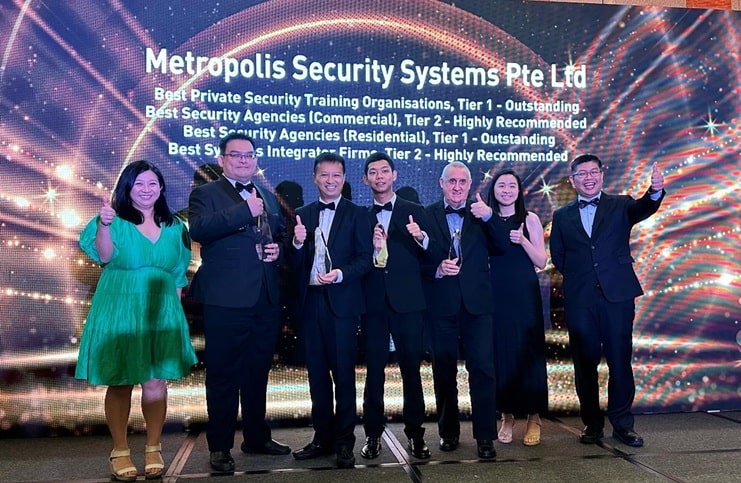
SINGAPORE, December 2, 2025 – From starting out as a humble security agency in 1999 driven by the determination and resilience of the company’s founder Mr.James Soh to being one of the top security agencies in Singapore today, Metropolis Security Systems has come a long way.
Back then, Mr.Soh’s HDB flat served as the command Head Quarters (HQ) for the agency and in-person job interviews were conducted at an eatery near his HDB flat. Uniforms for security staff were purchased off the shelf from shops at Singapore’s Famous Army Market! Today, the company operates a 24/7 Command Centre, located at its office in Midview City, that oversees islandwide operations.
AsiaBizToday spoke with Randy Ang, General Manager of Metropolis Security Systems on the company’s journey, its evolution as a people-and-technology driven company and how it is tackling the current trends, challenges and opportunities for the Singapore security industry.
What are some of the key milestones that have defined the company’s journey thus far?
I am proud to say that there have been plenty. Metropolis has consistently demonstrated operational excellence. Metropolis has been SACE-cleared for both Core and Core Electives, reinforcing its leadership in compliance and service delivery.
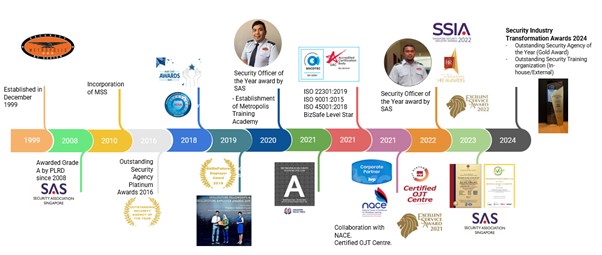
A key milestone – both for Metropolis Security as well as the Singapore security industry- was us establishing Metropolis Training Academy (MTA) in 2020 to deliver Workforce Skills Qualifications (WSQ) security courses for both public participants and in-house personnel. This initiative reflects the company’s commitment to talent development and building a skilled workforce and enhancing the professionalism of the security industry. MTA is now considered a top security training institute in Singapore.
Metropolis was the first SME to attain the Workplace Learning Organisation of Competence certification in 2022, and later the Workplace Learning Organisation of Competence (Gold) in 2025.
The company has been honoured with the Outstanding Security Agency of the Year – Gold and Outstanding Security Training Organisation (Gold) at the 2024 Security Industry Transformation Awards.
Our company’s officers have earned repeated recognition, with multiple Security Officer of the Year Awards.
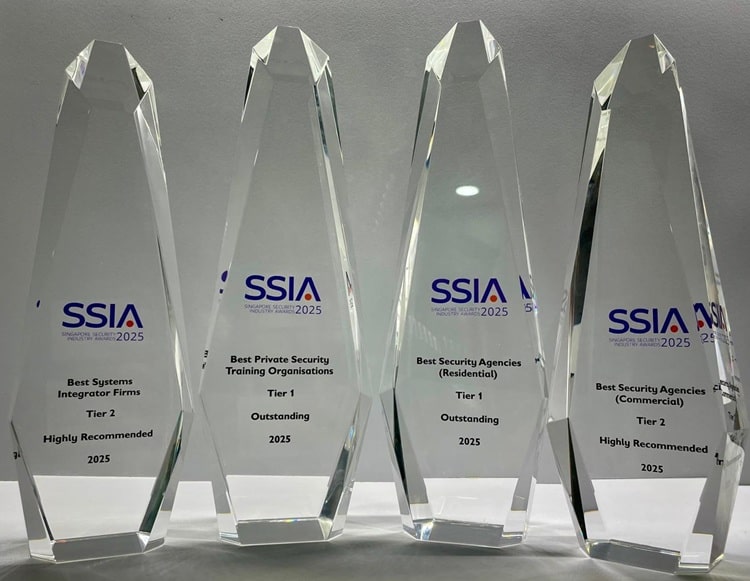
What gives us tremendous satisfaction is that Metropolis has been recognized not just for our core competence as a security agency, but also for our employment practices, the learning and development culture we have established and as a good corporate citizen. See all awards and accolades.
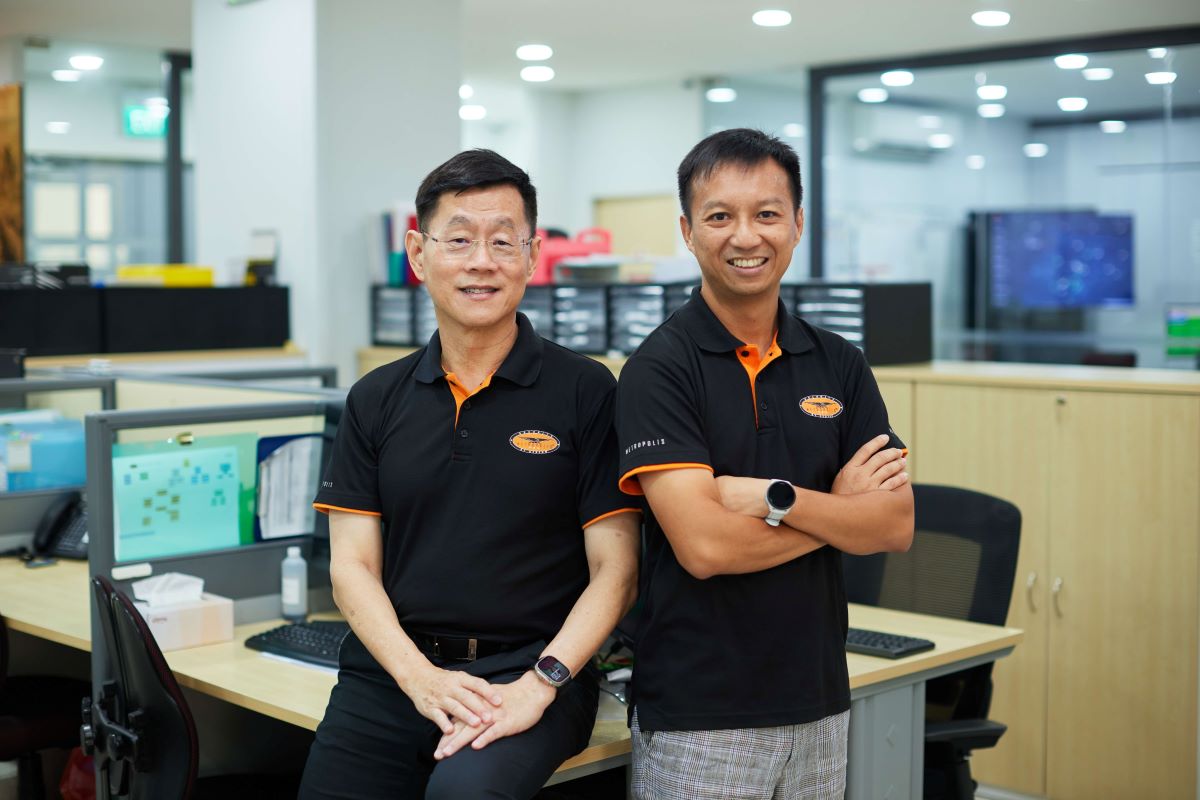
What core values have guided Metropolis’ growth and reputation in Singapore’s security landscape?
Our founder Mr. James Soh had been instrumental in guiding us through the development of Metropolis Security Systems. His mantra “Nil Sine Labore” (Nothing without labour) is the key to operational excellence ensuring total client satisfaction.
Everyone in the company is aligned with the company’s vision to not only be the foremost security agency in Singapore known for its service excellence but also setting a high industry standard in terms of providing and caring for our workforce. The latter is a top priority for the management as we believe that a workforce that is well taken care has a direct bearing on service excellence.
In the highly competitive Singapore security industry, how do you continue to differentiate Metropolis from other manned guarding and security service providers?
For one, we are not a security agency that just provides security officers for deployment. Besides security officers, we offer a range of security solutions that meet our clients’ desired security outcomes.
Our operations management is constantly on the ground ensuring our security services meet the excellence criteria that we pride ourselves on. Meanwhile the technology and training team works closely with the operations team to ensure the security objectives are fulfilled.
How does Metropolis ensure operational quality and consistency across all client sites?
Our frontline workforce and the management team supporting them operate in harmony and with a great spirit of camaraderie. Adopting and implementing workplace learning NACE framework allows us to be on top of all training needs and ensure the delivery of service excellence.
Investing in a compliance team allows us to audit and conduct checks across all operations and identifying gaps for improvement of operations.
A strict adherence to established systems and processes that are constantly monitored, evaluated and improved upon is key to ensuring that we are not a person-dependent organization and can deliver consistently good service across operations.
Metropolis has been recognized for integrating digital technologies such as remote monitoring systems, video analytics and robotics. What motivated this technology adoption?
With constant security manpower challenges in Singapore, the use of technology to reduce the reliance on manpower for security operations was inevitable.
One, there is a gap between the demand and supply of security manpower in Singapore. There is a steadily rising need for more security officers to guard premises within our country, for example, with the continuing growth of the residential property market.
Secondly, the manpower cost within the security industry continues to rise, with salaries of security officers increasing year on year. As a result, the cost of engaging security services will only increase over time.
Implementing security technology solutions decreases the reliance on security manpower and eventually, we will require lesser security officers on the ground. Technology can enhance security with reduced need for physical monitoring and enable deployment of offices for response instead.
What results and improvements have you observed from augmenting traditional security operations with smart security solutions?
Allow me to share a couple of the several significant positive outcomes we have seen. One, transparency. Data never lies; in fact, data allows us to have deep and better insights on what is happening on the ground around the premises. With smart security solutions, information is readily available and can be accessed by all stakeholders instantaneously.
Two, reduction in officers’ fatigue. Of course, we are not building a bionic man- the fictional character where a normal human being is being enhanced by technology and turning into a superhuman in terms of fitness level- but with the help of smart security solutions, our security officers need to perform fewer physical tasks, without negatively affecting the outcomes.
How do you strike the right balance between human guarding and automation, ensuring technology enhances rather than replaces manpower?
Instead of thinking about what is the right balance between human guarding and automation, we study the security requirements and outcome. A security proposal typically considers the security outcomes and security requirements of the premises. From there, the design for the appropriate smart security solutions will be proposed along with the corresponding number of security officers.
Reduction of security officers being deployed on-site does not mean that we are letting go officers. As mentioned earlier, our security industry is heavily in need of security officers and faces a significant shortage of manpower. By optimising security manpower at locations, we are then able to redeploy officers to other premises, thus covering the shortage.
What upcoming innovations or digital initiatives are you particularly excited about?
Innovations and digital initiatives have been a key driver in the industry in recent years. Advanced video analytics, IoT sensors, Digital Twins, are gaining traction.
Technology is an ever-growing space for us as service providers. We constantly watch out for the latest innovations that can be implemented while at the same time, taking into consideration the maturity of the technology and the cost of implementation. We must also consider buyers’ investment into technology.
Security officers often work long and demanding shifts. How is Metropolis working to provide better working conditions and meaningful careers for officers?
Welfare of our workforce is non-negotiable, particularly so considering the challenging physical requirements for the job. We go the additional mile in ensuring our security officers’ welfare is always taken care of.
Basic welfare such as ensuring no overworking, ample rest hours within their work shift and proper rest areas are important aspects we take into account before we consider deployment at any work site.
Additionally, we cater to need for snacks and beverages for every officer deployed regardless of site location and team size. For example, at one of our residential sites, an outdoor workstation set up comprising of a parasol, table and chair is being erected for our officer’s use, making it much more conducive and productive for their daily work.
What training or professional development programs are in place to help security personnel upskill and adopt new technology-driven responsibilities?
The Singapore security industry has been progressing on implementing mandatory training for security officers regularly. On top of these, we constantly send officers for job redesign programs to upskill them on learning how to use smart security solutions implemented on our clients’ sites.
Security officers are also being motivated to upskill themselves as we provide better benefits and recognition to officers who embrace security technologies solutions and undergo job redesigning. A token of appreciation is also awarded for every job redesign completed.
How do you attract young talent into the security sector, which is still sometimes perceived as a low-skilled job?
This has been a constant challenge as the industry has always leaned more to the matured workforce in general. The industry shift to relying more on security solutions and technology is one of the key attractions for younger talents, making the role more technical as opposed to traditional security manning.
Another strategy to engaging young talents is to provide better career opportunities and pathways to progression. One may start off as a security officer but eventually get promoted and tasked to take on management roles. In fact, saying that security is a low-skilled job is no longer valid. Nowadays, it takes a lot more to be a good security officer with all the technology and client requirements.
From your perspective, what are the biggest challenges facing Singapore’s security industry today—whether manpower constraints, regulatory requirements, or evolving customer demands?
Biggest challenge will be that of manpower constraints. The general societal mindset is that a security officer’s job is still not attractive enough, especially for the younger workforce.
Furthermore, there is a growing expectation mismatch between a security officer and clients. As the cost of engaging security increases with the increasing salary for security officers, clients’ expectations and demands will only get higher compared to that of a security officer who finds comfort in their role and is not as willing to upskill or perform different roles.
Here is where the security agency plays a key role in transforming not just its hardware “digitally” but also transforming security officers, encouraging them to upskill and enhance themselves to perform higher capability roles and consequently, increase their wages.
As automation and digitalisation accelerate, what shifts do you foresee in security workforce roles over the next 5–10 years?
Over the next 5-10 years, I foresee more security technicians who are skilled in operating and maintaining security systems as opposed to just security officers. As more security technology is being deployed and implemented, these technologies would require the human touch in regular maintenance, coming out with contingency plans on points of potential technical failures and handling the first and second level of equipment and/or software servicing.
As the need for physical security officers reduces and shifts into more technical roles, we will also observe lesser physical presence of security staff at sites. Instead these individuals will be faces behind security systems platforms, monitoring remotely and handling incidents and enquiries from the command centre, managing dispatching of response teams to situations happening on the ground.
Security officers will take on a more “passive” mode of operations where they are not constantly monitoring stable situations and handling mundane routine job scopes, which the systems will take care of. Security officers will instead be notified and informed when situations arise via alerts and they focus on response to the situation and provide support on ground.