
HONG KONG, March 23, 2026 – As global demand for lithium batteries accelerates alongside the rapid growth of electric mobility and energy storage systems, manufacturers are exploring new battery formats and materials to meet evolving performance requirements.
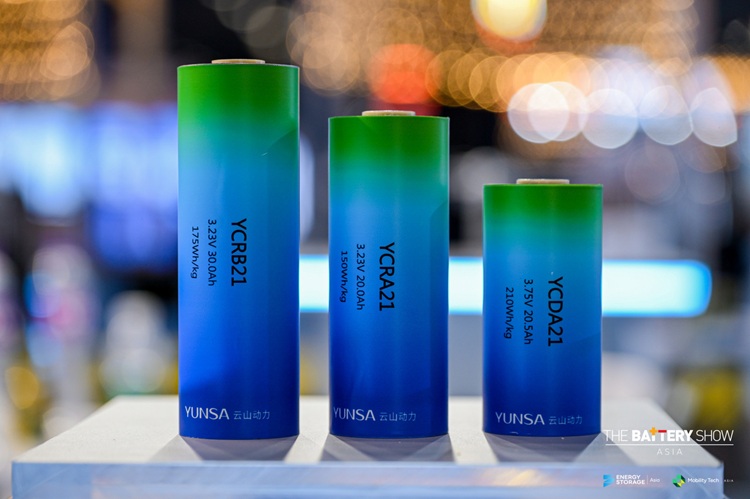
Chinese battery manufacturer YUNSA Power (Ningbo) Co Ltd, founded in 2021, is positioning itself in this fast-growing sector by focusing on large cylindrical lithium battery cells designed for high-rate performance and specialised applications.
Speaking to AsiaBizToday on the sidelines of The Battery Show Asia in Hong Kong, Justin Zhu, Overseas Sales Director at YUNSA Power, said the company is targeting niche markets where fast charging capability and strong performance under extreme operating conditions are critical.
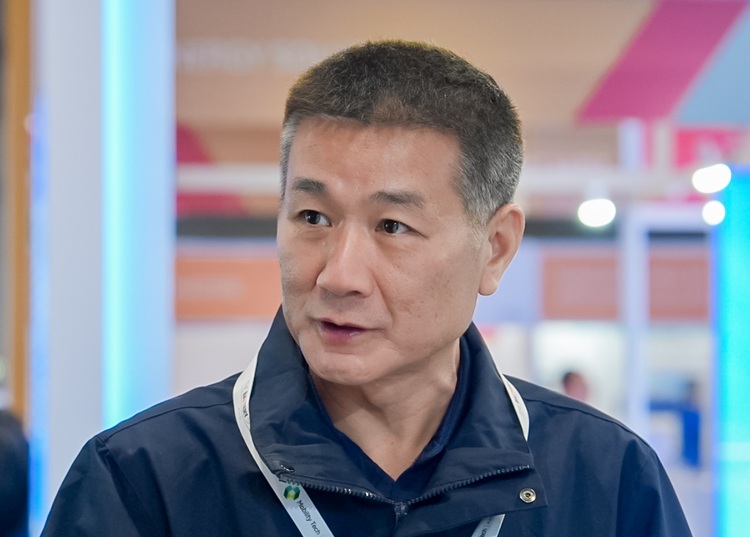
“YUNSA is still a relatively new company, founded in 2021, but we are highly focused on large cylindrical battery cells such as 4680, 4695 and other large formats,” Zhu said. “These batteries are designed for applications that require high-rate performance, fast charging and reliable operation in demanding environments.”
Rising Demand for Lithium Batteries
The surge in demand for lithium batteries is being driven primarily by the global push toward decarbonisation and the growing adoption of electric vehicles. Consumers, governments and industries are placing increasing emphasis on clean energy and environmental sustainability, creating strong momentum across the battery ecosystem.
“More and more people are paying attention to green energy and environmental protection,” Zhu said. “This demand is one of the main drivers of the battery industry today.”
Alongside rising demand, technological innovation continues to reshape the industry. New materials and improved battery architectures are enabling higher energy density, faster charging / discharging capabilities and improved operational performance.
The Case for Cylindrical Battery Cells
YUNSA Power specialises in cylindrical battery formats, which Zhu believes offer significant advantages over other cell structures such as prismatic or pouch cells. Historically, battery manufacturers have faced a trade-off between energy capacity and charge or discharge performance.
“Balancing high capacity with high-rate performance has always been a challenge,” Zhu said. According to him, cylindrical battery cells provide an effective solution to this problem. “The cylindrical format offers a good balance between high capacity and high-rate performance,” he explained.
The company’s battery designs incorporate high-nickel cathode materials and silicon-based anode technologies, which can improve performance but also introduce engineering challenges. These advanced materials allow the batteries to achieve faster charging speeds and higher power output, making them suitable for specialised applications.
Managing Gas Generation and Thermal Stability
One challenge associated with high-performance battery materials is gas generation during operation. Cylindrical cells are particularly well suited to managing this issue due to their structural characteristics.
“Materials with high nickel content or high silicon content can generate gas during operation,” Zhu said. “The cylindrical cell format is better able to tolerate this and maintain stable performance.” This structural advantage allows battery designers to push the limits of battery chemistry while maintaining operational stability.
Expanding Across Automotive and Energy Storage
YUNSA Power is already supplying battery solutions across multiple sectors, including electric vehicles and grid-scale energy storage systems. The company has secured contracts with major Chinese automotive manufacturers to supply battery packs for passenger vehicles.
At the same time, it is working with electricity utilities to deploy batteries for large-scale energy storage projects. “We already supply one of the leading Chinese automakers with battery packs for passenger vehicles,” Zhu said. “We are also working with electricity companies on energy storage systems.”
The ability to serve both mobility and stationary energy storage markets is becoming increasingly important as battery demand expands across sectors.
Looking Beyond China
While China remains the company’s core market, YUNSA Power is actively exploring opportunities overseas. Europe has emerged as a key target region for expansion. The company has already begun building partnerships with European customers focused on specialised applications such as unmanned vehicles and aviation technologies.
“This is our second time attending the Battery Show,” Zhu said. “We have already established collaborations with European partners for special applications including unmanned aircraft and other advanced technologies.”
These partnerships highlight the growing international demand for specialised battery technologies tailored to emerging mobility solutions.
Challenges of Global Expansion
For emerging battery companies seeking to expand internationally, scaling production while maintaining quality remains a major challenge. Zhu noted that cultural differences, regulatory compliance and local market requirements can create obstacles for companies entering new markets.
“As a medium-sized company, one of our biggest challenges is overcoming cultural barriers and complying with regulations in different markets,” he said. Despite these challenges, the company believes its flexibility and focus on tailored solutions provide a competitive advantage.
Partnerships play a critical role in bringing new battery technologies to market. YUNSA works closely with customers and industry partners through long-term research and development collaborations. “We usually establish long-term joint R&D projects with our partners so we can develop tailored solutions together,” Zhu said.
This collaborative approach allows the company to adapt its battery designs to specific customer requirements.
Despite growing interest in alternative technologies such as hydrogen energy, lithium-ion batteries remain the dominant solution for energy storage today. From both technical and economic perspectives, Zhu believes lithium-ion batteries will continue to play a leading role in the energy transition for years to come.
“Lithium-ion batteries are still the best solution for energy storage systems today,” he said. Over time, other technologies may emerge to complement or compete with lithium batteries, but for now they remain the industry standard.
Recycling and the Circular Battery Economy
As battery adoption increases worldwide, recycling and lifecycle management are becoming increasingly important. In markets such as China and South Korea, battery recycling industries are already developing rapidly.
“China already has a strong recycling ecosystem because of the large number of electric vehicles on the road,” Zhu said. Recovered materials from used batteries can be reintegrated into the manufacturing supply chain, creating a closed-loop system that reduces environmental impact.
Looking ahead, Zhu expects continued technological innovation within lithium-ion battery systems. New variations such as solid-state and semi-solid-state batteries are already under development and could reshape the industry in the coming decades.
“Lithium-ion batteries will remain dominant for at least the next 10 to 20 years,” he said. At the same time, advances in materials science and battery architecture will continue to push the boundaries of performance, efficiency and safety.
As the energy transition gathers momentum, these innovations will play a crucial role in enabling the electrification of transport, the growth of renewable energy and the expansion of global energy storage infrastructure.